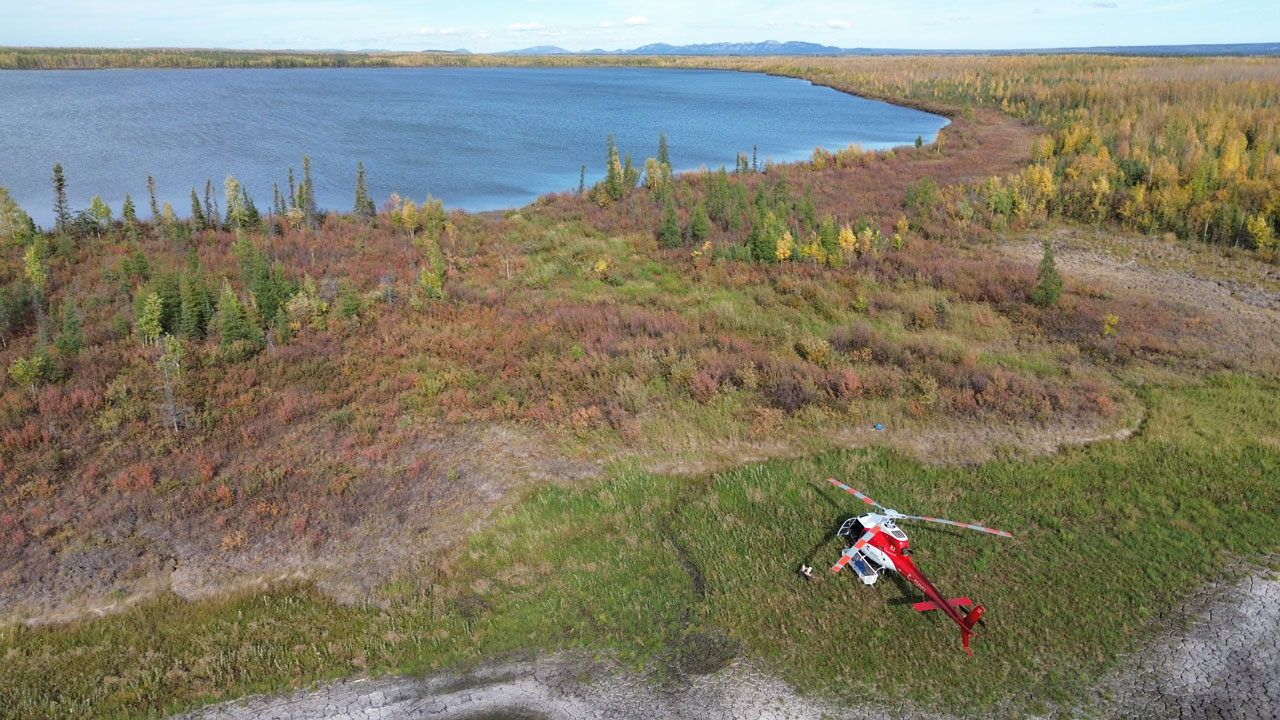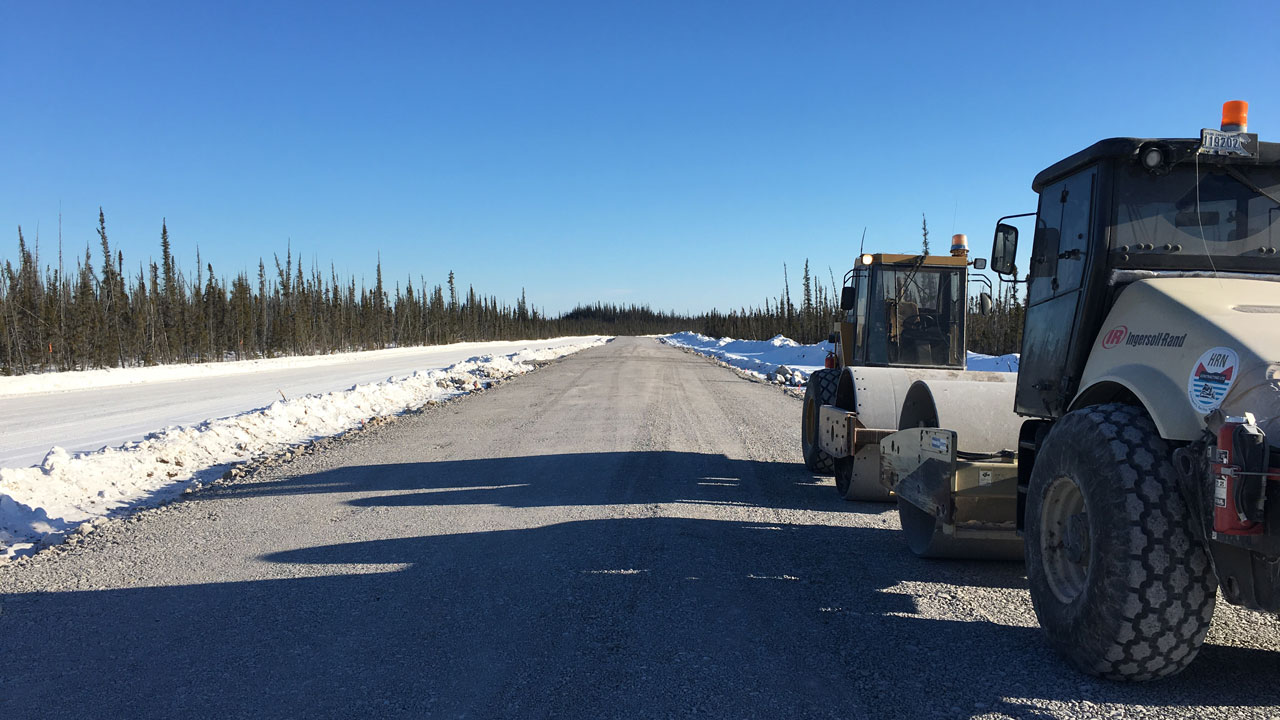
Tetra Tech is supporting the development of Mackenzie Valley Highway, an 800-kilometer all-season road in the Northwest Territories that will establish a critical transportation corridor to Canada’s Arctic.
The vision of an all-season highway through the Mackenzie Valley, connecting the Northwest Territories Highway System to remote communities and the Arctic Ocean coast, has been a strategic priority for Canada since 1958. Communities in the Mackenzie Valley are isolated and currently rely on aircraft, summer river barging, or winter ice roads for transportation.
The proposed Mackenzie Valley Highway (MVH) is an approximately 800-kilometer, two-lane gravel road that would replace the seasonal Mackenzie Valley Winter Road and connect remote communities to Canada’s highway network. Extending from Wrigley to Inuvik, the highway would connect the remote communities of Tulita, Norman Wells, and Fort Good Hope in the Sahtú Settlement Area. Development of the MVH requires cost-effective, resilient construction within the challenging constraints of an Arctic conditions, complex logistics, and remoteness.
The MVH traverses areas of extensive, discontinuous permafrost, where 50 to 90 percent of the landmass is underlain with perennially frozen soils and ground ice. In the face of climate change, thawing of permafrost soils and ground ice presents numerous challenges for planning, designing, and constructing highways in northern Canada. Permafrost degradation can result in thaw settlement, slumping, and other instabilities which can impact road use and increase risks to the public. Understanding the permafrost conditions and accounting for this in the road design is key to informing where the highway should be routed, what the road embankment geometry should be, and which construction techniques should be used.
Benefits
- Establishing a reliable transportation and economic corridor through the Mackenzie Valley
- Improving accessibility and affordability for communities in the Sahtú Settlement Area
- Reducing dependency on seasonal winter roads and river barging
- Increasing economic growth and diversification in resource development, remediation, and tourism
- Enhancing sovereignty and security through improved access to Canada’s Arctic
Using our Leading with Science® approach, Tetra Tech’s team of engineers, scientists, and technologists are advancing environmental and engineering studies for planning and design of the all-season highway from Wrigley to Tulita and Norman Wells, Northwest Territories. Since 2018, our team has provided geotechnical, hydrotechnical, permafrost, and transportation engineering as well as fish habitat, geochemical, terrain, and wildlife assessments to advance the project.
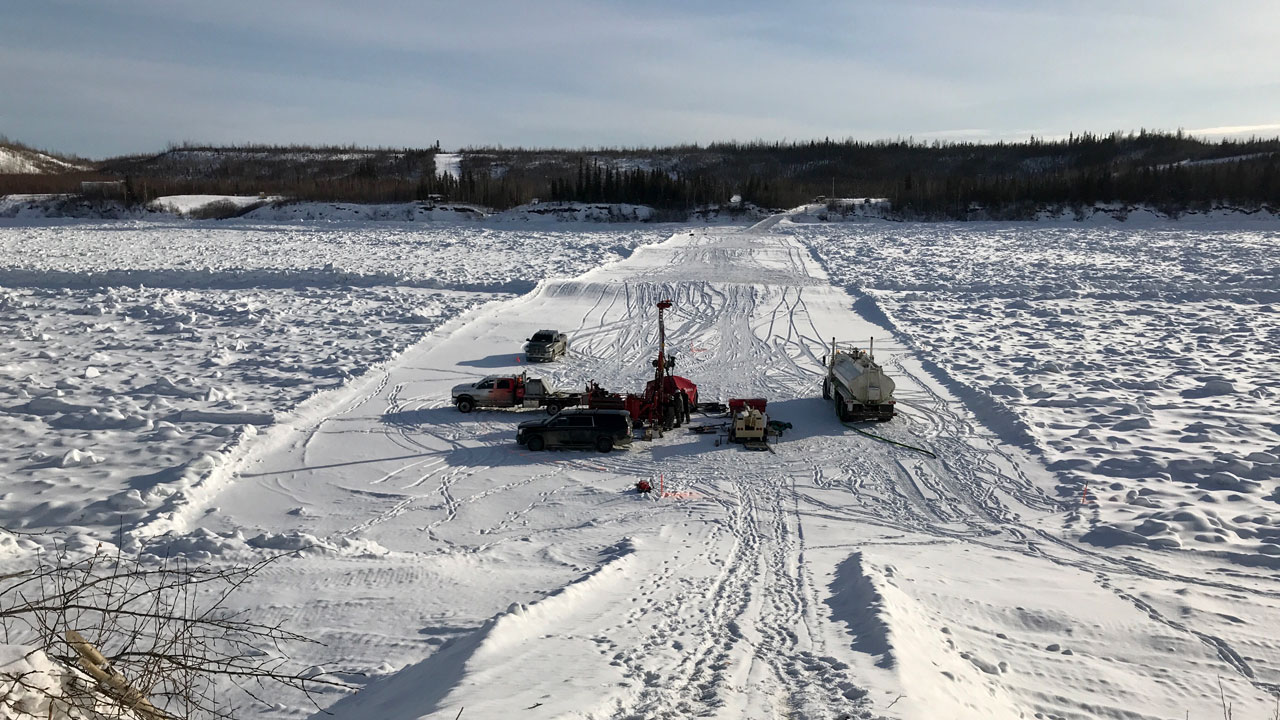
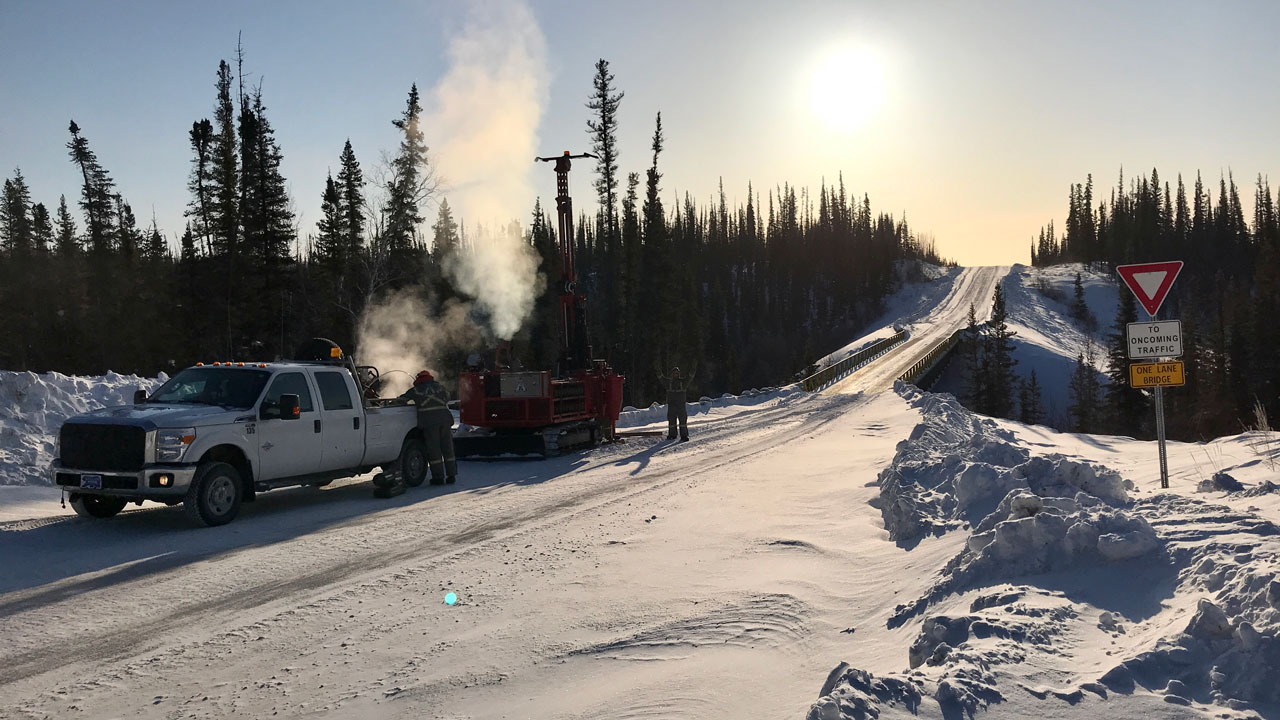
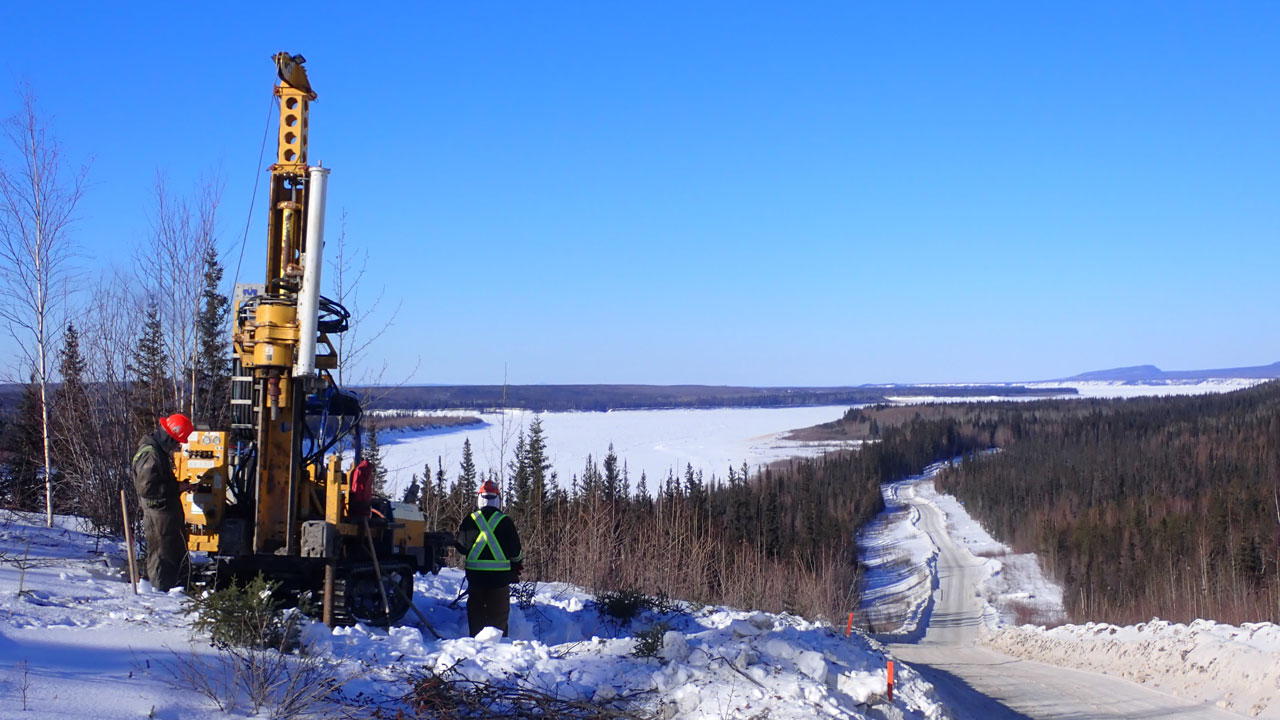
Tetra Tech’s arctic engineering and permafrost expertise has been key in identifying, mitigating, and adapting design of the MVH to the permafrost and ground ice conditions along the highway route. Our team has undertaken multi-method subsurface investigations, including intrusive geotechnical methods and non-intrusive geophysical surveys, to identify and characterize permafrost soils and ground ice along the MVH.
Our experts use data collected from these investigations to conduct in-house thermal modelling of road embankments, cutslopes, and crossing foundations to assess the highway design’s susceptibility to permafrost thaw due to disturbance and climate change. We developed design measures, such as fill-only road embankments, to maintain frozen ground and preserve permafrost where degradation can be prevented. In areas where degradation is likely, we adapted the highway design using measures such as thermal blanketing of ice-rich permafrost cutslopes to reduce the impacts of thawing.