
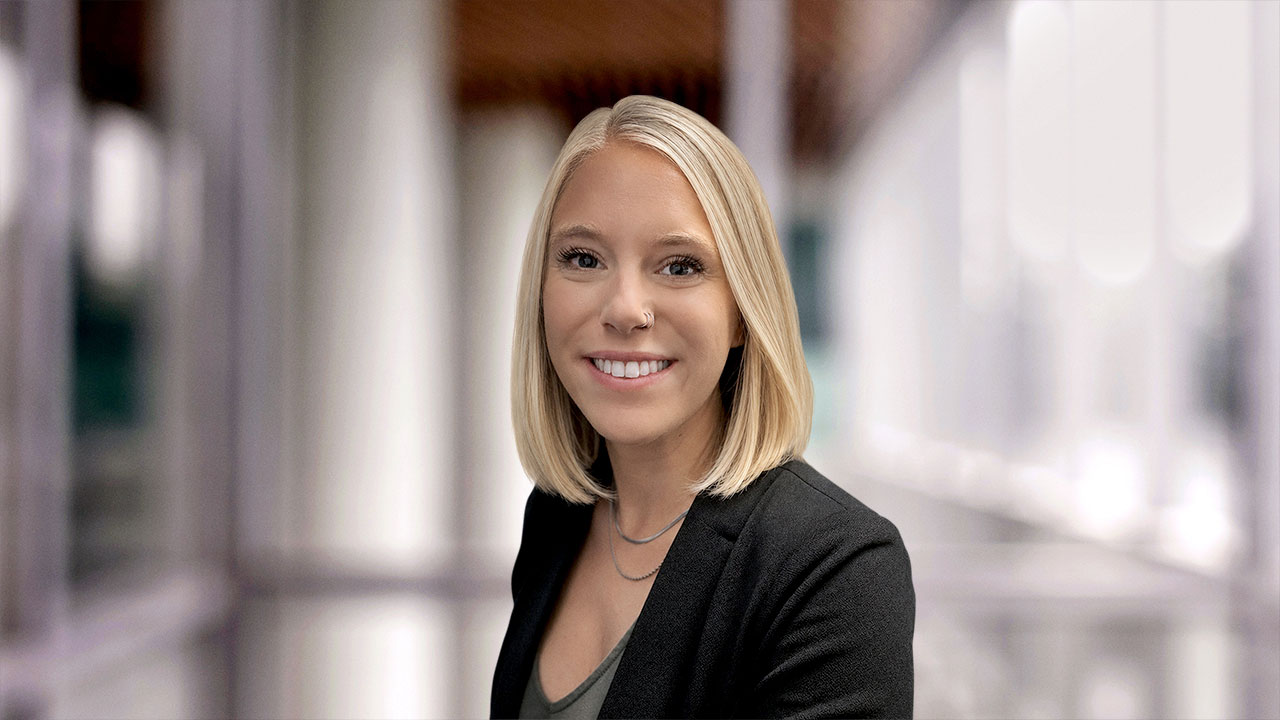
Amanda Smokoff, wastewater practice lead for Tetra Tech’s western U.S. region, discusses how wastewater utilities can make informed infrastructure investments to improve treatment performance, adapt to evolving regulations, and prepare for future regional growth.

What wastewater treatment trends are shaping Front Range utilities today?
Front Range utilities are facing a combination of continued population growth, increasingly stringent nutrient regulations, aging infrastructure, and limited space for facility expansion. As a result, many utilities are looking for practical ways to increase treatment capacity and improve performance without abandoning existing processes. One of the most significant trends we’re seeing is the adoption of intensification technologies that allow utilities to expand capacity within their existing treatment plant footprints while achieving better overall performance. By maximizing existing infrastructure, utilities can make more strategic capital investments, improve operational efficiency, and build resilient systems to serve their growing communities.
What challenges are utilities facing for nutrient removal and strict effluent limits?
Colorado utilities are planning in an evolving regulatory environment, making flexibility and adaptability more important than ever. While utilities must continue to meet today’s nutrient limits, they also need to prepare for the possibility of increasingly stringent requirements in the future. Recent permit renewals indicate that many facilities are being asked to achieve nutrient limits that approach the practical capabilities of conventional treatment processes while also complying with increasingly stringent effluent metals limits. As these requirements continue to evolve, utilities must make informed decisions about whether traditional approaches, such as chemical phosphorus removal, will remain the most effective long-term solution or if alternative treatment strategies will better position them for the future.
How are emerging technologies improving wastewater treatment performance and resiliency?
Colorado continues to lead the way in evaluating and implementing emerging wastewater treatment technologies that improve treatment performance and operational resiliency. Tetra Tech is partnering with several Front Range municipalities to pilot innovative processes, such as partial denitrification-anammox (PdNA) and Triple A, that have not yet been widely deployed at full scale in the United States. PdNA is used by utilities to achieve more energy-efficient nitrogen removal while increasing treatment capacity within existing infrastructure, and reducing overall chemical costs. Utilities that are currently recovering biogas are exploring Triple A as a primary treatment process, to redirect carbon and increase biogas production while reducing organic loading to downstream treatment processes. At the same time, we’re partnering with the Water Research Foundation on cutting-edge research to advance the industry’s understanding of these technologies by helping establish treatment performance expectations and design criteria. By combining scientific research with practical implementation, we’re helping utilities make informed decisions about when and where these technologies provide the greatest value, enabling flexible, resilient solutions that can adapt to evolving regulatory and operational challenges.
How is wastewater treatment evolving in Colorado, and how is Tetra Tech helping utilities prepare?
Wastewater treatment in Colorado is becoming increasingly focused on adaptability. As nutrient regulations continue to evolve and the timing and scope of future requirements remain uncertain, utilities must make capital investment decisions that balance today’s needs with tomorrow’s possibilities. Tetra Tech helps clients prepare by developing defensible, flexible facility master plans that evaluate multiple treatment pathways and phased implementation strategies. This approach gives utilities the information they need to make confident investment decisions today while preserving the flexibility to adapt as regulations, technologies, and community needs continue to evolve.
How does Tetra Tech help utilities deliver practical, sustainable treatment solutions?
At Tetra Tech, we believe successful wastewater solutions begin with understanding each utility’s unique goals, regulatory requirements, and long-term vision. While we help clients evaluate and implement emerging technologies when they provide the greatest value, we also recognize that the newest technology isn’t always the best fit. Our role is to help utilities make confident, informed decisions by developing practical, sustainable treatment strategies that balance performance, affordability, and resiliency. Whether optimizing an existing facility or planning for future growth, we focus on solutions that deliver measurable value today while preserving flexibility for tomorrow. That approach has helped clients achieve meaningful results, including a 40 percent reduction in energy consumption through process optimization at the City of Laramie’s wastewater treatment plant.
This article was featured in our Wise Water Management in the West issue of TetraVerse™.
About the expert
Amanda Smokoff
Amanda Smokoff is a wastewater practice lead for Tetra Tech’s western U.S. region.
She has more than 9 years of experience in wastewater treatment planning, process engineering, and utility infrastructure across Colorado’s Front Range. Her expertise includes wastewater master planning, nutrient removal improvements, alternatives analysis, process optimization, and capital improvement planning using process modeling tools such as BioWin and SUMO.
Amanda partners with municipal utilities to develop practical, sustainable wastewater solutions through facility planning, process modeling, hydraulic analysis, design, and regulatory compliance evaluations. She actively supports Colorado’s evolving wastewater regulations by participating in Colorado Department of Public Health and Environment work groups, including the Feasibility & Implementation Subgroup.
She holds a Master of Science and Bachelor of Science in Environmental Engineering from the University of Colorado, Boulder.