
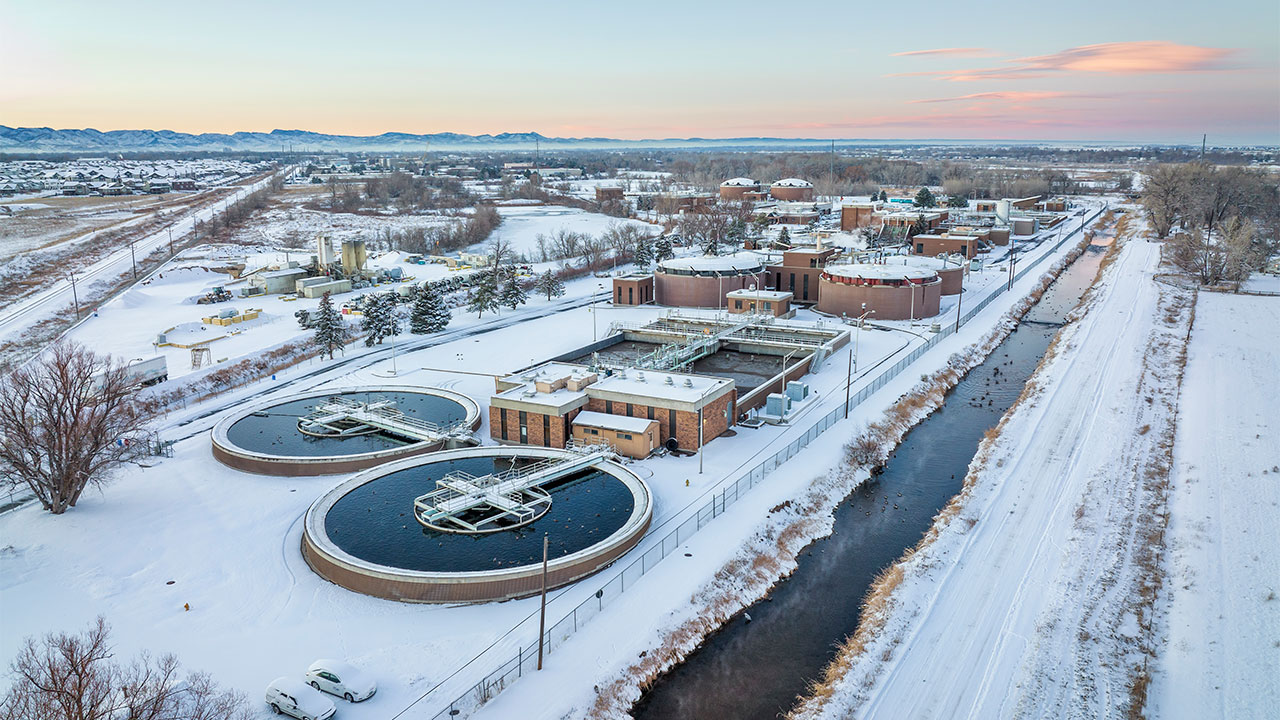
As utilities navigate shifting priorities, Tetra Tech’s wastewater facility planning expert, Deena Davidson, explains how specific adaptive planning tools can help organizations make confident infrastructure investments while remaining flexible for whatever comes next.
Master planning foundations
Master planning is one of the most valuable investments a utility can make. It provides the strategic framework that shifts facility management from reactive project delivery to proactive, long-term decision making.
Rather than responding to individual issues as they arise, a master plan creates a data-driven roadmap that aligns infrastructure investments with operational goals, regulatory requirements, and community needs. Planning begins with establishing a facility baseline including level of service expectations, growth projections, asset condition, and treatment performance; followed by process evaluations, regulatory assessments, and alternatives analyses.
These foundational activities identify needs within the traditional drivers of facility planning—capacity, regulatory compliance, and asset renewal—and translate them into a prioritized Capital Improvement Plan (CIP). When done well, master planning enables utilities to make informed investments, maximize limited funding, and position their systems to reliably serve their communities for decades to come.
Planning in an era of uncertainty
Traditional water resource recovery facilities (WRRFs) were designed to operate under relatively stable and predictable conditions and effluent limits. Today, those assumptions no longer hold true. Utilities are now navigating a rapidly changing landscape shaped by:
- Increasing regulatory requirements and customer expectations
- Changing climate conditions, including drought and water scarcity
- Constrained funding and rising capital costs
- Shrinking workforce availability
- Rapidly evolving treatment technologies
These converging pressures underscore the need for a more adaptive approach to facility planning. Building resilient WRRFs requires moving beyond traditional planning methods to embrace systems thinking, digital intelligence, and organizational alignment around priorities, policy, and capital investment. By creating planning frameworks and physical facilities that can evolve alongside changing conditions, utilities are better positioned to manage uncertainty while continuing to deliver reliable, sustainable, and affordable service.
From static reports to dynamic decision frameworks
Adaptive facility planning equips utilities with a resilient decision toolbox that supports confident, informed decision-making as conditions evolve. Rather than committing to a single implementation path, a modular CIP provides multiple strategies that can be advanced as regulations, funding opportunities, technologies, and community priorities change.
This flexible approach delivers greater long-term value by addressing today’s infrastructure needs while preserving future options. Utilities can confidently invest in critical capacity, regulatory, and asset renewal projects while maintaining the flexibility to evaluate innovative technologies, sustainable practices, and emerging solutions before making major capital commitments. The result is a planning process that reduces risk, avoids stranded investments, and keeps future decisions open—not predetermined.
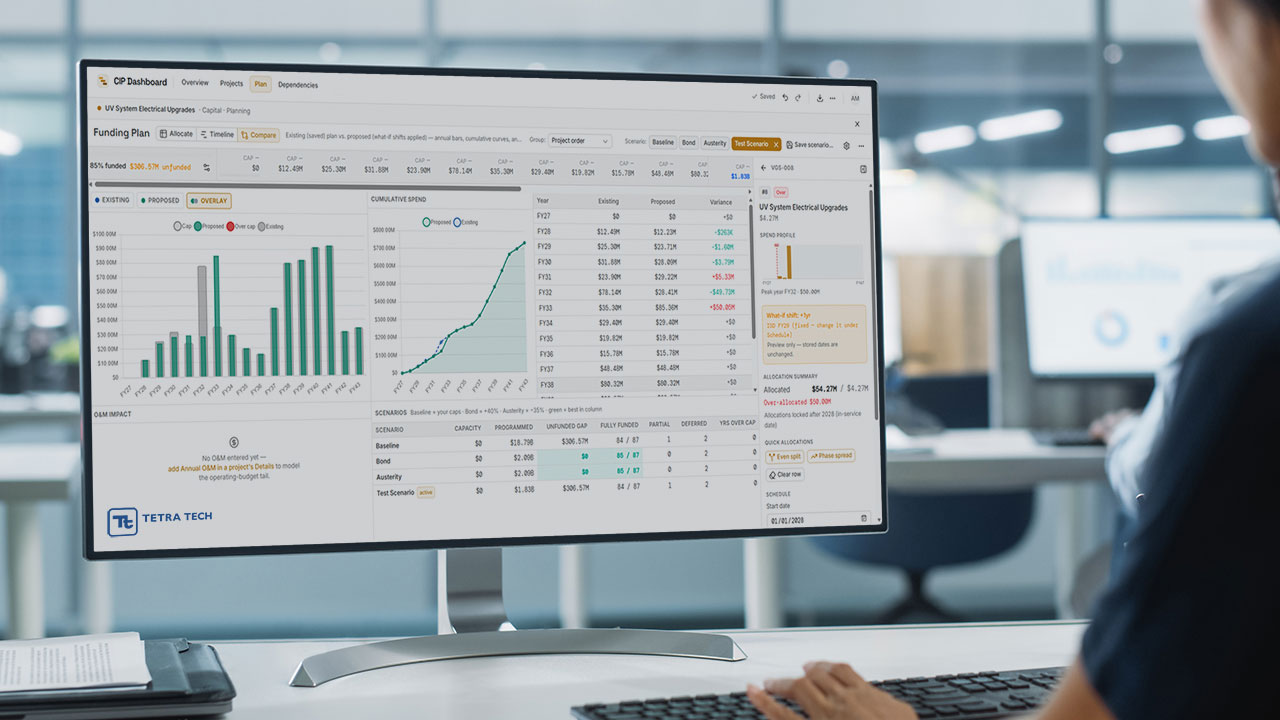
At Tetra Tech, we strengthen this resilient decision toolbox by integrating digital intelligence into the planning process. Our proprietary Digital CIP Management Tool, shown in Figure 1, allows utilities to visualize projects, evaluate alternatives, and adjust capital priorities in real time as new information becomes available. Instead of revisiting the master plan every few years, utilities have an interactive decision-support platform that keeps the plan relevant and actionable throughout its lifecycle.
Adaptive planning helps utilities:
- Build a resilient decision toolbox for changing conditions
- Preserve flexibility for future investments and innovations
- Improve transparency in capital decision-making
- Integrate sustainable and emerging treatment solutions
- Optimize infrastructure investments across the utility
Managing risk and value by coupling knowledge development with capital decisions
One of the greatest challenges utilities face is determining when to invest in emerging technologies versus proven solutions. For example, innovative treatment processes offer significant environmental, operational, and economic benefits, but adopting them too early—or too late—can introduce unnecessary risk.
To help utilities make more informed investment decisions, Tetra Tech integrates a Knowledge Development Plan (KDP) alongside every master plan.
Rather than viewing planning as a one-time effort, the KDP establishes a parallel pathway for continuously building knowledge while the Capital Improvement Plan progresses. Through targeted research, pilot testing, technology evaluations, regulatory engagement, and performance assessments, utilities gain the information needed to reduce uncertainty before major capital decisions must be made. As new information becomes available, that knowledge is fed back into the master plan, allowing project sequencing and implementation strategies to evolve without disrupting long-term objectives.
This integrated approach helps utilities:
- Evaluate emerging technologies with confidence
- Balance innovation with investment risk
- Improve long-term asset management
- Adapt to changing regulations
- Identify cost-effective solutions before committing major capital
Practical implementation strategy is equally important as well. For example, if new construction is required to meet regulatory limits, we help utilities negotiate a compliance schedule sufficient for design, permitting, financing, construction delivery, commissioning, and optimization. Compliance is not required immediately for new regulations unless existing facilities can already meet the new requirements, which is often not the case.
By coupling knowledge development with capital planning, utilities create a decision-making process that is both proactive and resilient—supporting sustainable infrastructure investments that are environmentally responsible, financially sound, and operationally effective.
Creating confidence for smarter investments
One of the greatest advantages of a KDP is that it gives utilities a priceless resource, which is time.
By gathering data, evaluating technologies, and reducing uncertainty well before major capital decisions are required, organizations can responsibly defer significant investments until they have greater confidence in the best path forward. The result is lower long-term risk, better-informed decisions, and more strategic use of public funding.
Learn more in Deena’s PARC Innovation Flow podcast, The Money Value of Time: Master Planning for Innovation, for additional insights into adaptive master planning and knowledge development.
Building resilient utilities for whatever comes next
Master planning is no longer about predicting the future. It’s about preparing for multiple possible futures. Utilities that embrace adaptive planning can respond to uncertainty while continuing to deliver reliable service, protect public investment, and meet evolving community expectations.
By coupling a modular Capital Improvement Plan with a Knowledge Development Plan, utilities can:
- Make smarter, risk-informed infrastructure investments
- Balance proven practices with emerging technologies
- Maintain regulatory compliance while adapting to evolving requirements
- Pursue funding opportunities with greater confidence
- Advance One Water and decarbonization goals while managing risk
- Strengthen organizational resilience through flexible, data-driven decision-making
In today’s rapidly changing environment, the most successful master plans are not the ones that attempt to precisely predict every future condition. They are the ones equipped with decision toolboxes designed to evolve. By embracing adaptive planning, utilities can confidently navigate uncertainty, optimize investments, and build resilient systems that continue serving their communities for decades to come.
About the author
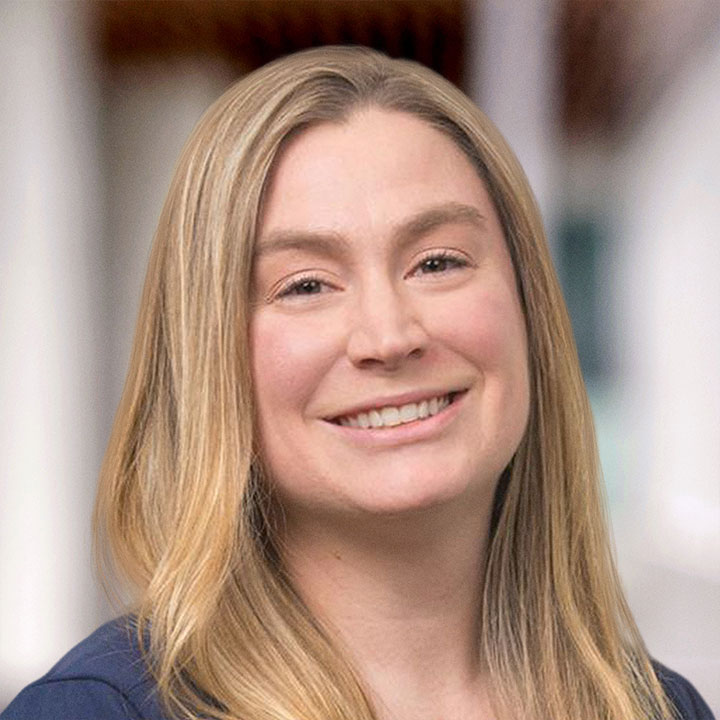
Deena Davidson, PE
Deena Davidson is a wastewater facility planning expert and vice president with more than 14 years of experience helping utilities develop resilient, cost-effective infrastructure planning strategies for long-term success.
Deena specializes in wastewater facility planning, treatment process design, and capital improvement planning for municipal utilities throughout the western United States.
Deena collaborates with clients to evaluate growth, regulatory requirements, aging infrastructure, and operational goals to develop tailored solutions that maximize existing assets while preparing for future needs. Her experience spans facility master planning, biological nutrient removal, hydraulic evaluations, permitting strategies, alternative project delivery, and the design of new and upgraded wastewater treatment facilities.
She holds a masters degree in civil engineering and bachelors degree in environmental engineering from the University of Colorado at Boulder.
This article was featured in our Wise Water Management in the West issue of TetraVerse™.