
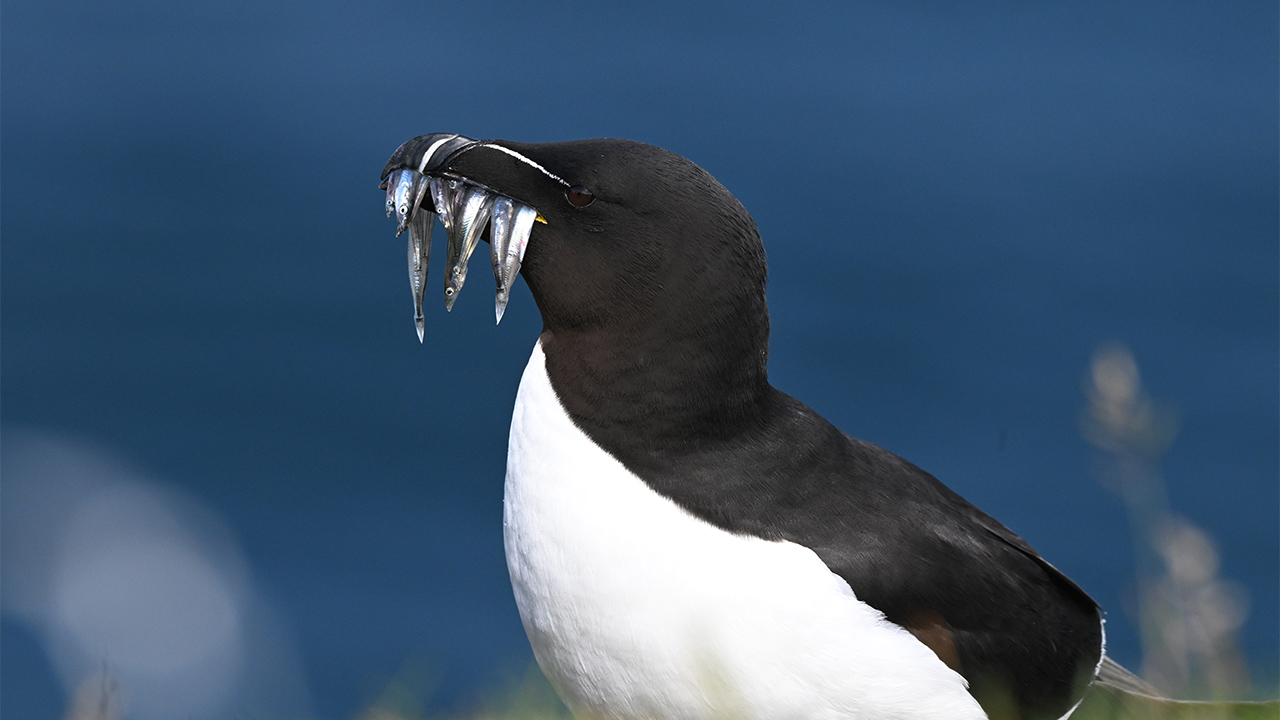
Tetra Tech is working with offshore wind developer Thistle Wind Partners (TWP) and the North East and Eastern Ornithology Group (NEEOG) to survey breeding seabird colonies in Caithness.
Challenge
Scotland is home to several internationally important seabird colonies, contributing to global seabird populations. Scotland’s seabirds play a key role in the health of its marine ecosystems and are a symbol of its natural heritage. However, many seabird populations are under threat. Climate change, invasive non-native species, food shortages, bird flu, and other pressures caused by human activity are contributing to declines in seabird numbers.
Offshore wind developers require accurate and recent data to understand the potential impact of offshore wind farms on seabird populations before construction and to provide a baseline for post-consent monitoring. Developers are required to conduct robust Environmental Impact Assessments (EIA) and Habitats Regulations Appraisals (HRA) as part of development applications.
Obtaining data is a challenge for offshore wind developers as seabird colonies are often in remote and hard-to-access places, and seabirds themselves are difficult to count precisely during a narrow window of opportunity in the breeding season.
Solution
From 2023 to 2025, Tetra Tech provided TWP with project management support to the consortium of specialist consultants carrying out the seabird census counts and sample plot monitoring along the East and North Caithness Cliffs. The cliffs are designated Special Protection Areas and are home to important breeding seabird colonies.
Due to the location’s limited access, the specialist team, comprising Net Zero Ecology, Black Bawks Data Science, Tracks Ecology and North of Scotland Ornithological Services blended traditional methods of counting seabirds from land and sea with those powered by technology. They used innovative drone surveys and digital imagery, providing a new insight into the key seabird populations in Caithness.
The data collected has been used successfully in impact assessments, including information on population trends for key seabird species and how populations may have been affected by recent bird flu outbreaks. The survey demonstrates the continued commitment by NEEOG developers to understanding the potential impacts of offshore wind farms on seabird populations. Our survey work contributed to NEEOG being awarded the prestigious Environmental Excellence Award at RenewableUK’s Global Offshore Wind Awards 2025.
Benefits
- Developed new techniques and procedures for understanding seabird population trends
- Acquired robust data on North and East Caithness Cliffs seabird populations
- Provided data to the British Trust for Ornithology’s Seabird Monitoring Programme
- Provided data to ScotWind developers for impact assessments and post-consent monitoring
- Provided crucial information on seabird population trends