
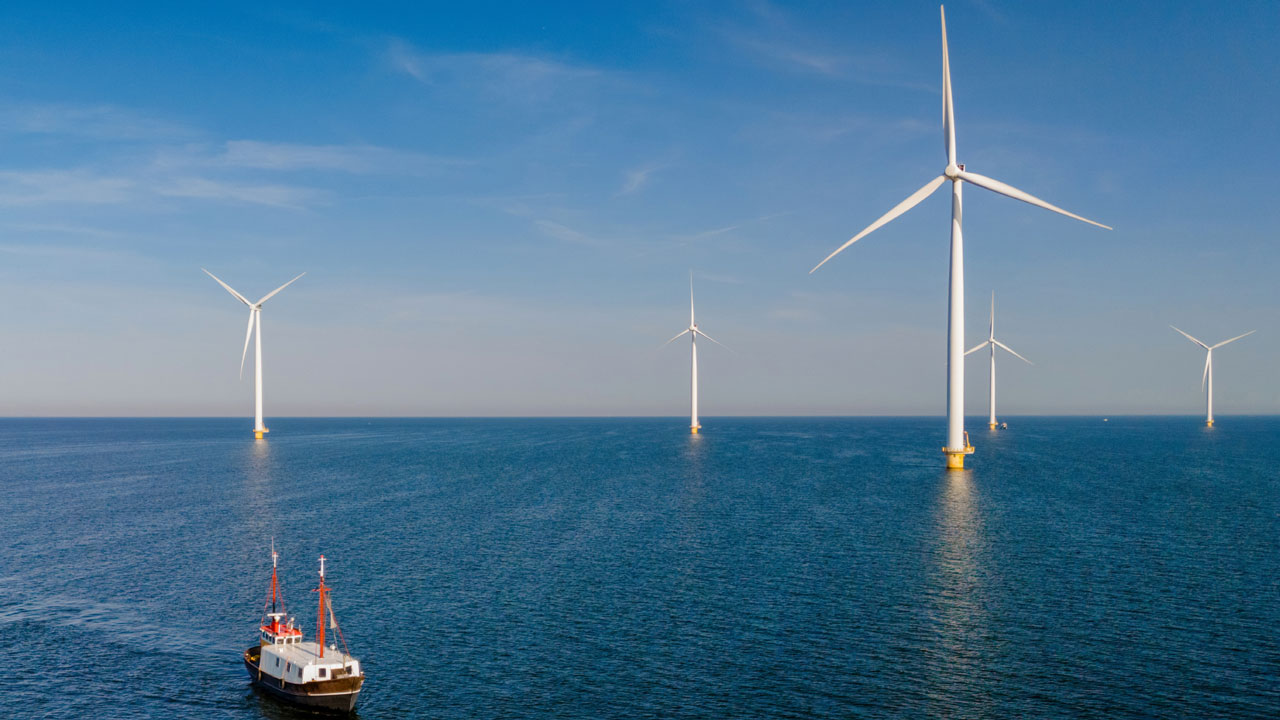
Tetra Tech’s offshore wind experts explain the financial and environmental benefits for clients in meeting international performance standards during permitting and consenting.
Numerous lease auctions are set to add to the offshore wind project pipeline in the next few years – with new entrants such as Portugal emerging alongside established ‘big names’ like the UK and Denmark. There are steps forward in countries such as Brazil and Greece, while growing markets like Australia are aiming for expansion. Despite this proliferation of possible development, there will be pressure to ensure that projects are financially viable.
Robust environmental and social assessment is a key step in this process, to de-mystify risk and incentivise developer participation. As industry regulation continues to evolve, international standards provide both a framework and a benchmark for assessment. The Equator Principles 4 (EP4) and the World Bank Group (WBG)/International Financial Corporation (IFC) Performance Standards are considered best practice. Read on to explore why EP4/IFC compliance makes good project sense.
Why IFC compliance in offshore wind consenting matters
It’s well worth understanding how IFC compliance (or lack of it) can impact projects – specifically, its relationship to local and international regulations, environmental impacts and mitigation, and the project’s financial viability.
The relationship between local, international and financial requirements
You’ll come across two similar terms in consenting – environmental impact assessment (EIA) and environmental and social impact assessment (ESIA) – but what’s the difference between them?
To obtain national permits for development in most countries, projects need to complete an EIA, which needs to be compliant with local regulations. This is often referred to as a “local EIA.”
To obtain external funding from international donors, projects will likely also need an ESIA. Funding bodies typically have additional lending requirements that are broader in scope than local laws/EIA, and the project ESIA can be used to address these.
Many International Financial Institutions (IFIs) are signed up to The Equator Principles, which use the IFC’s framework for understanding, assessing and managing environmental and social risk. Equator Principle Banks require the ESIA to be compliant with these to support eligibility for funding, including undertaking a related risk assessment process.
Other bodies include WBG and IFC, along with regional development banks—all of which publish their own environmental and social lending standards.
For past projects, we have addressed IFI requirements by producing either a local EIA that also incorporates the ESIA content or a separate ESIA addressing identified gaps between local and international requirements. Both approaches are equally valid, and the path chosen will often depend on the extent of the differences between the standards.
Early-stage assessment affects ongoing objectives
Despite being completed during early-stage development, the EIA/ESIA impacts the entire asset lifecycle. This is because measures it identifies to mitigate against environmental impacts are required throughout the offshore wind farm’s construction, operation and decommissioning phases.
Since the content of the assessment will have such lasting importance for the development, it makes sense to adopt robust, high-quality assessment practices.
In particular, international standards often request a higher level of stakeholder engagement, with an emphasis on ensuring vulnerable groups are considered. Early and meaningful engagement with the public, especially those that would be affected by the project’s impacts, has been shown to save time and money down the line by reducing risk. Not understanding the local community causes delays and could even stop the project altogether.
Quality is key
The quality of the project EIA/ESIA is particularly important because it affects the long-term sustainability of the asset, but also its potential for financial viability. What’s more, its effects can foster positive industry-wide benefits, such as protecting biodiversity, upholding human rights principles and championing the rights of Indigenous People. Following a robust, comprehensive approach for the EIA/ESIA helps to satisfy stakeholders, who may include governments and the public as well as Lenders.
Some more IFC compliance considerations
It’s clear that when it comes to the EIA/ESIA, “if a thing’s worth doing, it’s worth doing well”. Aside from supporting financial viability and legal compliance, here are some other impacts to consider.
- We frequently discuss the evolving nature of offshore wind regulations across the industry. Planning for IFC compliance from the early stages could help to insulate the project against such changes. For example, in Turkey, we are supporting the government in seeking to de-risk the offshore wind industry during early stage development, by identifying environmental and social constraints based upon compliance with international standards prior to site selection.
- Compliance with international standards can help develop the industry locally. IFC standards are based on a wealth of international experience; applying best practice helps to shape how markets develop. This article discusses other ways in which looking to international standards can support the energy sector.
- Navigating the often complex permitting process – successfully – requires a depth of expertise and solid previous EIA/ESIA experience. ESG support, for example, may be in limited supply in new markets; developers and investors will need to seek out support from advisors with a relevant track record. Note, too, the need for relevant, specific offshore and onshore capabilities matched to the demands of your project. Read more about leading the ESIA for Bandibuli (Firefly) in South Korea.
Support for IFC compliance in offshore wind development
Our team is currently engaged on a number of ESIA and Lenders Environmental and Social Advisory projects, such as our recently announced project leading the ESIA for Curonian Nord in Lithuania. Lithuania is a great example of a new market with a strong commitment to offshore wind. As with any new market, Lithuania will be looking to establish development processes that support industry growth effectively. Our specialists are adding value by providing IFC compliance on the biodiversity side, regarding climate change and for other relevant social impacts.
Tetra Tech has a well-established track record in high-quality impact assessment for both EIA and ESIA, with in-house experience across a wide range of technical specialisms and offices around the world.
Connect with us. Reach out to our offshore energy experts in the UK and Europe.
About the authors

Nicola Simpson
Nicola Simpson is director for offshore renewables and marine consenting and environment.
She works across core services in the UK and Europe. As a member of Tetra Tech’s Renewable Energy Global Strategic Initiative, she collaborates with our leaders in the U.S. and Australia and Asia Pacific.
Nicola’s clients span renewable energy, transmission, conventional power, and energy storage across marine consenting, compliance, and environmental services. She has over 20 years’ experience in offshore wind, including environmental impact assessment and site/route selection. She is also an experienced leader and grew her team from 16 to 75 people over three years.

Dorney Burgdorf
Dorney Burgdorf is a senior environmental and social program manager in our offshore energy services team.
Dorney is skilled at providing environmental and social risk assessment for public agencies, lenders, and private clients. She has more than 20 years’ experience working with clients to measure impact and navigate challenges in regional, national, and international projects.
Dorney has worked extensively in the developing world and specializes in social impact assessment with a focus on equity, land acquisition and resettlement, gender, and livelihood restoration impacts. She helps clients to ensure that the World Bank Group/International Finance Corporation’s (WBG/IFC) Performance Standards on Social and Environmental Sustainability are adequately addressed.

Morag Wilson
Morag Wilson is an associate director and senior environmental project director.
With more than 20 years’ experience building and directing high-calibre teams, Morag is skilled at executing large-scale public and private sector environmental projects across the UK and internationally.
Morag leads technical specialist teams in environmental impact assessment, ecology, marine ecology, air quality, noise, landscape and visual, cultural heritage, flood risk, health, waste and land use. Her projects have included onshore and offshore renewables and grid connections, built environment, rail, mining, flood defence, roads, water treatment, petrochemicals, oil and gas, and other infrastructure.