Tetra Tech’s commercial fisheries team explains how stakeholder engagement in floating offshore wind projects can lead to mutually beneficial outcomes.
Supporting interaction: offshore wind developers and fisheries
Tetra Tech’s commercial fisheries team, part of our offshore energy services group, was set up established to provide a dedicated resource for our clients who need to engage with fisheries. We are skilled at liaising with fisheries early in the process—the environmental impact assessment (EIA)—and throughout the subsequent stages of development. Our team emphasises the importance of communication with stakeholders to provide everyone with accurate, up-to-date information.
Mitigation measures and why they are needed
Different types of offshore development will interact with the marine environment in different ways. Specific to floating offshore wind, there are three factors to be aware of.
Developing different offshore environments
Floating offshore wind farms will be developed in deeper water – moving into a different environment to fixed foundation developments. As a result, the types of fishing activity that occurs could differ from that taking place in shallower water. Projects may also be sited closer to established fisheries.
Fish aggregation
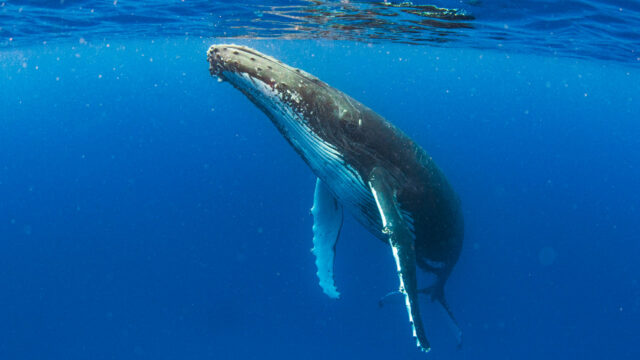
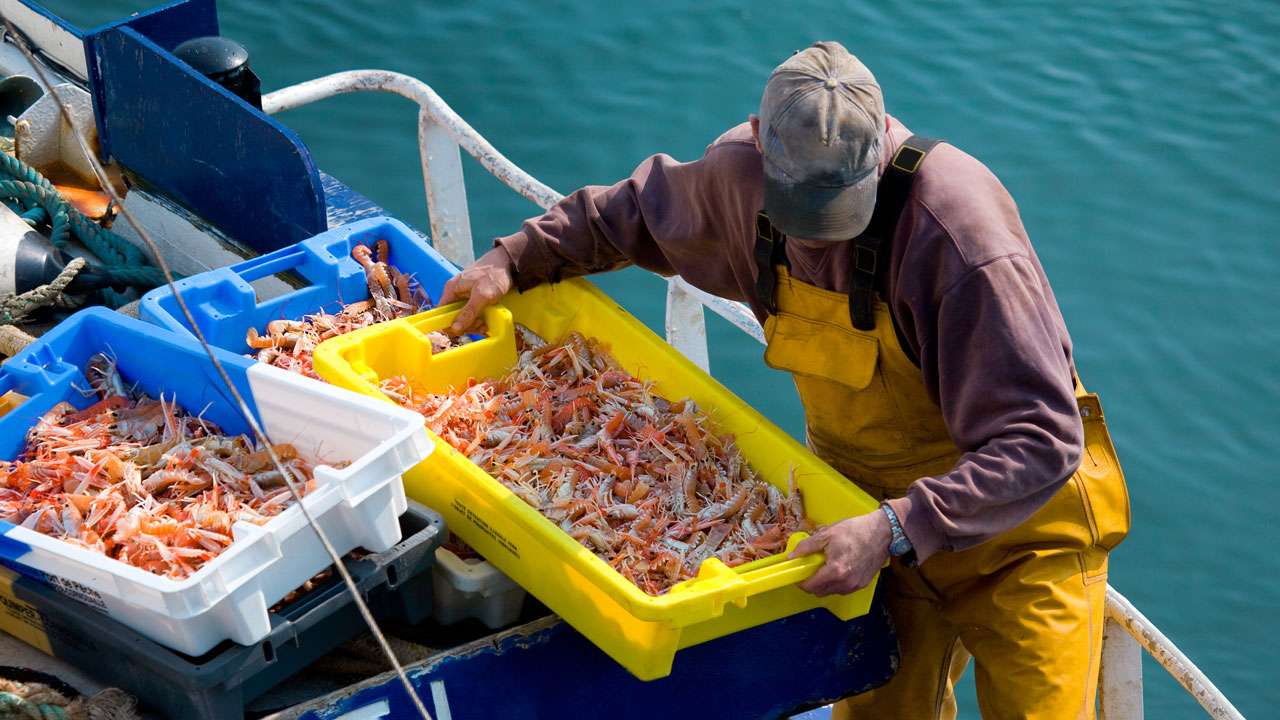
Because they provide shelter, offshore wind turbines can attract small fish and act like a fish aggregation device (FAD). When fish aggregate, bigger predators also arrive. Fishers will be attracted to the FADs and may wish to access these fish stocks, which requires discussion with developers.
Safety
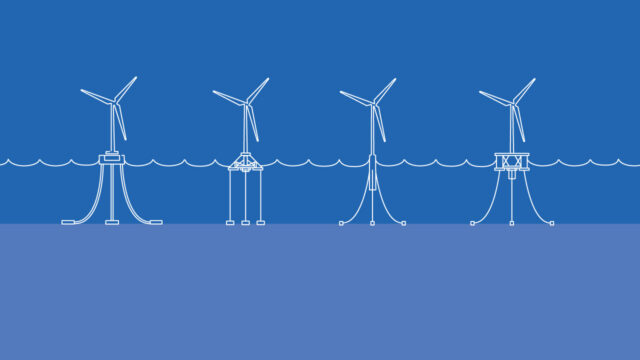
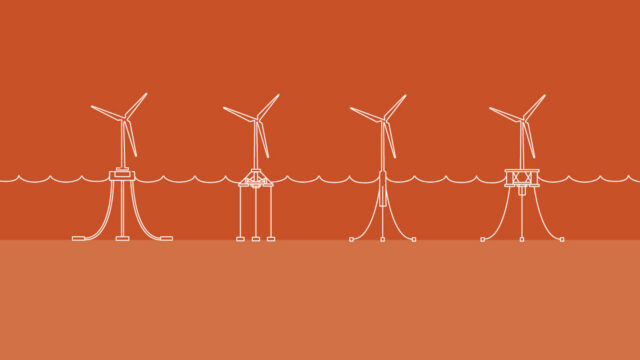
The footprint of a floating offshore wind turbine is different to a fixed turbine because it uses a number of anchors, rather than a fixed foundation. Buoys will be needed to mark out where anchors are. Fixing cables will also prevent fishing inside the anchors as this would be hazardous. To protect fishers, their boats and equipment, and the turbines, cables, and anchors, exclusion zones can be necessary; these can be the subject of much discussion regarding their placement.
Factors for developers to consider
Clients often ask what stage they should engage with fisheries stakeholders. In our experience, effective communication from the start supports long-term success for everyone throughout the project. We’ve identified a few key factors for developers to consider.
Mitigation measures
Mitigation and monitoring plans will need to investigate, decide, and record what mitigation is needed, how it will occur, and what area it should cover. It is particularly important to communicate timescales well, helping stakeholders to manage the speed of change and plan effectively.
Siting and design
Many floating offshore wind farms are still at demonstration or design stage. This means that there is variation at industry level, with the possibility of further technological development around aspects such as anchors and moorings. The site itself also needs to be considered. For example, some sites may need to include defined corridors to allow vessel transit.
Evolving regulatory frameworks
Regulations will continue to evolve as the offshore wind industry develops and expands. Although some of the industry’s current regulatory frameworks were designed for fixed offshore wind, we’ve discussed how various regions are setting their sights on expansion—making it likely that regulations will need to be reviewed in the future.
Better communication presents opportunities for stakeholders
The concerns of different groups need to be handled with sensitivity, and discussions around the co-existence of different offshore industries can be found around the world. Our view is that there are real benefits to co-existence. For example, the presence of a wind farm could allow areas of seabed, marine environment, and certain fish species to regenerate, leading to an increase of fish stocks.
As the energy industry moves towards net zero, we can have a positive impact on the marine biodiversity around the coast. We must keep these benefits a priority.
For our commercial fisheries team, one aspect of this is the ability to work closely with researchers. The baseline studies required in consenting floating offshore wind farms provide an opportunity to improve understanding of the marine environment, such as information about the site, the species present, and impacts of previous activity. This is knowledge that future developments, developers and stakeholders could also benefit from, ensuring that floating offshore wind grows with confidence based on robust evidence.
How Tetra Tech can help
Our team has regulatory backgrounds working with commercial fisheries and a strong understanding of how it works and why. We have wide experience of liaising with multiple stakeholders in their own environments, with an awareness of the information that will be most important to each group. These stakeholders can include NGOs, conservationists, and universities as well as fisheries representatives.
We have a connected understanding of the wider ecosystems in which our clients operate. Our fisheries experts work alongside our experts marine consenting and environment team, as well as marine ecologists, to provide industry-leading service for offshore energy developers.
Connect with us. Reach out to our offshore energy experts in the UK and Europe.