
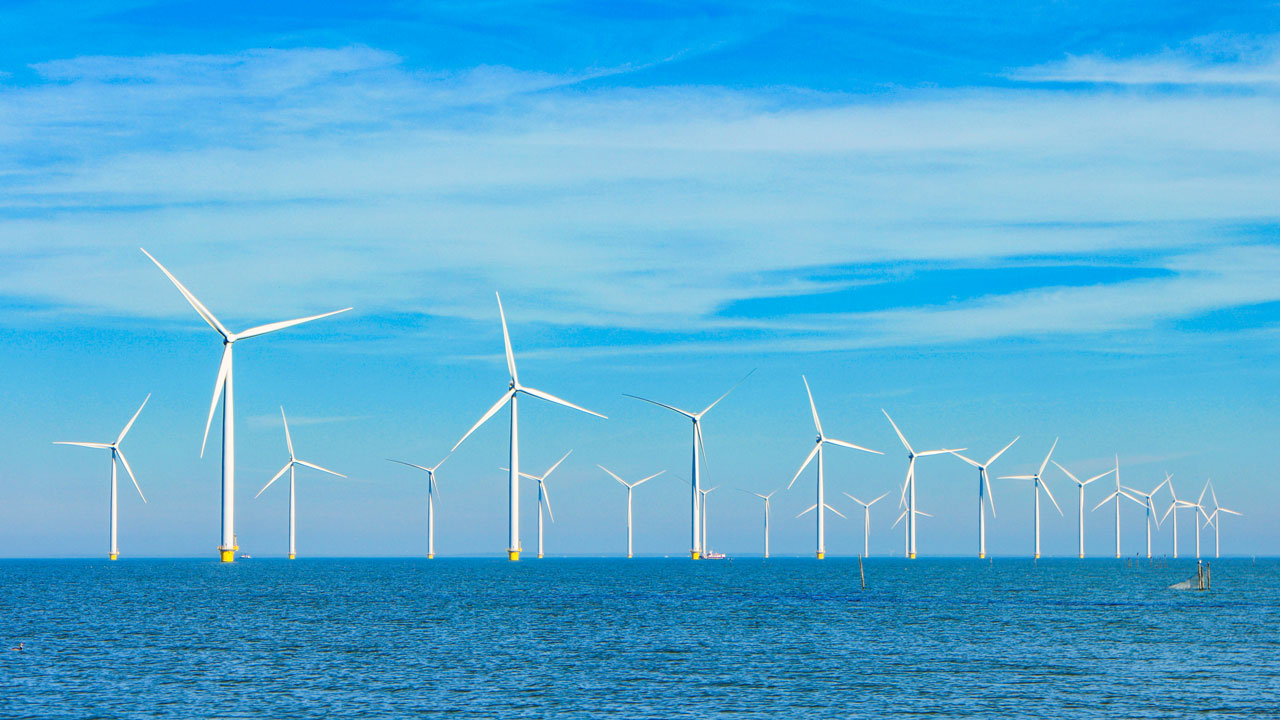
Tetra Tech’s Emily King, senior associate director, explores the six key areas in which offshore energy developers should consider the need for a cumulative effects assessment.
With the rapid growth of offshore energy projects in the Celtic Sea, cumulative effects assessments—as required by UK marine regulations—are becoming increasingly important in leasing rounds. With Tetra Tech’s experience working across the project lifecycle, six key areas should be considered by clients putting a project forward for approval.
Floating offshore wind
Celtic Sea projects will need to consider how they develop their project design envelope (PDE). PDEs are relatively refined for fixed turbines (i.e. more mature technology) but less so for floating turbines. On some of our recent projects, we have seen very large project design envelopes to allow flexibility or further refinement at the construction stage. When multiple projects include large project design envelopes, the cumulative effects will be even greater.
Ports
During construction, floating offshore wind projects may require wet storage (an area at sea or at port where turbines are ‘stored’ before installation in the array area). This is a relatively new consenting challenge—for regulators as well as developers—so it comes with some unknowns. In the case of multiple projects aiming for consent at the same time, collaboration between different developers could help, but project flexibility would need to be considered. Learn more about wet storage in this article by Ruth De Silva.
Onshore cumulative effects
We have seen “squeeze for space” in the North and Irish Seas, with multiple projects connecting to same or nearby grid connections. In the South-West, there would also need to be National Grid updates to allow these offshore wind projects to connect to the grid. This is a relatively new territory for the South-West, which hasn’t had this type of infrastructure before.
Our team has an in-depth knowledge of onshore constraints in this area, having undertaken the site selection for the Atlantic Array offshore wind farm, which was proposed to be located between north Devon and south Wales. Developers on similar projects may need to consider environmental impacts and design constraints on beaches where it’s challenging to make landfall, as well as disruption to these areas. The associated challenges are also new and unfamiliar to stakeholders in the South-West.
Marine mammals
Both floating and fixed bottom offshore wind projects may use piles to fix the turbines, and other offshore structures (such as platforms and substations), to the seabed. Rarely do the noise effects from a single project have a significant effect, but multiple projects in the same area could affect certain populations of marine mammals. This cumulative effect would apply to both UK and Irish Celtic Sea projects; however, DEFRA’s January 2025 guidance now requires that all offshore wind pile-driving activity in English waters demonstrates that best efforts have been made to reduce underwater noise. Last year, Tetra Tech RPS Energy completed a project advising DEFRA on the use of underwater noise abatement systems (NAS), which will be a key tool in addressing this challenge. Read more about floating offshore wind and marine mammals here.
Offshore ornithology
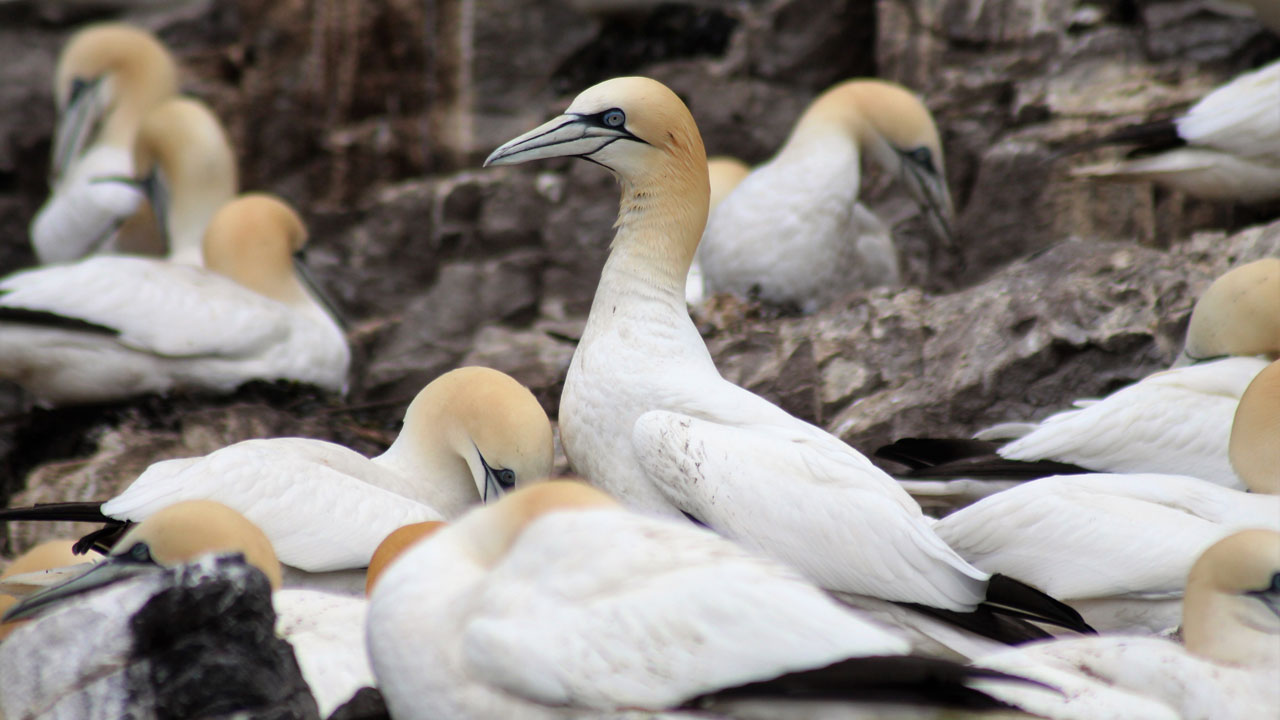
As with marine mammals, this cumulative effect presents transboundary considerations. The two main impact ‘pathways’ are collision risk and displacement (including barrier effects), which both affect different species. Each project will undertake the analysis of these two impacts following Natural England and Natural Resources Wales guidance. They will also need to prove that embedded mitigation has taken place: the most common mitigations come in the form of design to avoid collision risk and reducing the wind farm footprint to mitigate against displacement. Note that birds affected by cumulative effects may be counted by each project, i.e. counted twice, but since this level of precaution is required, it needs to be recognised as part of the assessment process.
Other marine users
Other marine users such as shipping and commercial fisheries could be affected by a squeeze for space related to both UK and Irish Celtic Sea projects. For example, projects could intersect with much-used ferry and cargo routes into and out of the port of Milford Haven. There is a need to work collaboratively with other developers and stakeholders to understand and resolve or mitigate effects, finding ways for offshore wind and other marine users to coexist effectively. Tetra Tech has firsthand experience of assessing and identifying mitigation (including co-location) measures for these types of effects, having recently completed projects in the eastern Irish Sea that have intersected ferry routes and been located in key fishing grounds. Read more about cumulative effects from our colleagues in Australia.
Tetra Tech explores key challenges for developers. Our offshore wind consultancy team provides solutions and insights for developing in the Celtic Sea.
How Tetra Tech can help
The offshore wind industry has continued to evolve to understand and address development effects. Now, it has reached the point where the combination of effects from different projects presents the “next big challenge” for the industry, which will continue as it grows.
Offshore wind developers need to be highly aware of the touchpoints where cumulative effects are most likely to be an issue. These need robust yet proportionate assessment, matched by appropriate mitigations.
Finally, there are a number of challenges where collaboration between different developers, projects and industries offers a way to mitigate against cumulative effects. Working together could become a repeated theme in finding the best solutions. Tetra Tech is well versed in cumulative effects assessments with a deep bench of expertise in our UK’s offshore energy team.
Read more from Emily about cumulative effects assessment
Connect with us. Reach out to our offshore energy experts in the UK and Europe.
About the author

Emily King
Emily King is a senior associate director in Tetra Tech’s UK’s marine consenting and environment team.
Emily’s work focuses on project management for offshore environmental impact assessments. She has a wealth of experience supporting clients in gain and comply with all necessary marine and environmental permits/consents. She has specialist experience in the environmental impact assessment (EIA) process.
Emily has project directed and managed the EIA and habitats regulation assessment HRA for several offshore wind farms, including Mona, Morgan, Berwick Bank, Hornsea One, Hornsea Two, Hornsea Three, and Atlantic Array. She coordinates and manages consulting projects from initial site selection to DCO application and during the examination phase.