Tetra Tech’s Kevin Linnane, senior associate director and marine ecologist, explores challenges and issues clients should consider in the permitting and approvals process for floating offshore wind.
Floating offshore wind is just starting to develop projects on a commercial scale. As it evolves, there will be a steep learning curve for developers and regulators alike. However, previous experience in deep water—for example, from oil and gas projects—will prove invaluable at the consenting stage, alongside experience from fixed foundation offshore wind.
Tetra Tech’s marine consultants are experts in the AKA permitting and approvals processes with experience addressing project challenges. We have built in-depth understanding of different marine environments and project types having supported major projects including fixed offshore wind, oil and gas, and currently, floating wind in the Celtic Sea and Scottish waters.
In this article, we lay out seven key challenges—including what we’ve learned—for clients to consider when developing an offshore wind project.
1) The regulatory environment is always subject to change
As floating offshore wind grows, experience of complex permitting will prove highly valuable. The range of experience will also matter: deep water knowledge will count, but so will nearshore and land-based when factors like anchoring, cabling, and grid connection come into play.
As for the regulatory regime, the UK (for example) has different regulators for offshore oil and gas and offshore wind. Different regulators will prioritise different issues. And despite the similar environments for floating wind and oil and gas, renewables projects can expect a higher level of scrutiny, sensitivity, and evidence gathering—especially in areas where there hasn’t been previous development.
2) Each region will have its own specific concerns
Some issues will be common to the floating offshore wind industry at a global level—where knowledge of international best practice can be applied. However, there will also be regional variations that could make a big difference. Alongside different regulatory regimes and levels of industry maturity, there will be different priorities, energy strategies and stakeholders. Although not unique to offshore wind, this will be an overarching concern for international developers as the industry heats up worldwide. On a related note…
3) Stakeholder engagement will be crucial
Stakeholder engagement highlights concerns and spotlights technical questions that need to be asked and answered. Here’s an example. Tetra Tech has international experience of stakeholder engagement on deep-water issues; on one Falklands oil and gas consultation, we received questions about the risk of invasive species being transferred in ballast water for floating structures. This was a key concern for Falklands Islands stakeholders because of the unique habitats in their marine waters and the relatively isolated location, and therefore increased risk of invasive species causing problems.
Although some regions have regulations to prevent issues around invasive species, others may not. As floating offshore wind develops, transporting equipment out to sea will be much more common. Oil and gas projects will be more used to this, but renewables developers potentially less so. It will also become more of a focus as the necessary supply chains develop. The key message is to value local knowledge, be aware of local considerations and recognise that developments aren’t ‘one size fits all’.
4) Structure movement means new challenges
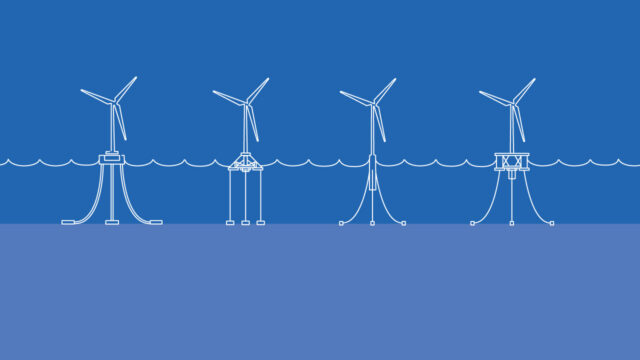
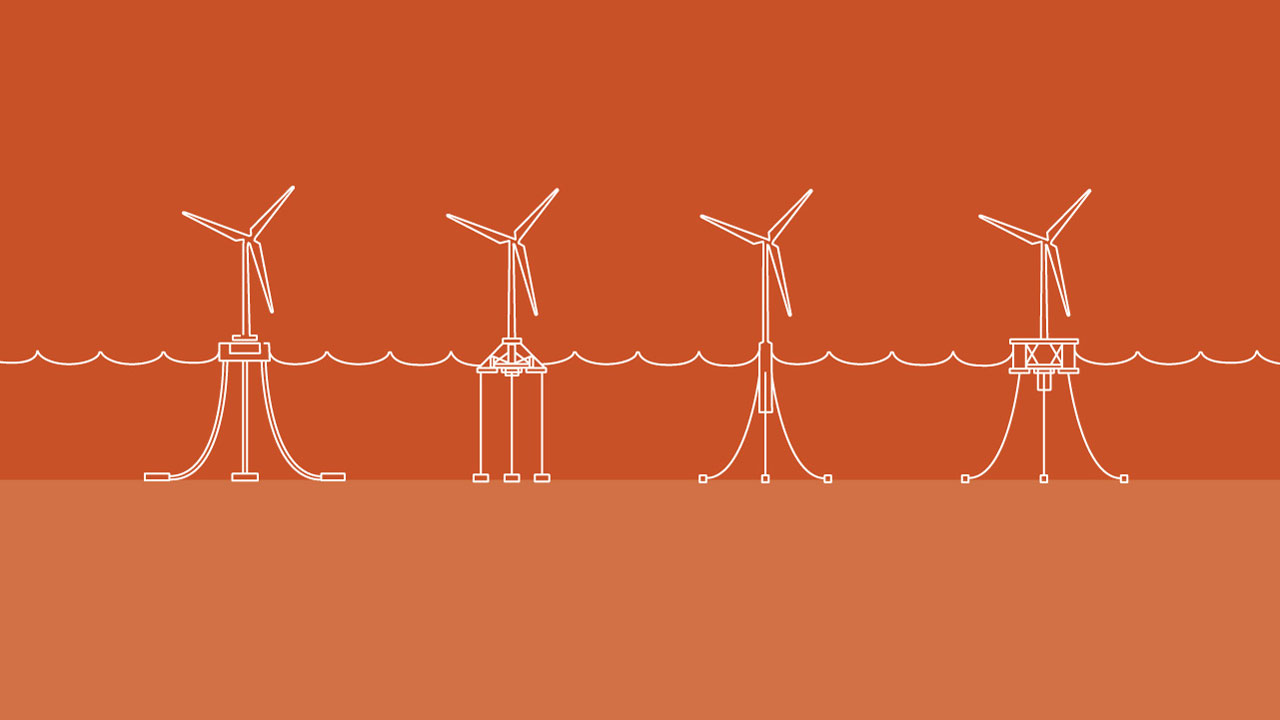
The ‘everyday’ movement of the floating structures themselves will also affect the subsurface infrastructure such as mooring lines and cables. Projects should expect to allow bigger exclusion zones and safe passing distances for vessels than for fixed wind farms, accommodating for floating turbines’ multiple moorings and larger seabed footprint.
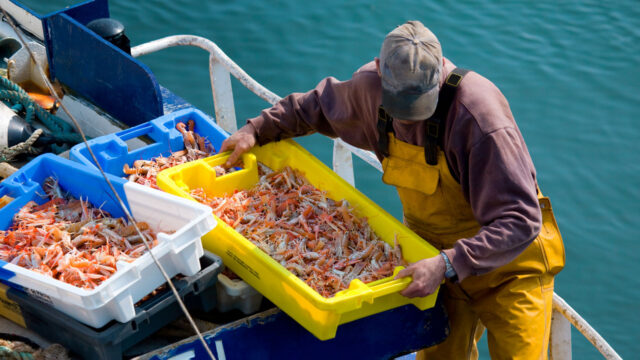
Environmental impact assessment (EIA) and modelling will support thorough understanding and planning, while here again, there’s an important role for stakeholder engagement; structure movement and exclusion will be of concern to groups such as commercial fisheries and shipping operators.
The kinds of ecological assessment experience associated with offshore oil and gas environments will also prove especially relevant. Assessors will be looking at how sensitive and highly diverse habitats would be affected by effects such as anchor ‘chain slap’ on the seabed or turbidity and sedimentation (which Tetra Tech models in-house), as well as employing knowledge of different international protection statuses. Sensitive marine habitats are found across the globe; key habitats such as reef habitats and herring spawning beds may be given unique protection. Site-specific survey data on sensitive habitats can also be a good way to engage with government stakeholders, providing data that is otherwise difficult to obtain and promoting/enabling proper management of sensitive areas.
5) Assessments could become more challenging as the industry grows
Floating wind assessments will not only be made more complex due to the newness of the industry, but there is also a key misunderstanding to contend with: that floating offshore wind only has a small impact on the seabed. This may be more true of ‘tension leg’ or similar designs, which avoid ‘anchor drag’, but with semi-submersibles, it could be the opposite. Given the number of anchors needed, a wider (rather than smaller) area might be affected. This makes it difficult to ‘microsite’ (decide a specific location) within a wind farm array area. Site selection will therefore prove very important.
Site selection could also be more challenging for areas that haven’t had much previous investigation. The UK and Norway have had numerous prior geophysical studies and gathered a wealth of benthic and seabed data across relatively extensive regions, but a region like California may not have the same data coverage. In either case, habitats can change, so up-to-date data is key and scheduling new surveys is advisable.
This also applies to marine archaeological features which, like reef habitats, are very sensitive to seabed disturbance, often requiring micrositing of infrastructure to avoid disturbing them. In the UK, Norway, parts of Asia and other jurisdictions, undersea archaeology will be a key feature of surveying potential sites for floating wind development. In the regions mentioned, oil and gas developers will know that discovering shipwrecks is a surprisingly regular occurrence. For floating offshore wind, the standard management approach of micrositing may be much more challenging due to the number of structures involved.
6) Health and safety compliance is complex
In offshore oil and gas, the risks associated with unplanned events are well-known and robust regulations and guidance exist with the aim of preventing these occurrences. As a result, it is recognised industry good practice for offshore oil and gas companies to have documents and procedures such as an oil spill contingency plan (OSCP) in place, with regular drills to ensure effective application of such measures. For floating wind, locating missing people or assessing potential for collision/allision by vessels are more applicable scenarios than a spill, but planning and modelling will be important actions.
Tetra Tech has long experience in maritime safety and emergency response planning, and conducted the UK’s first wind farm emergency response scenario exercise for the Ormonde offshore wind farm. The case study below discusses how we support safety planning for coastguard clients across Europe.
7) There is no ‘rinse and repeat’ from oil and gas
The examples above highlight the value of having broad marine experience in permitting major infrastructure in offshore deep water. However, it’s worth noting that developers from the offshore oil and gas sector may find some aspects of permitting renewables projects surprising – the different project types won’t run in identical ways:
- Stakeholder interest in new renewables projects is highly engaged, whereas this isn’t always the case for conventional energy projects being developed far offshore, where the number of stakeholders can be lower.
- Whereas the offshore oil and gas consenting process is well-established, and therefore much more streamlined, offshore wind and particularly floating offshore wind consenting are still in their relative infancy. Therefore, permitting an offshore oil and gas project will generally take months, costing thousands, as opposed to offshore wind which can take years and cost millions.
As the energy transition continues to deliver clean and decarbonised energy, there’s no better time to draw on the expertise from other project types—but this isn’t just a ‘nice to have’. Instead, it could be critical to achieving development deadlines, with the right knowledge and experience ensuring environmentally responsible, safe, and cost-effective development.
Tetra Tech explores key challenges for developers. Our offshore wind consultancy team provides solutions and insights for developing in the Celtic Sea.
Connect with us. Reach out to our offshore energy experts in the UK and Europe.
About the author

Kevin Linnane
Kevin Linnane is a senior associate director, Marine Ecology & Habitat Regulation Assessment, working on energy and infrastructure projects in the UK and internationally.
Kevin is a project manager and marine ecologist with over 14 years’ experience as a marine consultant. He provides consenting/permitting support and advice to projects including offshore wind and renewables, oil and gas, interconnectors, aggregates, and ports and harbors. He has a PhD in marine ecology and specialist knowledge of the effects of marine activities on benthic and fish ecology.
Kevin is a skilled Environmental Impact Assessment (EIA) practitioner in support of Development Consent Order and marine license applications. Kevin also has considerable expertise in Habitat Regulation Assessment. He has excellent working relationships with a range of stakeholders including consenting authorities across the UK and Statutory Nature Conservation Bodies during all stages of consenting and post-consent. This has included developing appropriate management and mitigation measures to minimize effects of marine activities and industries on the environment.
The project featured in this article was undertaken by RPS, A Tetra Tech Company and originally published on RPSgroup.com. In March 2026 RPS rebranded to Tetra Tech.