Tetra Tech’s Purshotam Juriasingani discusses how high-frequency ultrasound can destroy per- and polyfluoroalkyl substances (PFAS) in contaminated groundwater through a field-scale treatment system.
This article was originally published in Groundwater Monitoring & Remediation, Volume 46, Issue 4. Read the full article.
Firefighting foams containing PFAS have been widely used for fire training and emergency response, resulting in PFAS contamination in groundwater, surface water, and soils. Current field-scale treatment of PFAS-impacted water has largely relied on technologies that concentrate PFAS rather than destroy them, creating secondary waste streams that still require management.
Applying high-frequency ultrasound
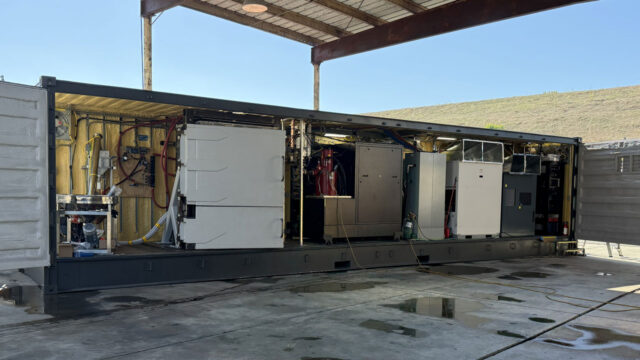
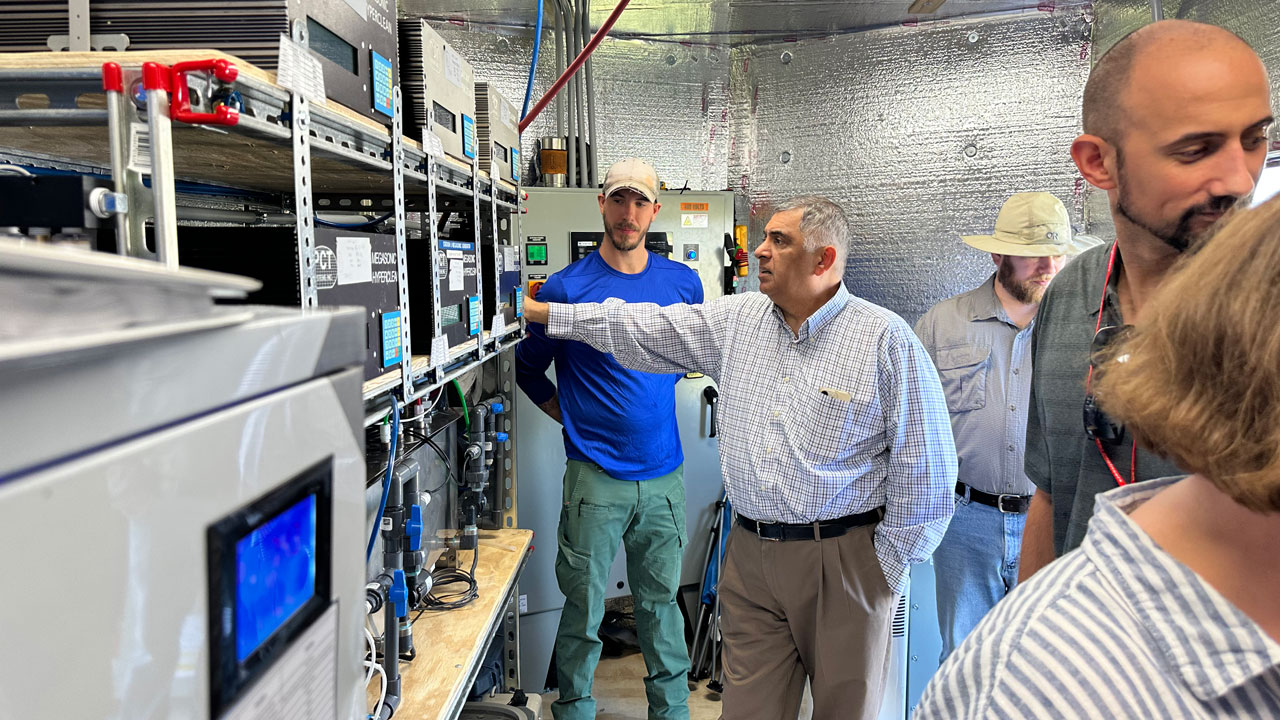
To evaluate an onsite PFAS destruction approach, a field demonstration was conducted at a U.S. Department of Defense site in Nebraska using a mobile high-frequency ultrasound treatment system. PFAS-impacted groundwater was pumped into the system, where acoustic cavitation created localized high temperatures and pressures to degrade PFAS.
The demonstration achieved PFAS degradation efficiencies ranging from 68 to 91 percent. The average decrease in adsorbable organic fluorine after treatment was 63 percent, indicating that destroyed PFAS were likely being mineralized without forming excess by-products.
Advancing onsite PFAS treatment
The results demonstrate the potential for high-frequency ultrasound to treat highly contaminated groundwater within source zones, helping reduce the amount of PFAS transported downstream to sensitive environments and resources. Tetra Tech has a proven track record of evaluating and scaling innovative technologies for the treatment and destruction of PFAS. Learn how we are helping our clients proactively manage PFAS.
Read the full article, “Field Demonstration of a High-Frequency Ultrasonic Treatment Reactor for PFAS Destruction in Contaminated Groundwater.”
About the author

Purshotam Juriasingani
Purshotam Juriasingani is a vice president who leads Tetra Tech’s research and development for emerging contaminant treatment technologies.
He has more than 28 years of professional experience in environmental program management and remediation technology innovation, design, and implementation. Purshotam has extensive experience with thermal, physical, biological, and chemical treatment technologies and leads Tetra Tech’s program to develop proof-of-concept treatment technologies and processes for PFAS compounds. He also works as a principal investigator for U.S. Department of Defense projects focused on site demonstration of PFAS treatment technologies.
His experience includes leading multi-location, cross-functional teams and applying innovative remedial technologies for the treatment of both conventional and emerging contaminants in soil, groundwater, and sediments. He holds a Bachelor of Science in civil engineering, Master of Science in environmental engineering, and is a registered professional engineer in Texas and Montana.