

Tetra Tech’s Thomas Bradshaw and Andrew Horwood discuss how we use our permafrost expertise, cold regions experience, and in-house innovation to overcome the challenges of developing transportation infrastructure in Arctic and northern regions in Canada.
What is the main challenge in transportation development in the Arctic?
Constructing roads, highways, or aerodromes in Arctic and northern regions presents many challenges. These areas of northern Canada are isolated and remote and, while the summers are beautiful, construction often needs to occur in the winter when it is cold and dark. The costs are high, and access to construction equipment and materials can be challenging. Access to sites may be limited to seasonal winter snow and ice roads and, although winter can feel long, this access is not reliable due to climate change.
Even upon completion, the linear infrastructure remains vulnerable to the perils of climate change, a risk shared with road, highway, or aerodrome development in southern Canada, with one crucial difference—permafrost. Permafrost, a permanently frozen layer of soil or rock bound together by ground ice, can be the strength and resilience of transportation infrastructure if it stays frozen, or can result in degradation and failures if it thaws.
How is this challenge overcome?
In some areas permafrost is discontinuous, so with proper characterization and planning, it can be avoided. Where permafrost is continuous, or cannot be avoided, the key is to design and construct the linear infrastructure to preserve the frozen state of the permafrost. This requires understanding the permafrost and geotechnical conditions, considering drainage requirements, and evaluating the potential changes to the climate early in project planning and design. These considerations form the foundation for developing adaptive solutions that minimize permafrost disturbance and enhance climate resilience. Some of these solutions include fill-only construction techniques, aggrading (i.e., raising) permafrost into the embankment, using cold region-specific foundations founded in permafrost (e.g., thermopiles, adfreeze piles) for bridge abutments and piers, and employing passive ground cooling technologies and winter construction methods.
How is Tetra Tech assisting clients in the development of transportation infrastructure in permafrost regions?
For each project, Tetra Tech assembles a multi-disciplinary team of engineers, scientists, and technologists as well as engagement, environmental, and regulatory specialists with relevant transportation development experience in cold regions. While the geotechnical engineer on the team will be the lead permafrost expert, each other team member will have experience working on linear infrastructure in permafrost regions. Everyone from the project manager to the wildlife biologist, transportation engineer, survey technologist, water resources engineer, climate specialist, and construction manager understands how their role on the project contributes to resilient designs that preserve permafrost for the life of the project.
The teams work collaboratively from the project’s initial conceptual and planning stages through the environmental review, field investigation, design, and construction stages to completion. Avoidance or preservation of permafrost will be among the top priorities from the start, with all team members contributing knowledge from their respective disciplines and experience. The geotechnical engineer will provide initial information to identify ice-rich and thaw-sensitive permafrost areas that the transportation engineer will consider when routing or siting the linear infrastructure. Climate specialists provide climate projections that inform early project planning and are incorporated into detailed modelling and design to adapt embankments, alignments, and watercourse crossing foundations.
Cost considerations are also incorporated from the project’s early stages to ensure that the linear infrastructure is affordable to build and operate.
Tetra Tech offers comprehensive lifecycle services for northern transportation infrastructure, supported locally by our northern Canada offices in Yellowknife and Whitehorse. Our team works closely with local Indigenous Peoples through business partnerships with Indigenous organizations, beneficiaries, and participants under Canadian land claim agreements. Our Indigenous business partnerships in northern Canada include Kiggiak-EBA Consulting Ltd. in the Inuvialuit Settlement Region, Northwest Territories; Nehtruh-EBA Consulting Ltd. in the Gwich’in Settlement Area, Northwest Territories; and NELPCo with Na-Cho Nyäk Dun Development Corporation, Yukon Territory.
About the authors

Thomas Bradshaw
Thomas Bradshaw is a senior geotechnical engineer and a team lead with Tetra Tech’s Arctic Engineering Practice.
He is a professional engineer registered in Alberta, Newfoundland & Labrador, Northwest Territories, Nunavut, and Yukon Territory, with more than 15 years of experience on civil, mining, municipal, and transportation projects in northern Canada, Greenland, and Alaska. His areas of expertise include multi-disciplinary project management, regulatory permitting, and infrastructure inspections as well as geotechnical and permafrost engineering, including subsurface investigations, aggregate/granular source assessments, and foundation design.
Thomas has worked on large-scale linear infrastructure projects in areas of continuous and discontinuous permafrost, including aerodromes, bridges, highways, fiber lines, pipelines, and resource roads. He is a contributing author to several Canadian Standards Association (CSA) publications related to linear infrastructure planning and development in permafrost regions.
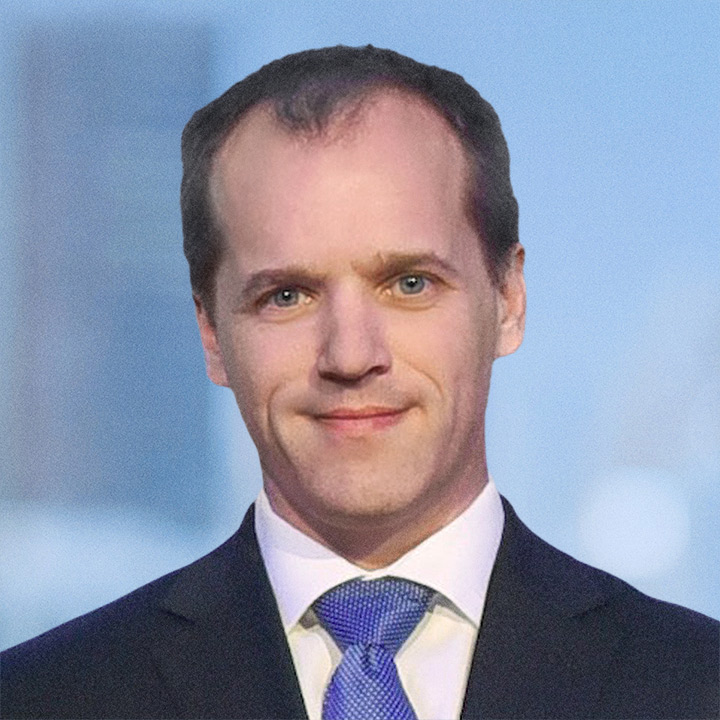
Andrew Horwood
Andrew Horwood is the regional manager for Tetra Tech’s Northern Transportation Practice.
He has more than 25 years of experience leading multi-disciplinary projects, including 20 years of direct experience in northern environments. His projects have covered a wide range of infrastructure, including road rehabilitation, roads through underdeveloped areas, ports, buildings, traffic and safety studies, bridges, geohazard mitigation and stream and shore rehabilitation. He has worked from the initial planning stages to construction completion in a variety of roles including as an owner’s engineer on design-build projects and a project manager for Inuit, First Nations, municipal, federal, territorial, and provincial clients.
Andrew’s experience in the North provides him with unique skillsets, including the ability to efficiently design and construct in permafrost environments, manage the challenges of remote northern logistics, address the unique constraints presented by northern environmental conditions, and interact respectfully with northern communities.