
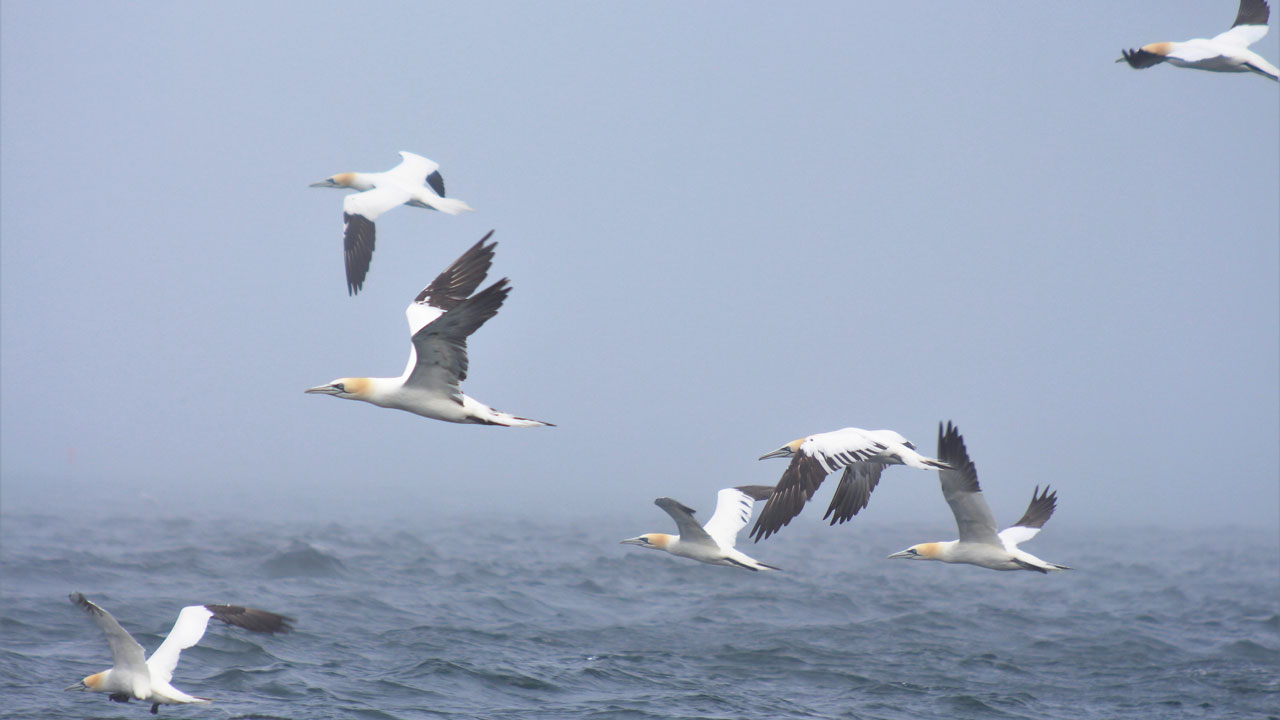
In this article, we analyse learnings from an offshore ornithology study and how they can help advance the way we approach environmental impact assessments for offshore wind consenting and permitting.
Concerns regarding seabirds can be one of the biggest risks to offshore wind farm project development. We have come a long way in recent years, with novel research projects helping us to understand how seabirds respond to offshore wind farms, but there is still a lot to learn.
Since 2019, Tetra Tech has been working with our partners, Denmark-based DHI Group, on a study commissioned by Vattenfall of bird flight behaviour around offshore wind turbines. The research is intended to improve knowledge of the offshore environment and help improve the accuracy of offshore wind-related environmental assessment and planning.
The study uses integrated radar technology, software-linked to cameras, to monitor the flight patterns of gannets, kittiwakes and large gulls flying through and close to the wind farm. It delivers data on bird tracks (where the birds fly), as well as very detailed behavioural information about how they approach turbines.
This study is so important because of the uncertainty around bird behaviour—a factor that makes environmental impact assessments (EIAs) more difficult and creates a challenge for offshore wind consenting. This in turn creates a potential barrier to offshore wind sector growth, so the Vattenfall Aberdeen study has three important and positive potential impacts:
- Resolving uncertainties and decreasing the possibility of overestimating effects on seabirds in the EIA stage
- Reducing risk in the consenting process
- Improving the ‘consentability’ of potential development sites
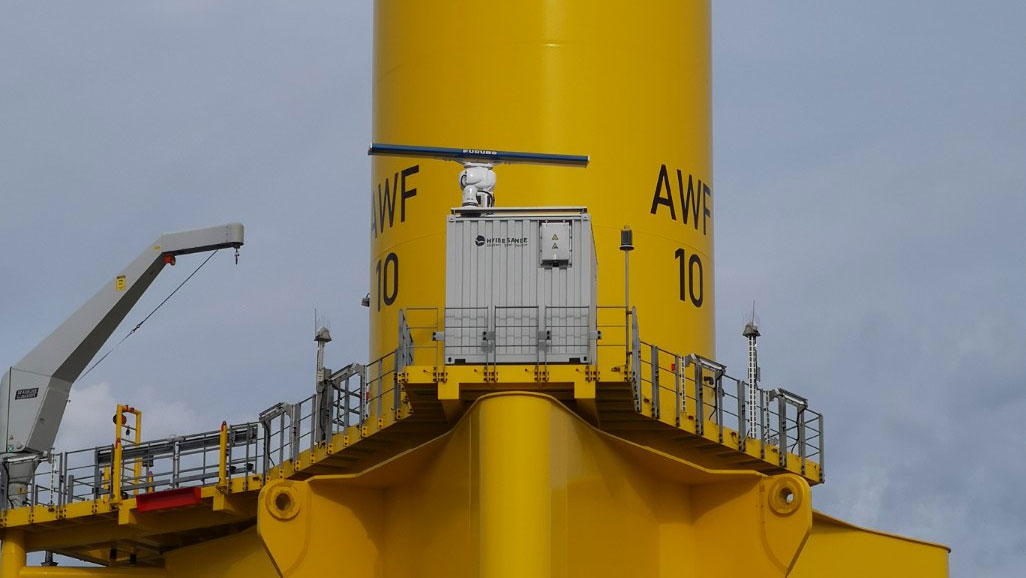
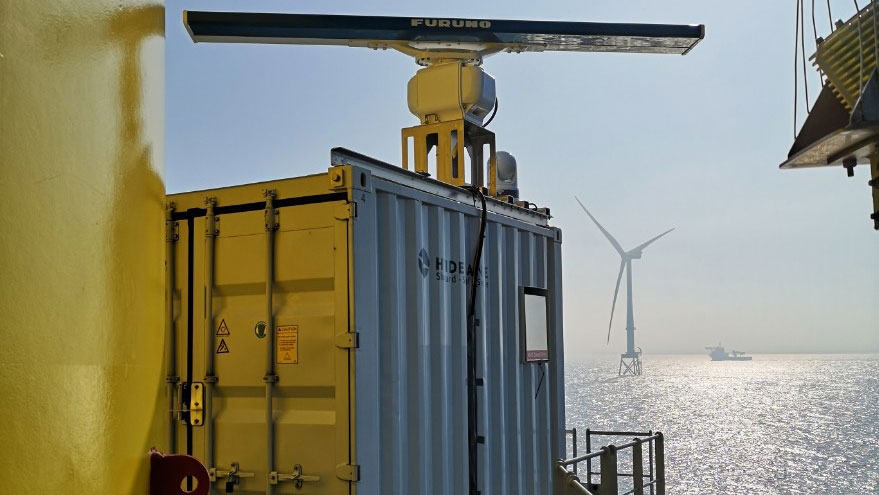
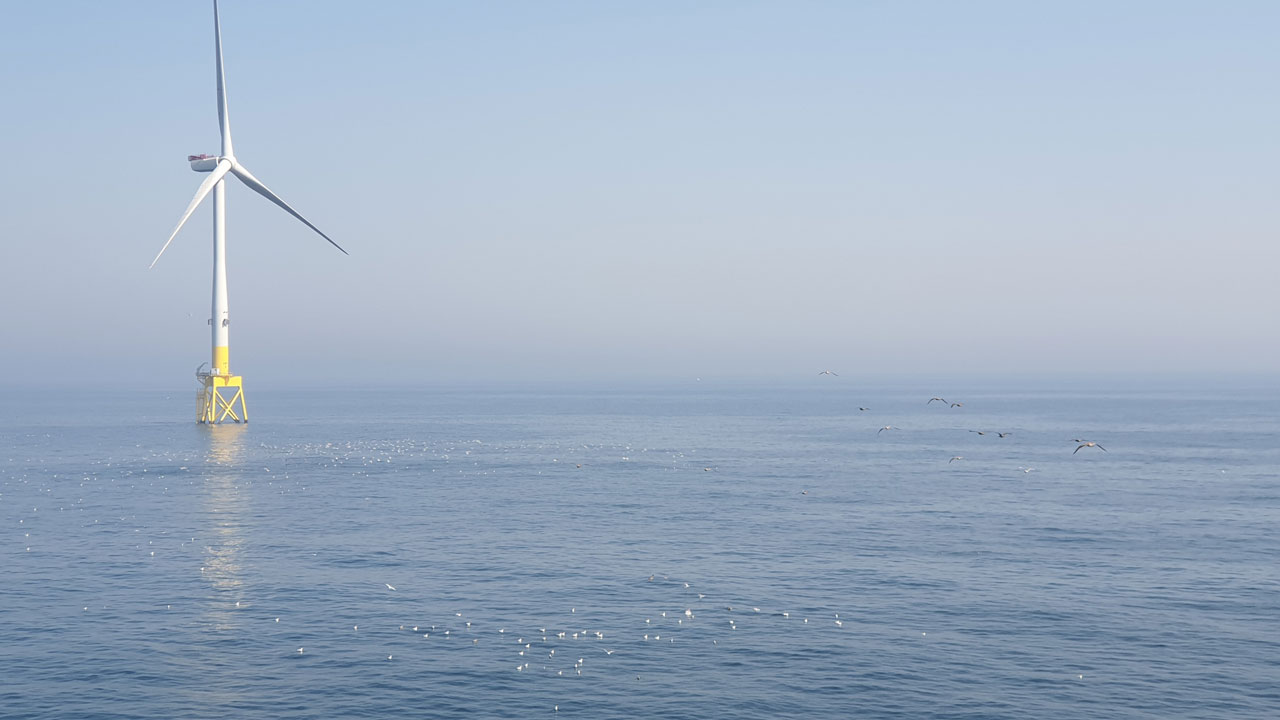
Advancing the study of offshore bird behaviour
The Aberdeen study’s focus is on improving the behaviour models used to predict wind farms’ effects on birdlife, aiming to achieve greater accuracy and understanding in that process. This could help decrease the complexity of steps and margin for error that currently exists in the EIA.
The technological scope of the project has also widened as AI has been brought in to solve the problem of ‘empty videos’, where the camera’s motion trackers would be confused by other objects in the field of view. On average, researchers would initially review several thousand study videos per month, but cameras could be triggered by unrelated motion, such as boats, waves or turbine rotor movements. Introducing an advanced motion tracker with AI that recognises birds meant that the intensive review process could be cut down to several hundred videos, all relevant and featuring bird activity. The AI is also in-situ, integral to the system, rather than needing to be processed offline as a separate stage. All this makes a clear case for research and development (R&D) and technological investment to speed up and improve the baseline study processes related to offshore wind development.
In terms of study results, these are educational on behavioural responses to turbines and ‘avoidance’. There are three types of avoidance behaviour that researchers look at:
- Macro-avoidance: avoiding an entire wind farm area
- Meso-avoidance: avoiding the turbines within the wind farm
- Micro-avoidance: behaviour to avoid the blade itself
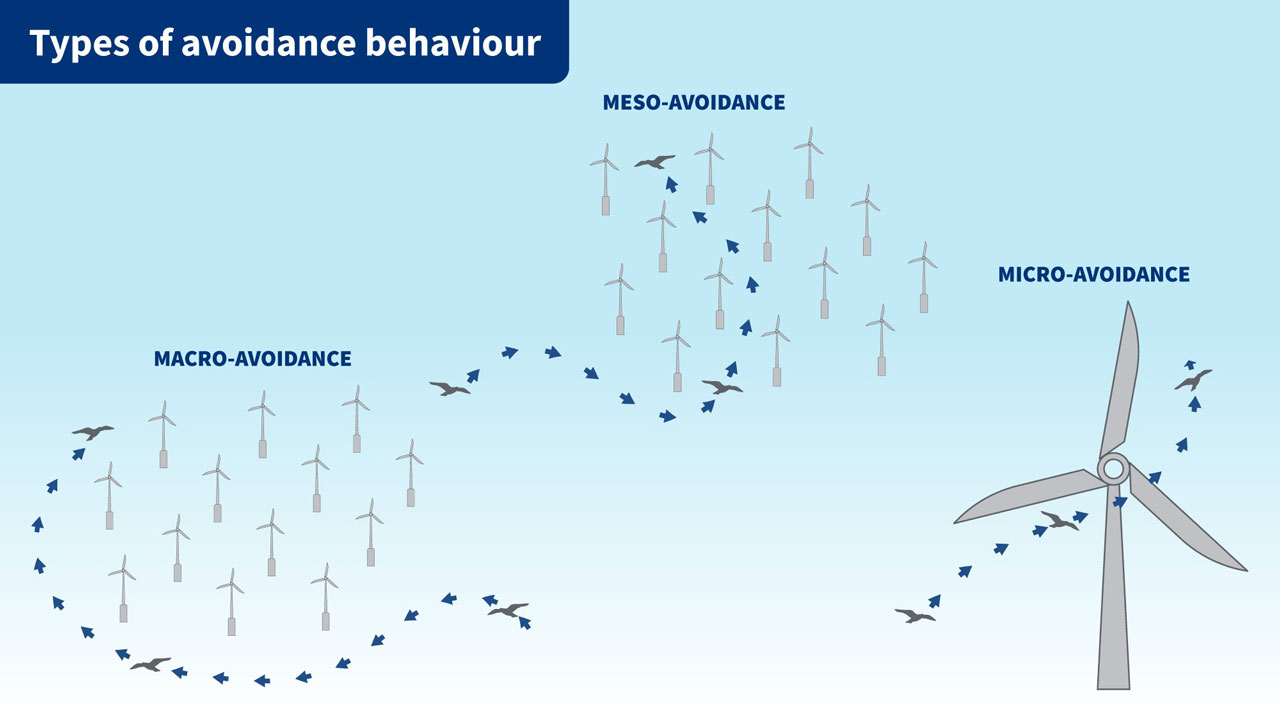
Although there is another year to go on the study and more data coming in, early analysis suggests strong meso avoidance response in the study species—spending time within the farm but avoiding the space closer to the turbines. We have also learnt more about the change in behaviour, such as flight speed and flight height, as birds approach closer to turbines. Information such as this helps to refine our understanding of how birds are affected by wind farms and to open the door to further development. The study can also help us understand the potential rates of collision with turbines, suggesting that this could be much lower than is often predicted in EIA estimates. We will publish further updates when the study concludes at the end of 2021.
The importance of R&D funding and collaborations within the offshore wind sector
Other aspects illustrated by this project are the importance of funding for research and the value of collaboration at central government and agency level.
The Tetra Tech and DHI study is part of the €3 million Scientific Research and Monitoring Programme, funded by Vattenfall’s EOWDC test and demonstration facility. The programme is believed to be the largest research programme of its kind and has also been awarded up to €40 million of funding by the European Union. Other offshore wind-related projects funded by the programme include a look at socio-economic impact on the human environment (focussed on the local economy and communities near offshore wind farms) and a study of the migration routes and wintering areas of guillemots and razorbills.
The EOWDC itself was developed with the involvement of the Scottish government, which guided on establishing the programme and the scientific panel that defined its focus areas and priorities. Panel members represented a wide range of agencies, from Swedish energy company Vattenfall and Aberdeen Renewable Energy Group to Marine Scotland Science, NatureScot (formerly Scottish Natural Heritage), the Scottish Environment Protection Agency and The Crown Estate. As the offshore wind sector recognises the need to remove barriers to development while enabling environmentally robust assessment and the raising of research standards, collaboration is proving to be a key theme.
For Tetra Tech, the Aberdeen study means an opportunity to extend our expertise in ways that will help our clients build more effectively and sustainably, while feeding greater technical and ecological understanding into offshore wind development, which will ultimately benefit the environment.
Connect with us. Reach out to our offshore energy experts in the UK and Europe.
About the author
Martin Scott
Martin Scott is a senior director of ornithology, part of our offshore energy team in the UK and Europe.
With more than 30 years’ experience, he has led on a wide range of projects for governments, international organizations, and developers, both on and offshore, to promote conservation and best practice alongside renewable developments. Martin has worked in Australia, the U.S. and Canada, Middle East, and across Europe sharing his knowledge. His career began on a project of two small wind turbines but is now involved in schemes with over 300 giant devices. This has involved working for clients’ best outcomes while utilising biological knowledge in a pragmatic approach. Martin holds a BSc in Quantity Surveying.
The project featured in this article was undertaken by RPS, A Tetra Tech Company and originally published on RPSgroup.com. In March 2026 RPS rebranded to Tetra Tech.