
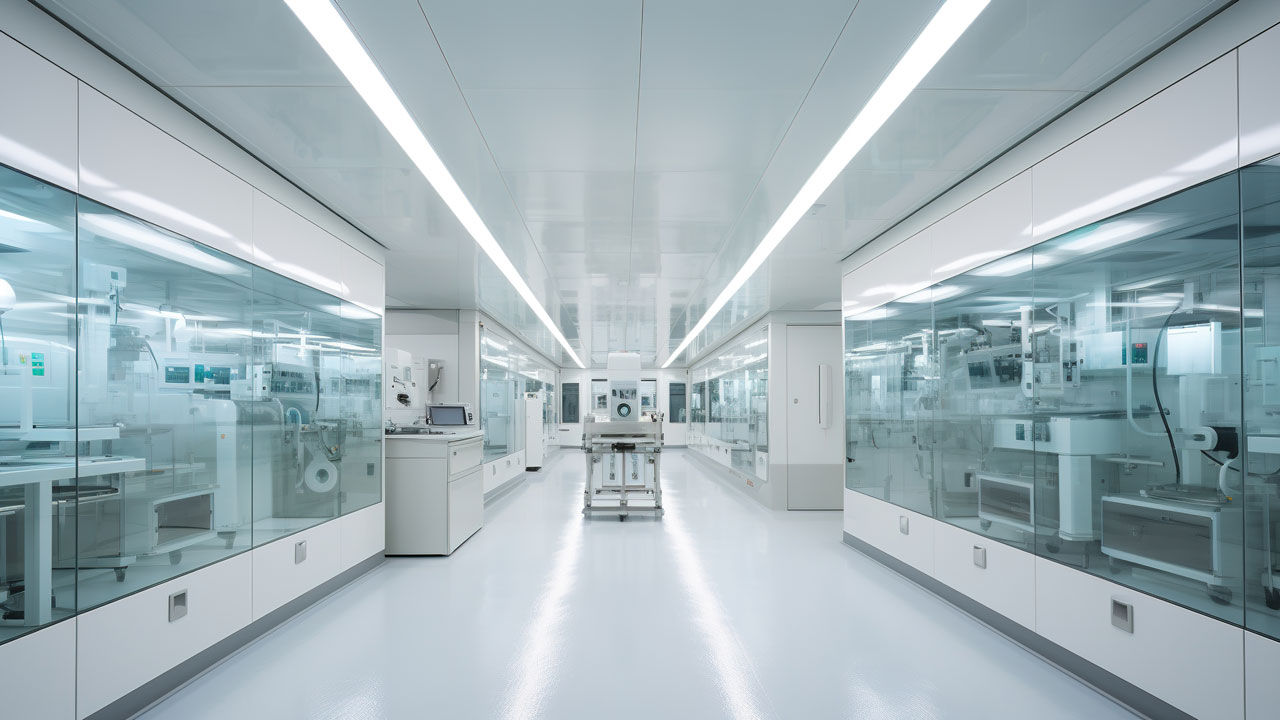
Tetra Tech Digital Systems audited more than 80 control systems and designed precision hazardous waste control solutions to strengthen automation resilience at a five-floor semiconductor fabrication facility.
A leading integrated device manufacturer (IDM) in Santa Clara, California, needed to maximize uptime across a vibration-sensitive, five-floor cleanroom fabrication complex. The facility’s lithography and etching operations demand strict chemical delivery, exhaust handling, and effluent disposal, making system reliability essential to production continuity. The client needed support to audit and optimize their existing automation infrastructure and to design new control systems for the storage, transfer, and neutralization of hazardous acid waste and volatile compounds at the scale and density of large-scale semiconductor manufacturing.
Our engineers conducted a thorough audit of more than 80 control systems, applying piping and instrumentation diagram (P&ID) analysis, redundancy assessments, network evaluations, and input/output (I/O) validations across more than 21,000 I/O points. Site walks and panel inspections across all five facilities surfaced optimization opportunities in documentation, near end-of-life components, and unnecessary I/O. The team reorganized I/O across existing Allen-Bradley programmable logic controllers (PLCs) to maximize redundant functions and reduce the risk of downtime during critical processes, including waste management, compound neutralization, and heating, ventilation, and air conditioning (HVAC).
In parallel, we designed precision control systems for six categories of hazardous waste: corrosive solvent waste, solvent acid waste, phosphoric acid waste collection, nitric acid waste collection, volatile organic compound (VOC) solvent exhaust, and the bulk caustic feed system. We designed control narratives to document the I/O, alarms, and algorithms for each system to ensure safe, efficient operations. Every design adhered to stringent industry standards and aligned with the redundancy principles established during the audit.
Benefits
- Audited more than 80 control systems, totaling over 21,000 I/O
- Employed P&ID analysis, redundancy assessments, network evaluations, and I/O validations
- Minimized potential downtime by optimizing system documentation and I/O