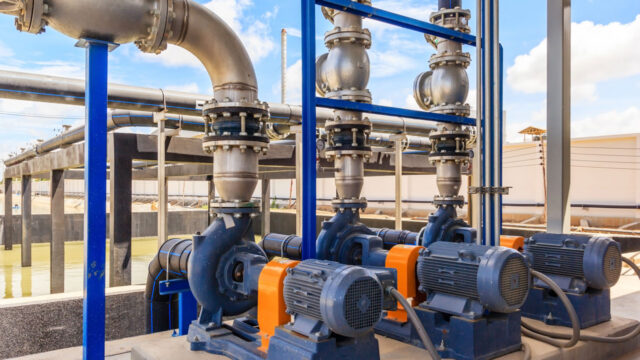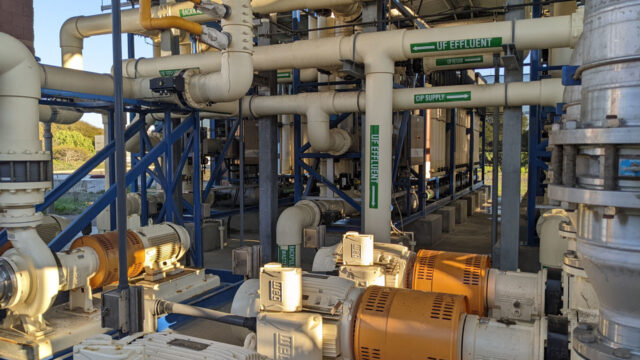
Tetra Tech Digital Systems delivered a power management system (PMS) for SA Water that autonomously controls solar and grid energy, integrates new solar systems, and maximizes operational efficiency.
SA Water delivers clean water and wastewater services to more than 1.7 million customers across South Australia at an annual energy cost exceeding AUD $80 million. Facing energy market uncertainty and pressure to keep customer pricing stable, SA Water launched its Zero Cost Energy Future (ZCEF) project in 2018, committing more than AUD $300 million across seven initiatives to offset total electricity costs to a net-zero outcome.
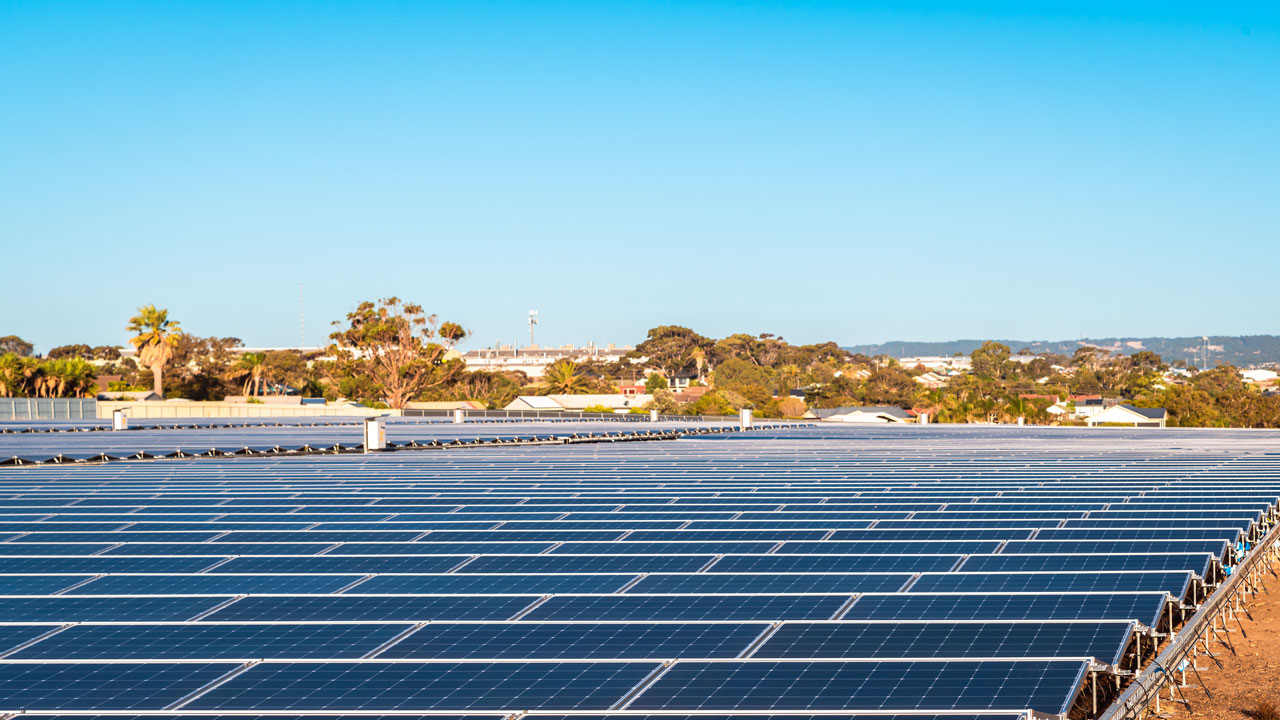
Tetra Tech Digital Systems delivered control and automation solutions across two project phases. Phase 1 introduced 4.2 megawatts (MW) of solar photovoltaic (PV) generation capacity across three high-energy treatment facilities, integrating an energy management system (EMS) with SCADA for more than 160 solar inverters and three containerized switch rooms. Phase 2 scaled the program to 33 SA Water sites, connecting more than 350,000 solar panels, 46 SMA solar central inverters, 61 wall mount inverters, and 9 Tesla Powerpack battery systems for a combined 154 MW of solar and battery capacity.
To accommodate the variation in grid connections, technologies, and electricity providers across 33 sites, we engineered a bespoke PMS on Modicon M580 ePACs using a modular coding standard to accommodate each site’s unique hardware, grid requirements, and plant systems. The PMS interfaces with solar and battery controllers, Australian Energy Market Operator’s and SA Power Networks’ grid data, SA Water’s SCADA infrastructure, and ancillary equipment including solar tracking systems and weather stations. It autonomously balances energy generation against real-time site loads, participates in National Electricity Market (NEM) bidding cycles every 5 and 30 minutes, maintains regulatory compliance, and generates additional revenue streams that support low and stable customer billing.
Benefits
- Potential savings of AUD $80 million in annual energy costs
- 154 MW of solar and battery capacity delivered across metro and regional South Australia
- 33 sites gained distributed generation and storage capacity