

Tetra Tech’s Victoria Brayshaw, head of civil engineering and an experienced framework director in Tetra Tech’s UK division, explores how integrated planning and digital tools can strengthen water security and flood resilience.
This article was originally published in Infrastructure Intelligence magazine.
Water is essential for life. We expect that when we turn on the tap, water will flow. We expect that our rivers and bathing waters will be safe to enjoy. And we expect that farms, industry, and emergency services will always have access to the water they need when they need it.
But we live in a changing world, and our infrastructure must be designed with that in mind.
Navigating flood risk and water scarcity
In 2025 multiple regions across England and Wales were hit by drought. With just 128.2 millimeters of rainfall, that spring was 40 percent below the long-term average and the driest in more than 50 years. At the same time, the 2024-2025 storm season brought several major weather events, with Storm Éowyn in January 2025 being the most impactful. Flood risk and water scarcity can and do coexist, and we must adapt to become more resilient.
Having the right quantity of water means providing resilient supply for households, businesses, and emergency services while preventing flooding that harms people, property, and livelihoods. That balance requires a multifaceted response, including improved leakage detection, strategic storage to support water supply during dry periods, and catchment scale measures to slow and store runoff, reduce flood risk, and support groundwater recharge.
Catchment scale thinking can unlock new opportunities for flood risk management. Upper catchment interventions offer viable solutions where downstream areas are heavily constrained. For example, following Storm Ciara, Tetra Tech assessed flood risk within the village of Shap in Cumbria and found that mitigation measures in the upper catchment would have slowed the flow reaching the village, reducing flooding and overflow spills.
Flood risk and water scarcity can and do coexist, and we must adapt to become more resilient.
Improving river water quality
Recent river health assessments show that none of England’s river stretches are in good overall health, while 23 percent are classified as poor or bad. Persistent chemicals that remain in ecosystems for decades now affect every river.
There are many reasons why rivers fail Water Framework Directive health tests. 62 percent of river stretches failed because of activities attributed to agriculture and rural land management, 54 percent of river stretches failed because of activities attributed to the water industry, and 26 percent of river stretches failed because of activities attributed to the urban and transport sector.
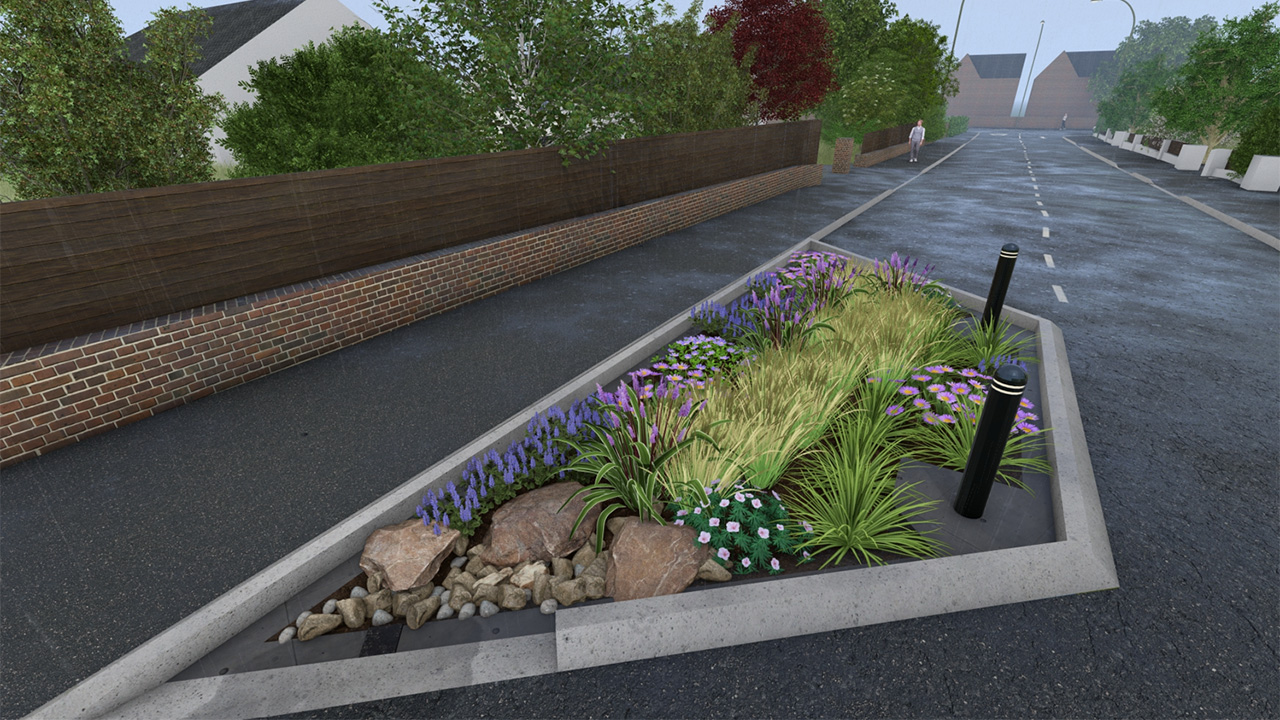
A scalable approach to quality is required. Schemes that combine deculverting, nature-based solutions, and river restoration reduce both flood risk and pollutant loading. For example, our River Lea Outline Business Case in Luton modelled fluvial and pluvial interactions using an integrated approach and proposed deculverting and nature-based solutions across the town centre.
Addressing regional water supply needs
Many water supply shortfalls are regional and systemic. Addressing them requires strategic planning, coordinated investment, robust assessment, and governance to allocate costs and risks fairly.
Strategic resource options (SRO) are large, multicompany or regional interventions, including new reservoirs, major transfers, large-scale reuse and storage schemes to address supply shortfalls. They are a pragmatic response to imbalances, but they are no substitute for resilience.
Best practice combines:
- Prioritising demand reduction, reuse, and local storage
- Designing SROs as multi-benefit projects to deliver environmental and social gains
- Using a gated process to derisk projects before commitment
- Embedding adaptive governance to be responsive to change
Strategic planning also means safeguarding land. Catchment planning can identify land that should be protected from development to preserve future flood storage capacity, providing a practical form of intergenerational insurance.
Leveraging digital water technologies
Providing supply when it’s needed and protection during storms relies on accurate information. Monitoring networks, seasonal forecasts, and predictive analytics convert uncertainty into manageable risk. Digital twins, models, and real-time controls enable operators to shift storage and operations in advance of extremes.
However, digital water technologies are not simply add-ons; they must be fully integrated into the overall solution to maximize benefits. With the right approach, they can lower capital costs, speed deployment, support targeted control, and improve overall system performance.
Our challenge is to deliver interventions to keep water flowing, rivers healthy, and communities safe—today and for the next generation.
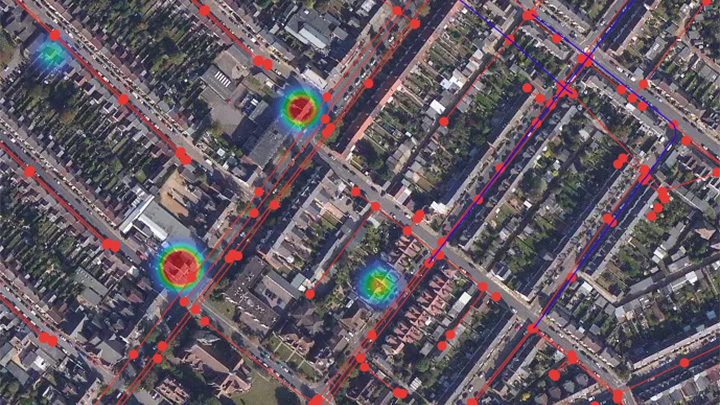
Tetra Tech’s WaterNet™ technology is a spatial asset management reporting and analysis tool that efficiently collates data for operators and water companies, empowering them to make smart investments and efficient operational decisions.
Applying integrated solutions
Delivering resilient systems requires integrated teams of hydrologists, geomorphologists, civil and environmental engineers, ecologists, modellers, planners, and community engagement specialists.
Tetra Tech’s design and planning work at Derby Riverside illustrates the multidisciplinary nature of modern delivery. Civil and structural design, geotechnical surveys, ecology, landscape, and heritage considerations were all embedded to deliver flood protection while enabling regeneration and respecting heritage features and existing constraints.
Building resilience across the water sector
The sector must embrace strategic, multiscale programme that combine demand reduction, catchment thinking, and flexible, phased delivery. Key approaches include:
- Embedding climate allowances and iterative modelling into planning and design
- Combining engineered and nature-based solutions in hybrid schemes
- Translating technical outputs into emergency preparedness and resilience plans
- Prioritizing investments that deliver environmental, social, and economic outcomes
The water sector is running record scale capital programme, responding to intense public scrutiny, and managing supply chain pressures. Our challenge is to deliver interventions that overcome those challenges to keep water flowing, rivers healthy, and communities safe—today and for the next generation.
Read the original article in Infrastructure Intelligence magazine for more insight on strengthening water systems.
About the author

Victoria Brayshaw
Victoria Brayshaw is the head of civil engineering and technical development lead in Tetra Tech’s UK division.
She is a fellow of the Institution of Civil Engineers (ICE) and leads a national team of over a hundred engineers, designers, and flood risk management consultants. She has been involved with the ICE for more than 20 years, including as a supervising civil engineer, a branch chair, and regional committee member.
Victoria and her team work with communities to address their water security and flood resilience challenges year-round.