
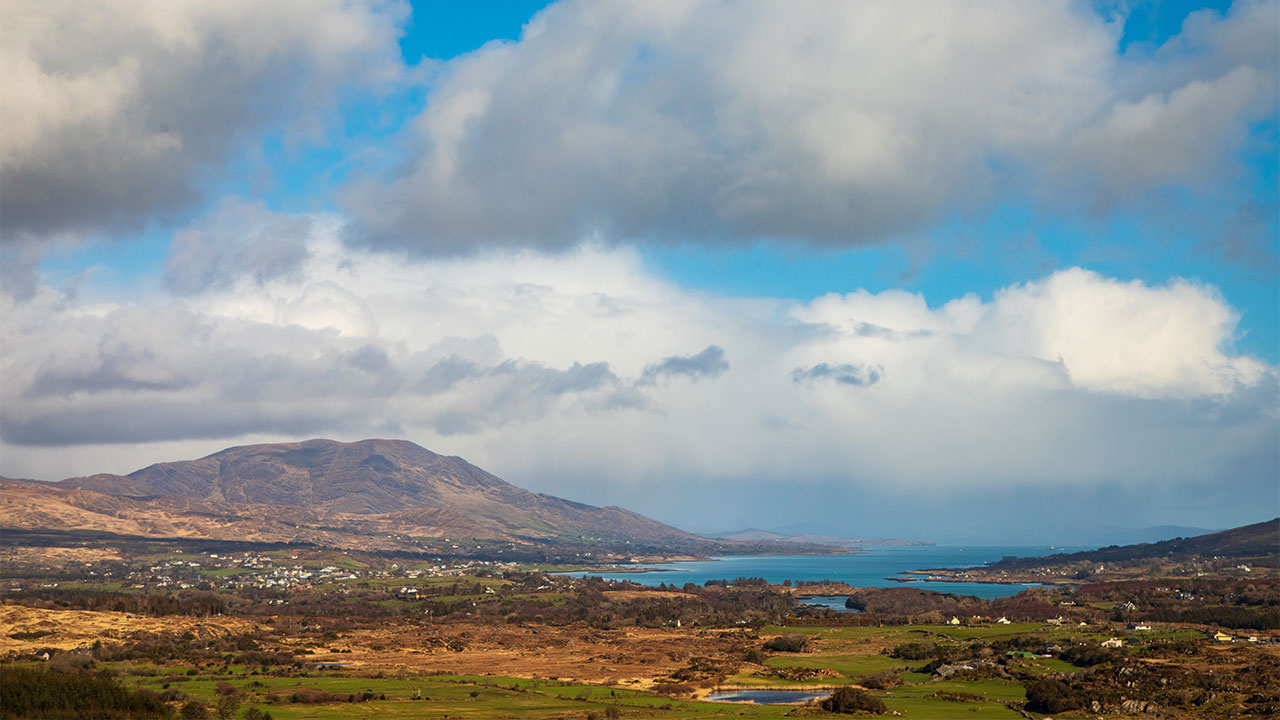
Tetra Tech provided consultancy services to expand Dinish Wharf in Castletownbere, enabling increased seafood landings and onshore processing at Ireland’s major fish-port.
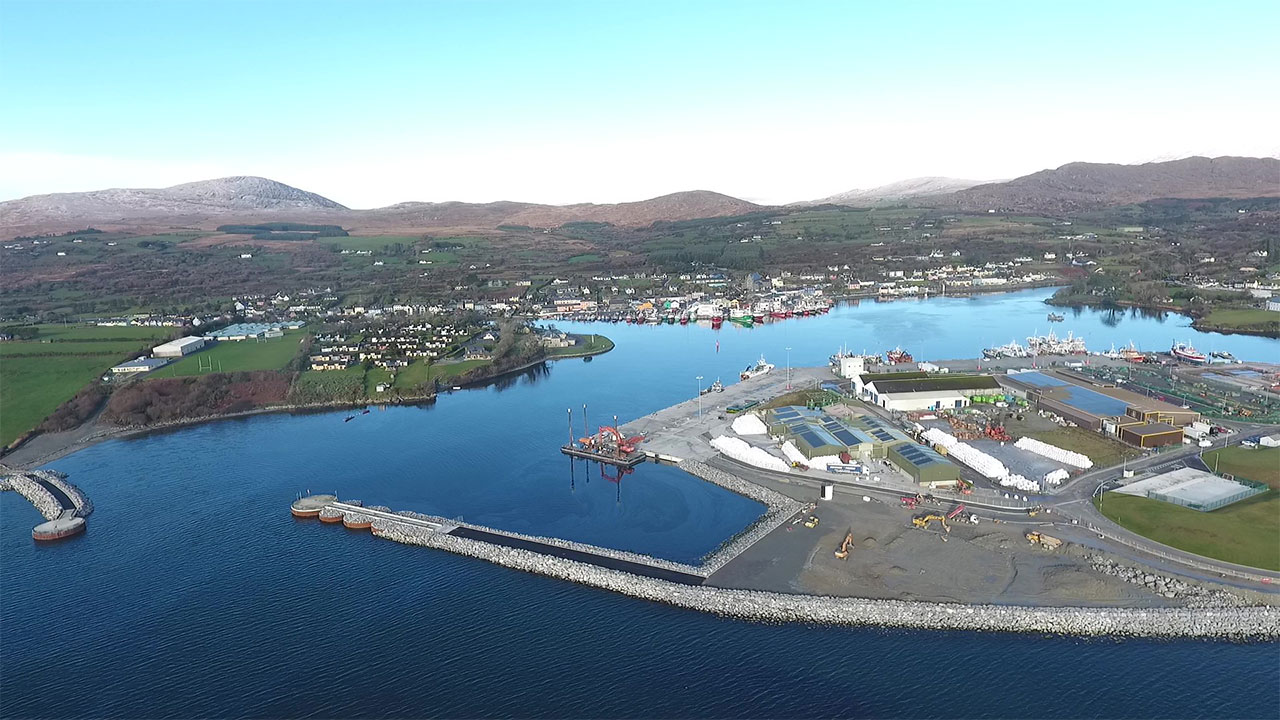
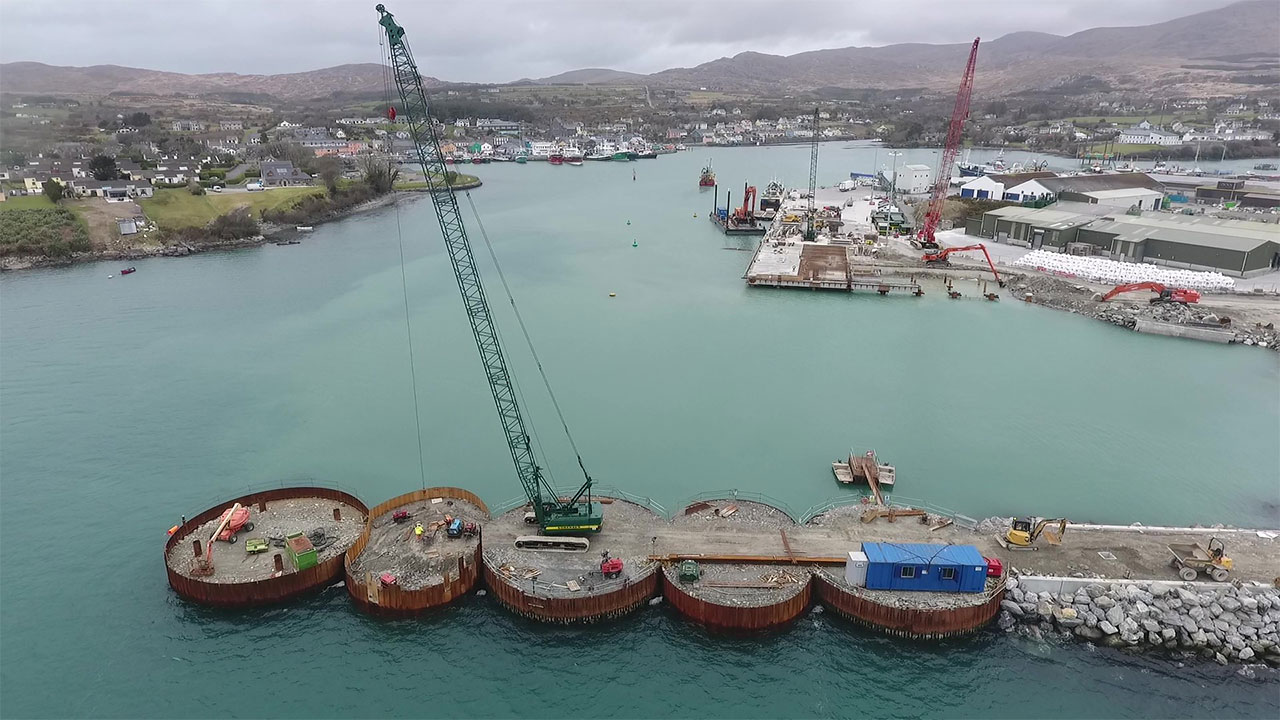
We provided consultancy services for the expansion of Dinish Wharf. The works included design and supervision of site investigation and detailed design and supervision of the construction.
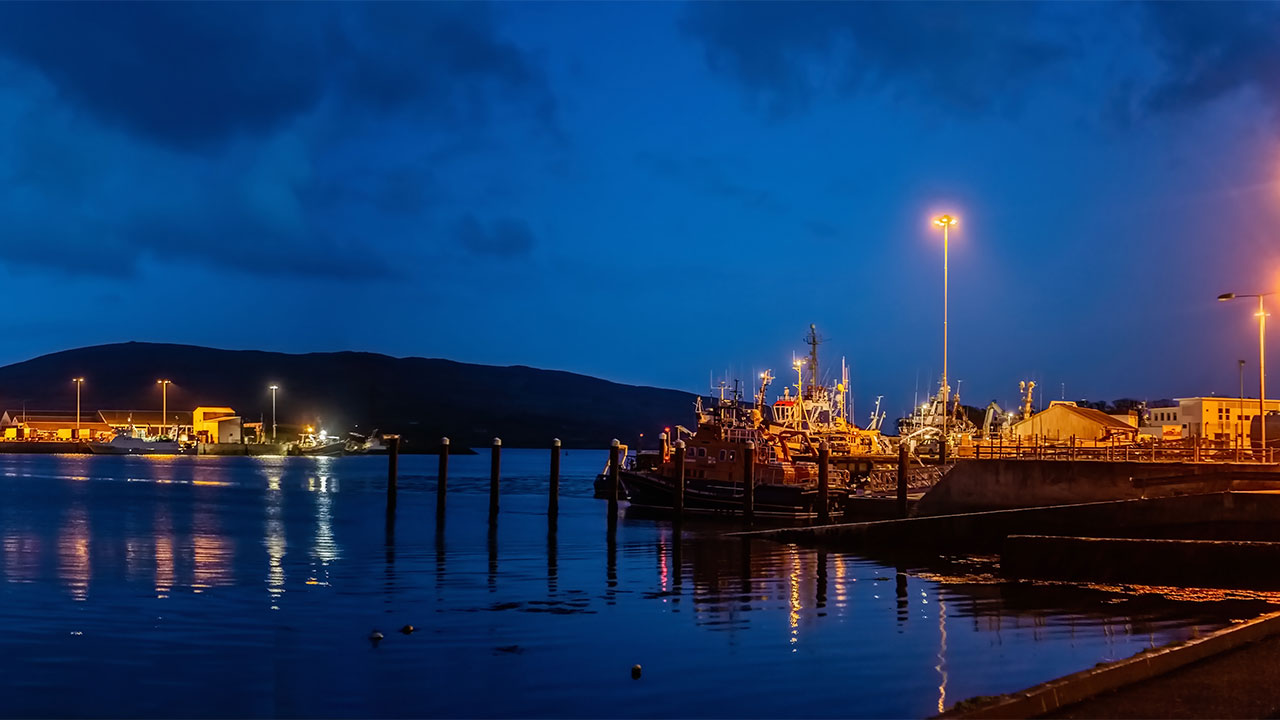
Castletownbere Fishery Harbour is one of Ireland’s major fishing ports and its largest whitefish port. The inner harbour is the location of the main piers and infrastructure and splits into two areas: Dinish Island to the south and Castletownbere to the north. Between 2010 and 2017, the value of fish landings in the harbour increased by 275%.
Quay expansion was vital to ensure the ongoing growth and to future-proof the seafood sector.
Challenge
Dinish Wharf is a complex maritime engineering project that required consideration of a range of environmental and engineering issues to develop the most appropriate solution. The key challenges included:
- Wave environment in the outer harbour and impact on navigation and quayside operations
- Highly variable geotechnical conditions
- Presence of contaminated sediments
- Limited port access and working areas
- Potential environmental impact of works
During the execution of the main contract works, the main contractor became insolvent, which presented a considerable challenge to facilitate the timely and cost-effective completion of the remaining construction works.
Solution
As sole consultant, we worked with the client and stakeholders to develop a layout and structural solutions to meet a range of diverse requirements in an operationally efficient manner.
Undertaking significant computational modelling of the wave and tidal environment, we investigated various options to design infrastructure to provide the required shelter for safe operations while maintaining navigational safety in the harbour access channel.
Developing a dual form of construction (rubble mound and cofferdam structures) for the variable conditions at the breakwater locations, we accommodated the required wave protection without impacting the navigation channel.
We prepared a sustainable solution for the dredging works, including a high degree of in-situ testing to manage contaminated sediments and re-use of excavated materials to provide reclamation area providing much needed additional port operational space.
Benefits
- 216m quay walk extension
- 70,000m³ capital dredging of berth pocket and navigation channel
- 2.2ha of land reclamation for re-use of treated dread material
At a glance
Client
Department of Agriculture, Food and Marine
Location
Ireland
Services
Civil engineering, coastal engineering, environmental impact assessment, maritime infrastructure, planning, project management
The project featured in this article was undertaken by RPS, A Tetra Tech Company and originally published on RPSgroup.com. In March 2026 RPS rebranded to Tetra Tech.
Explore related solutions
- Transport in Europe
- Ports, Harbours, Waterways, and Maritime Infrastructure in Europe
- Water in Europe
- Engineering in Europe
- Civil Engineering in Europe
- Coastal Engineering in Europe
- Maritime and Port Engineering in Europe
- Environment in Europe
- Environmental Planning and Assessment in Europe
- Planning in Europe
- Planning Consultancy in Europe