
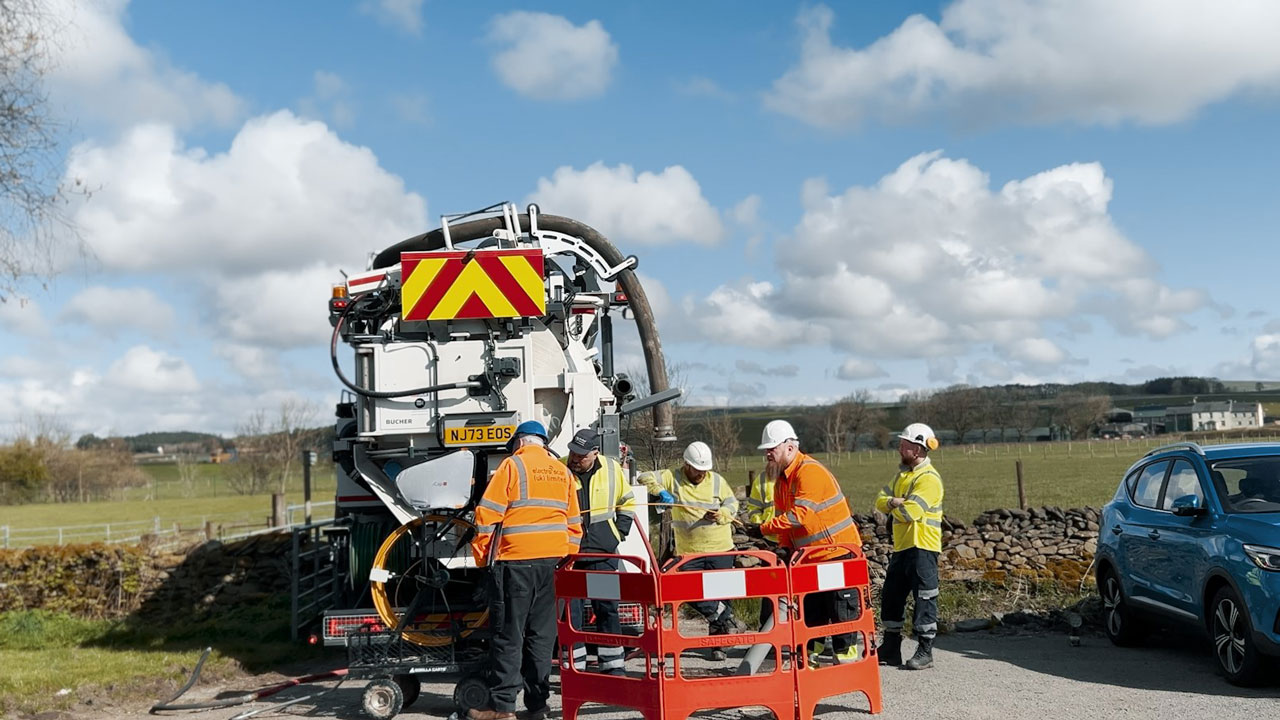
Tetra Tech’s water experts, Paul Freeman and Steve Hogg, share how Tetra Tech uses a range of innovative non-disruptive inspection methods including in-sewer inspection and digital tools to help clients detect and reduce infiltration in drainage networks.
Practical solutions to reduce infiltration and inflows
Infiltration occurs when groundwater finds its way into the underground sewerage system, which can result in damaging effects such as sewer flooding. Tetra Tech works proactively to develop state of the art technology and solutions to monitor, inspect, and assess sewers to identify and reduce infiltration and inflows across the wider drainage network.
Amongst rising industry-wide challenges around improving network capacity escapes, Tetra Tech ensures a realistic solution development process with exceptional value for clients.
New technologies
Most traditional methods of reducing infiltration or surveying areas with high infiltration include inspection using CCTV units and flow monitoring to aid in the identification of areas of infiltration. As well as physical approaches, Tetra Tech specialises in digital solutions to optimize the data collected and deduce a well-rounded analysis. These include our in-house software:
- PondSim: assesses rapid overland flow to determine the impact of flood waters
- Frontier Leakage Optimisation (FLO): examines leakage maintenance and reduction options to achieve frontier targets at the lowest cost
- FlowBot: optimises data visualization, analysis, and machine learning methods
Along with these, Tetra Tech utilises BLOOM, a research-based mapping and costing tool to identify and optimise opportunities for sustainable urban drainage systems (SuDs) and nature-based hybrid optioneering in wastewater catchments, integrating with hydraulic models to devise feasible solutions and PLATO, our iterative storage optimiser and flow assessment utility which can accurately identify a solution to rectify a given number of spills.
Testing and innovating
Tetra Tech has developed solutions for reducing infiltration consisting of both grey and blue-green approaches, building storage tanks (grey), and the removal of impermeable areas via SuDs (blue green), as well as hybrid solutions combining both approaches.
Developing solutions calls for the collection, acknowledgement, and understanding of details such as root causes of spills, contributing areas, hydraulically linked sites, treatment, and network capacity, as well as the consideration of other complexities including the difficulties associated with retrofitting SuDS. With the right, tools, techniques, and processes. Tetra Tech can collect more accurate data and define more efficient solutions resulting in an overall saving in terms of time and cost.
An informative and constructive day
Electro Scan is one of many new technologies being tested as part of Tetra Tech’s continuing commitment to serve clients with the most advanced and novel approach to major projects. Electro Scan is an inventive technology used to determine the location, measurement, and infiltration flow of potential defects within a pipe. Tetra Tech embraces innovative methods and techniques to reinvent, modernize, and create a more efficient approach to global projects.
Tetra Tech prides itself on utilising technology to refine exceptional processes for tackling large-scale projects. By embracing the latest and most advanced techniques, we can ensure we continue to provide excellent results and achieve amazing outcomes.
Paul Freeman, Business Development Director
Modern innovations
Playing a key role in shaping the world around us, Tetra Tech translates big ideas into deliverable schemes. Whether it’s finding an innovative approach to meet the challenges associated with ageing infrastructure or providing the best means of accommodating new growth, utilising state of the art technology is the best way to develop well-organised, cost-effective solutions to solve complex issues.
Utilising modern innovations, Tetra Tech was proud to demonstrate its ability to save time, and costs, and continue to collaborate to develop solutions all the while innovating and reinventing common practices.
Tetra Tech is excited to continue using technology and explore advanced techniques to solve problems, overcome obstacles and find new and unique solutions to common challenges.
With this approach, Tetra Tech can work to protect and enhance water resources, prioritising sustainability, and innovation in every decision.
About the authors

Paul Freeman
Paul Freeman is Tetra Tech’s wastewater director in the UK.
Paul has an abundance of project experience in all areas of Surveying, Wastewater and Drainage both in the UK and internationally. He is an accomplished engineer with considerable experience in Water & Wastewater Operations and Capital Delivery support. Paul holds overall responsibility for the development, growth, and business performance of the Surveying, Drainage and Wastewater Operations divisions of Tetra Tech.

Steve Hogg
Steve Hogg is the managing director responsible for the UK water consultancy business, leading a team of more than 300 wastewater and clean water technical staff.
Having started his career within a Local Authority, Steve gained a considerable range of experience of sewerage network operations, hydraulic modelling, feasibility, design, contract documentation, construction supervision and contract administration before moving in the consultancy. He has successfully delivered a range of major water industry frameworks in the role of Framework Manager and Framework Director over the last 15 years, focusing on strong technical delivery and client satisfaction. He is a Chartered Civil Engineer and member of the ICE and has a diploma in Management from the University of Leicester.