
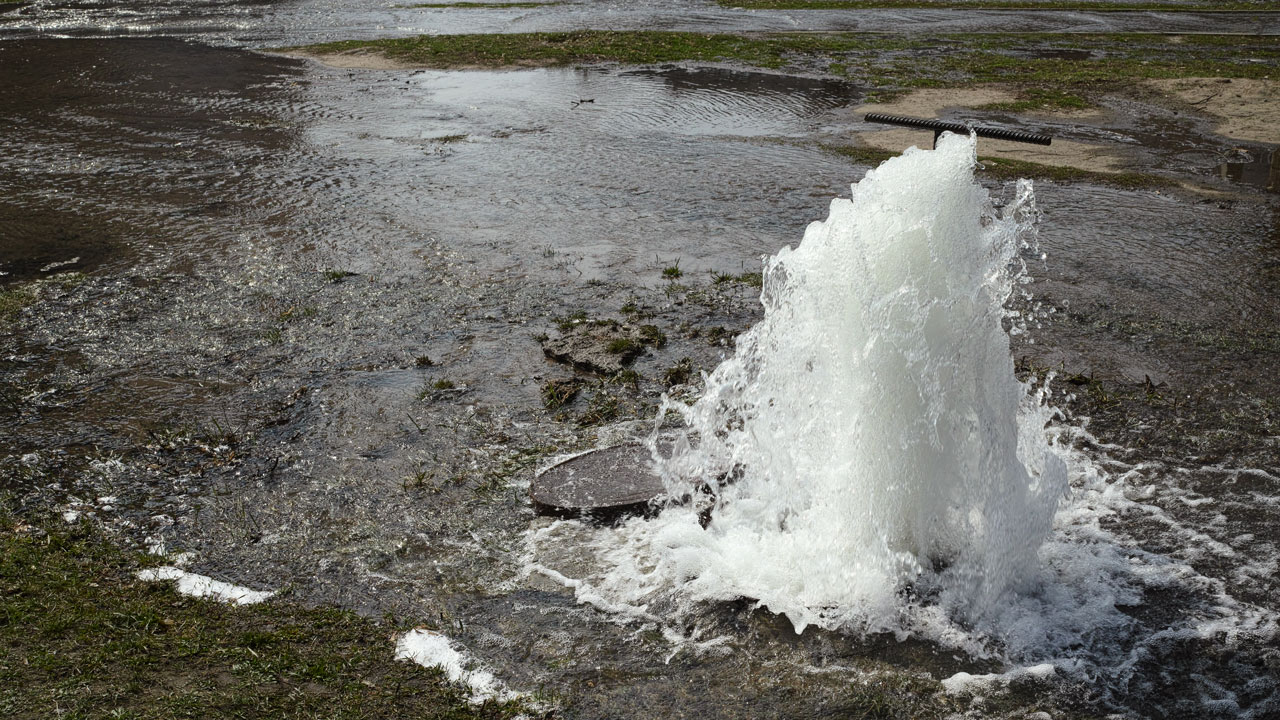
Josh Greener, a modeler in our water team, delves into the intricacies of the UK’s Storm Overflows Discharge Reduction Plan (SODRP), its connection to the AMP8 cycle, and how it has shifted water and sewerage companies’ focus on environmental sustainability.
Limited public knowledge of storm overflow discharge is an immediate challenge. Addressing this issue early and effectively is critical to maximise the industry’s potential to reach our associated targets, which can be achieved collaboratively with small contributions from everybody.
Looking to the future
Water UK have suggested the capacity of the UK’s sewerage infrastructure has become unable to cope with the volume of runoff generated during storm events due to population growth, urbanisation, pipe deterioration and climate change. As a result, storm overflow discharges have become routine during storm events, instead of acting as an intended last resort. All of these factors are likely to worsen this issue in the future. Courtesy of the Environmental Act, the industry is seeing changes to monitor and mitigate wastewater pollution, with the introduction and widespread-use of event-duration (EDM) monitors at storm overflows.
Flood risk solutions
In regard to flood risk, the demand for flood mitigation and prevention methods is ever-increasing. Facing pressure from customers and local council authorities, water and sewerage companies (WaSCs) have a methodology to deliver fast, effective, and low-cost options without creating or worsening problems in the surrounding network. As lead modeller on United Utilities supply and demand framework, my role is to model and assess potential flood-solution options, using level-of-service assessments to identify changes to worst-case flood volume and top-water-levels with FEH13 design storms. The introduction of the SODRP has driven heightened interest in the impact of options on the frequency and volume of CSO spills, which I assess using time-series rainfall.
The SODRP encompasses environmental sustainability, emphasising the removal, management and utilisation of rainwater with the implementation of sustainable urban drainage systems (SuDS). This is likely to influence optioneering work in future, with the requirement to incorporate blue-green infrastructure into flood-mitigation options. Water companies are beginning to implement pilot schemes to understand the effectiveness of SuDS, which have presented some immediate challenges. My involvement in Kidsgrove surface water removal scheme has proven that more time, work, resources, and budget are required to fully understand SuDS effectiveness in comparison to traditional ‘grey’ options, renowned to deliver results with surety. As AMP8 approaches, our team understands the challenges presented by limited budgets and scarce resources. We are a key stakeholder in current industry issues and strive to bolster the efforts of water companies to meet their targets, providing the necessary attitude and skills to tackle spill reduction targets and embedding environmental sustainability into our optioneering.
We can all help make a difference
Reflecting on my existing work towards green solutions along with popular opinions in the news, I feel as an industry we would benefit from improving public knowledge on the scale and severity of the issue we face, with information on how everyone can contribute to reach our targets sustainably and collaboratively. I feel the best way to approach this is to utilise popular platforms such as television and social media to provide informative guidance on the significance of small-scale contributions such as reducing localised blockages from fat, grease, and wet wipe build-ups, which contribute to wider-scale capacity issues and can cause or worsen storm overflow discharges. This level of grassroots contribution has the potential to encourage a collaborative approach to reach our targets.
With surface water separation being a key enabler of incorporating SuDS into our solution options, it is imperative that we properly incentivise home-owner participation in these schemes. I also believe there is a link between improved public knowledge and home-owner participation in surface water separation schemes. Door to door interviews as part of the Kidsgrove pilot scheme emphasised this, with a high percentage of those who declined participation not having a real understanding of the benefits of the scheme for localised flooding and sewerage capacity. Blue-green options are an integral mechanism of the optioneering approach to reducing overflow spills. It is therefore imperative that continued innovation is pursued to ensure our targets are met sustainably.
About the author

Josh Greener
Josh Greener is a senior wastewater modeller based in the Newcastle office with over six years’ industry experience.
Josh specialises in hydraulic modelling, confidence assessments, and solution design. He delivers projects across large framework contracts with a strong focus on water and wastewater systems.