
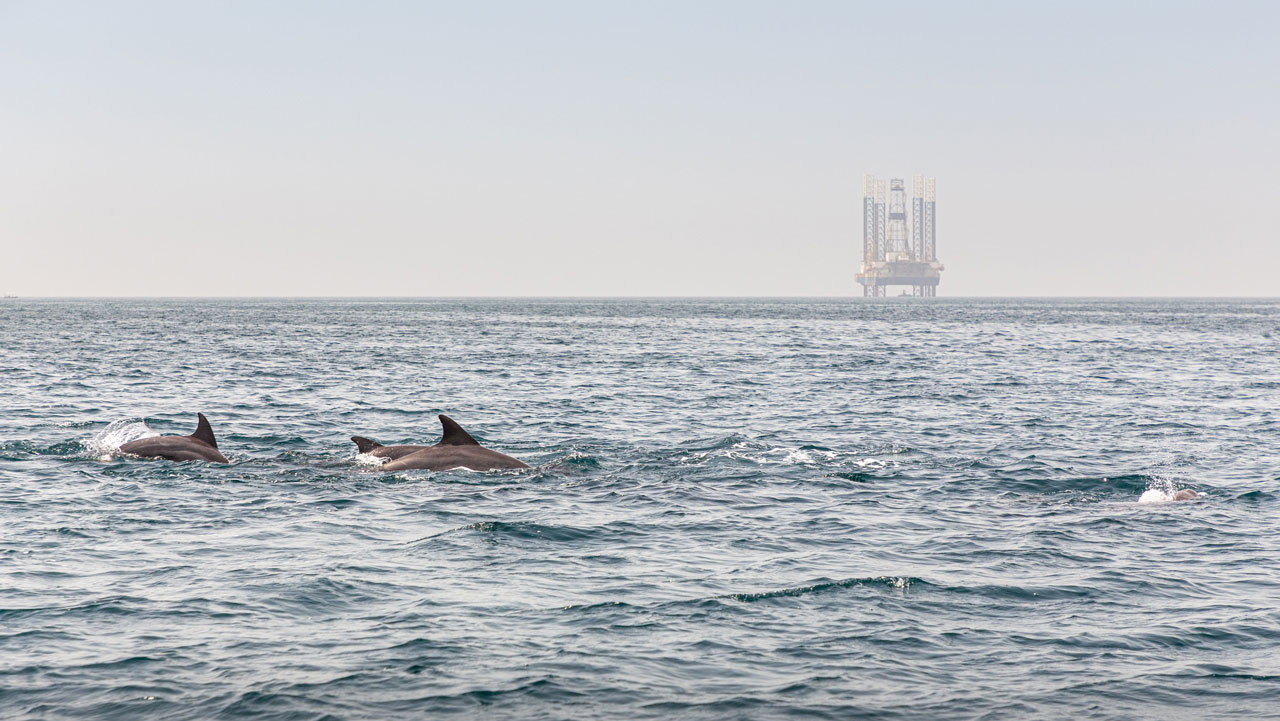
Stephanie Milne, U.S. team leader for offshore wind, explains how Tetra Tech’s Neptune AI technology helps offshore energy clients detect marine mammal activity faster and more accurately than traditional tools.
Protected species monitoring and mitigation are required for many offshore marine industries because project activities can disturb wildlife, often through underwater noise. Today, acoustic monitoring during project activities is performed by acoustic analysts, certified professionals working from remote offshore sites.
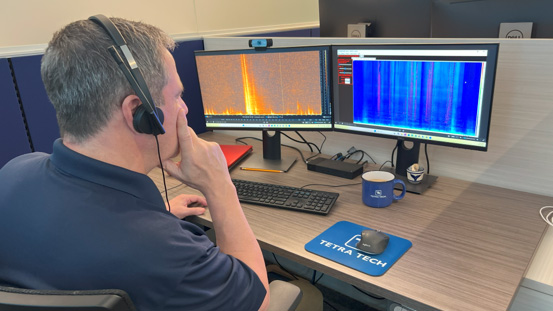
The tools they use to detect marine mammals are often limited by the noisy conditions of operations. Many of these detectors were built for quiet environments or configured to detect a single species, so they miss faint calls and can flag false positives from ships and equipment. That leaves analysts needing a practical, real-time solution designed for use in the real soundscapes they encounter offshore.
Real-time, mitigation-ready AI that was built to learn
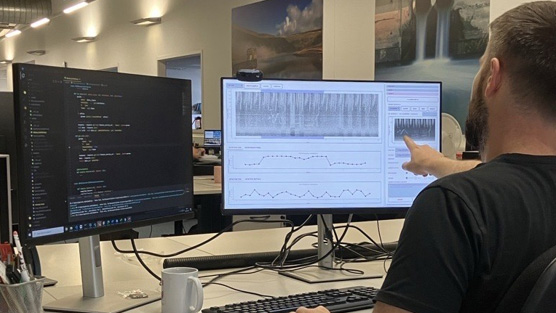
Tetra Tech developed Neptune, a patented high-end, AI-powered marine mammal detection system that provides state-of-the-art monitoring and data outputs, while reducing false detections and reliance on offshore and onshore personnel responsible for reviewing, evaluating, and reporting offshore data. Neptune is uniquely developed for real-time mitigation monitoring and was trained on actual sound recordings during the types of offshore activities where it will be used. It can identify faint low and mid-frequency vocalizations across all species groups in environments that have high-level background noise.
Neptune has demonstrated a 96 percent accuracy rate in detecting the calls of some of the most vulnerable whale species in the ocean, well above the 80 percent average accuracy rate that AI acoustic software strive to achieve.
Adaptability at sea is essential, particularly for large offshore energy projects. Noise and conditions change constantly, so monitoring tools must evolve with the environment. Neptune can be trained to reduce false positives from human and vessel noise and updated to recognize new soundscapes in real time. This means far less data needs to be transmitted from buoys to shore for review and manual adjustment, helping reduce the time required of human analysts and thereby cutting the overall cost to the operator.
On a recent marine construction project, the integration of AI for marine mammal detection reduced the volume of data transmission by 40 percent, which resulted in an overall cost reduction of 70 percent for our client.
Designed for accuracy, adaptability, and cost-efficiency
Neptune is easily implemented to support many types of projects and clients. It can be embedded on buoys or unmanned surface vehicles to support marine construction projects like offshore wind farm construction, port expansion, pier and platform installation, and decommissioning. It also can be operated on traditional vessel towed acoustic systems used on seismic exploration projects.
In addition, Neptune’s capability for analyzing large volumes of acoustic data for a wide range of marine mammal species means it can be used to contribute valuable information to our understanding of ocean habitats. It enables clients to better understand the soundscapes in which they operate for both real-time application and future planning.
Neptune is a flexible platform that can be integrated with any method of acoustic data collection, and it offers our clients cost savings while providing clear and documented metrics about its performance accuracy.
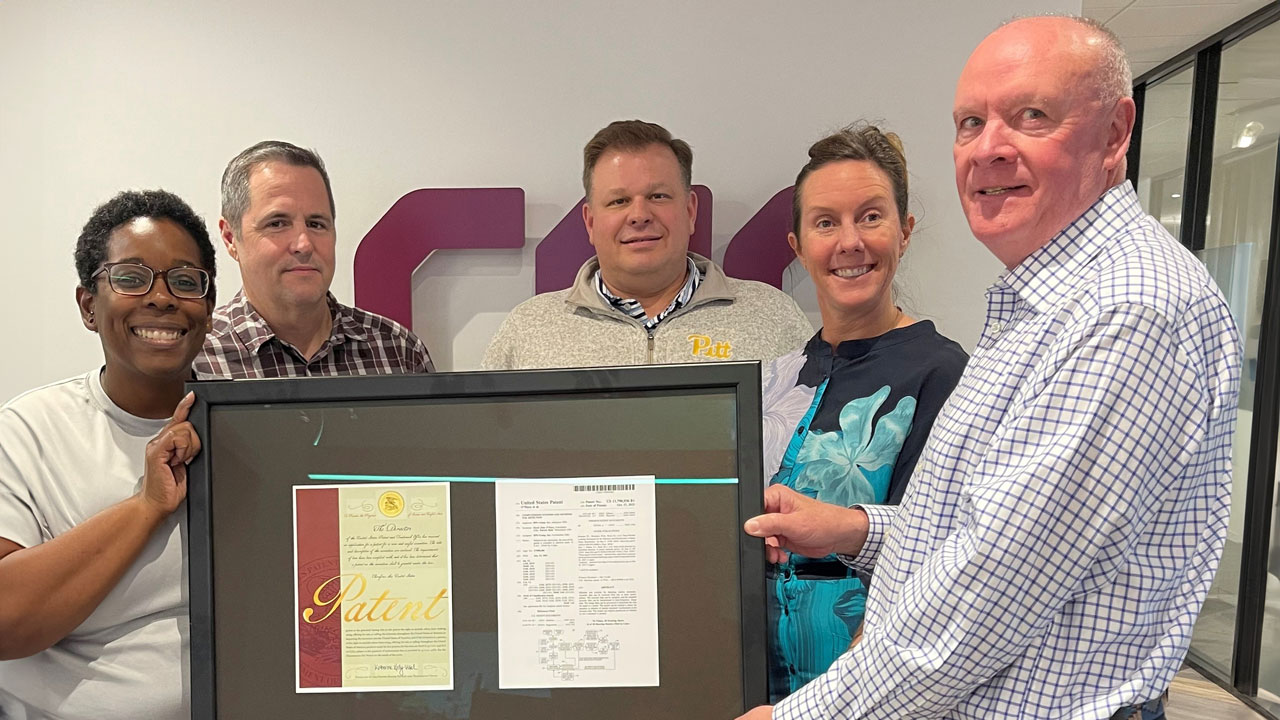
Neptune AI was awarded the 2025 Oceantic Ventus Innovation of the Year Award for its successful operation on a multi-phased National Offshore Wind Research and Development Consortium (NOWRDC) project.
About the author

Stephanie Milne
Stephanie Milne is a senior environmental manager and the U.S team leader for offshore wind.
She has more than 20 years of global experience implementing and managing marine environmental programs for regulatory agencies and stakeholders, including 15 years in the energy industry—most recently leading Tetra Tech’s U.S. offshore renewables team. As senior environmental program manager, she oversees North America’s marine environmental programs and personnel and is responsible for managing stakeholder and government agency relationships.
Stephanie has overseen the development of many emerging technology initiatives that advance industry capabilities to detect marine protected species, taking them from research and development initiatives to viable, commercially scalable, regulatory agency-accepted tools and strategies.
This article was featured in the At the Water’s Edge: Building Resilient Oceans with High-End Solutions issue of TetraVerse™.