
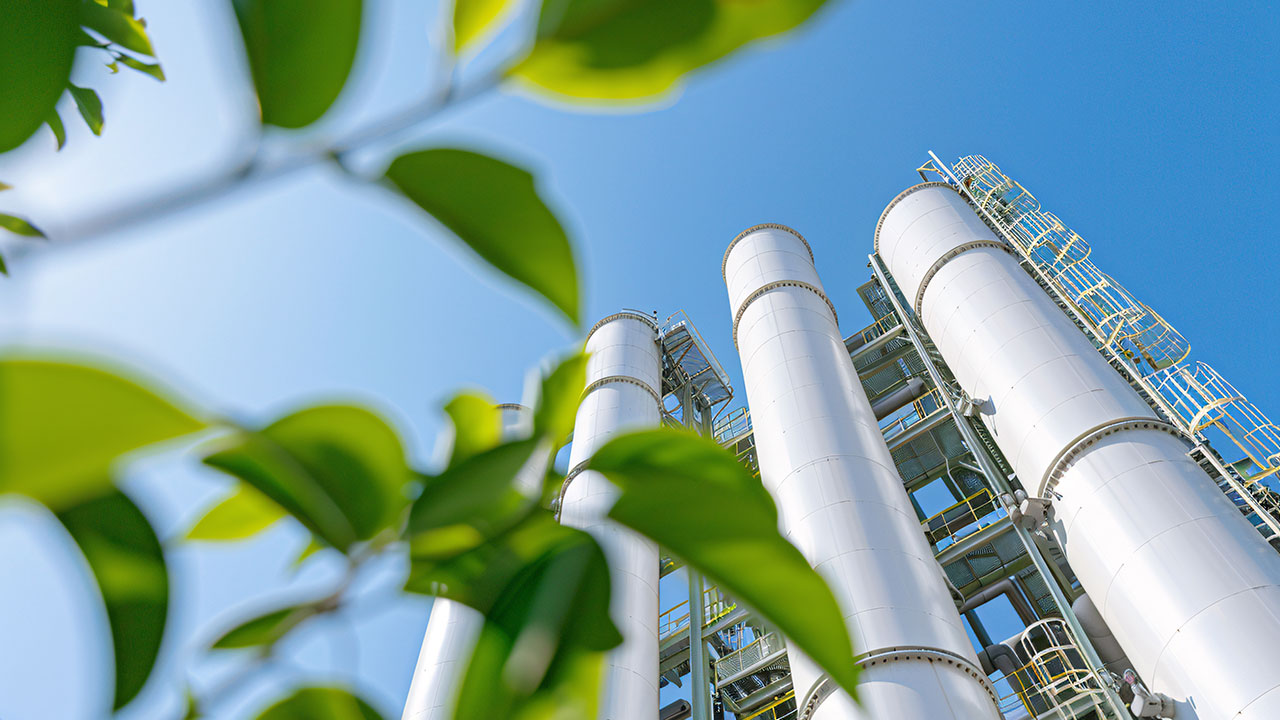
Tetra Tech supported the development of a carbon capture and utilisation plant capturing more than 40,000 tonnes of CO₂ per year at Winnington, the UK’s largest CCU project.
Carbon Capture and Storage (CCS), which includes Carbon Capture and Utilisation (CCU), is positioned as one of our greatest weapons in the fight against climate change. Our Environmental Permitting team have played a vital role in bringing the UK’s largest CCU project to life, helping to shape the future technology that will be key for industry in the pursuit of net zero carbon.
Tata Chemicals Europe’s (TCE), CCU plant based in Winnington will capture approximately 40,000 tonnes of CO₂ per year.
The CCU plant will use an amine solution to capture CO₂ from the exhaust gases from the Combined Heat and Power (CHP) plant on the same site. The plant will purify and liquefy the captured CO₂, after which it will be stored before being used to manufacture sodium bicarbonate at TCE’s local facility.
We provided permitting advice, supported pre-application and post-submission discussions with the Environment Agency (EA), and provided support for full permit variation application and post-application services, including air dispersion modelling and odour assessment. We also supported the application to vary the water abstraction licence to incorporate the additional volume of cooling water required for the CCU process.
Challenge
There was a lack of existing data or guidance for this relatively new technology which hasn’t yet been operated on this scale in the UK. In the absence of a defined regulatory position, we worked together with TCE, the technology provider and the EA to agree the approach and to gather the data required. The key permitting challenges posed by this project were:
- The lack of defined best available techniques (BAT) for carbon capture technology
- The absence of defined emission limit values (ELVs) for key emissions
- The absence of environmental assessment levels (EALs) for key emissions
- The lack of defined monitoring regime for key emissions
Solution
To address the lack of defined best available techniques (BAT) and emission limit values (ELV), we conducted a BAT assessment early on. This set out supporting information for the proposed ELVs and for BAT for reducing monoethanolamine (MEA), a pollutant emitted as a result of the solvent used. We referred to European guidance, pilot plant results and information from the technology provider. This assessment was discussed with the EA at the pre-application stage and the submission was accepted as BAT during determination.
There were no environmental assessment levels (EAL) for the key pollutants MEA and nitrosamines. For MEA, the EAL used was derived from workplace occupational exposure limits. For nitrosamines, an EAL from the Norwegian Institute of Public Health was used.
We worked with the determining officer to have early sight of the EA’s monitoring expectations. After reviewing the feasibility of the proposed suite with analytical laboratories, we agreed a revised monitoring suite that included only parameters where approved monitoring methods were available to ensure EA monitoring expectations could be delivered.
At a glance
Client
Tata Chemicals Europe Limited
Location
Winnington, Cheshire, UK
Services
Air quality assessment, BAT assessment, odour assessment, permitting (including pre-application discussions, permit application and post-submission support), water abstraction license application
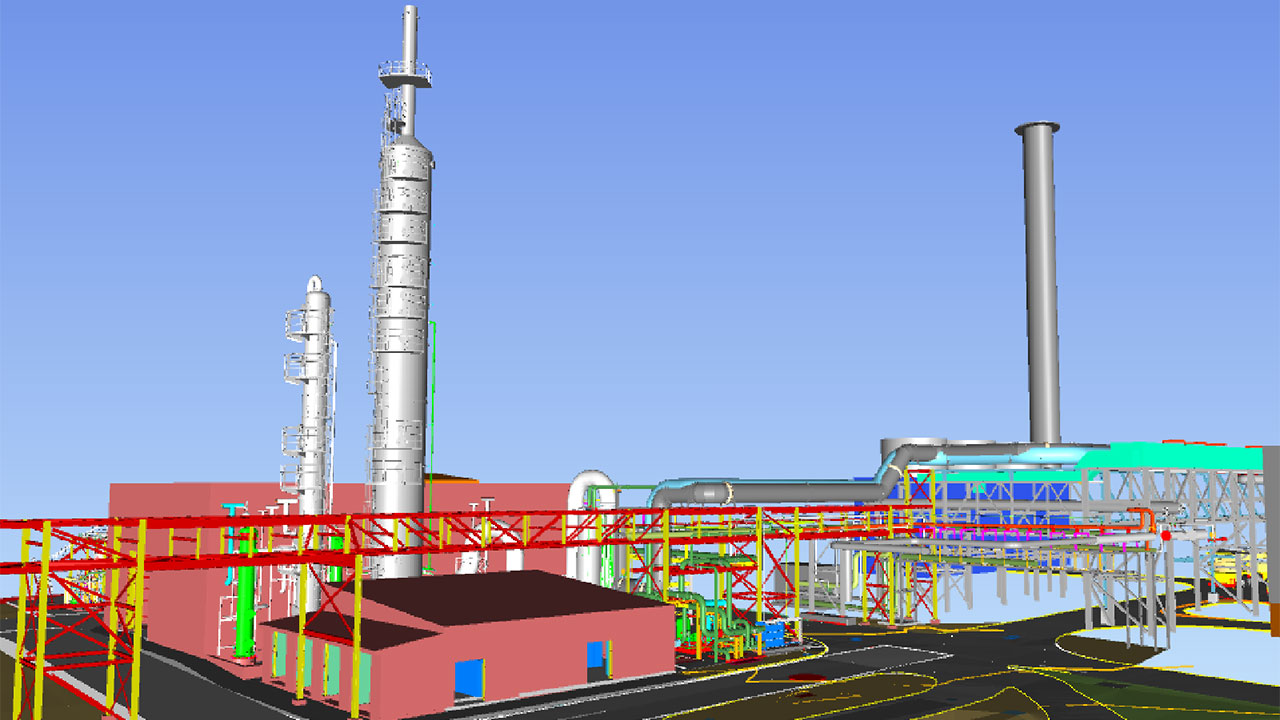
The project featured in this article was undertaken by RPS, A Tetra Tech Company and originally published on RPSgroup.com. In March 2026 RPS rebranded to Tetra Tech.