
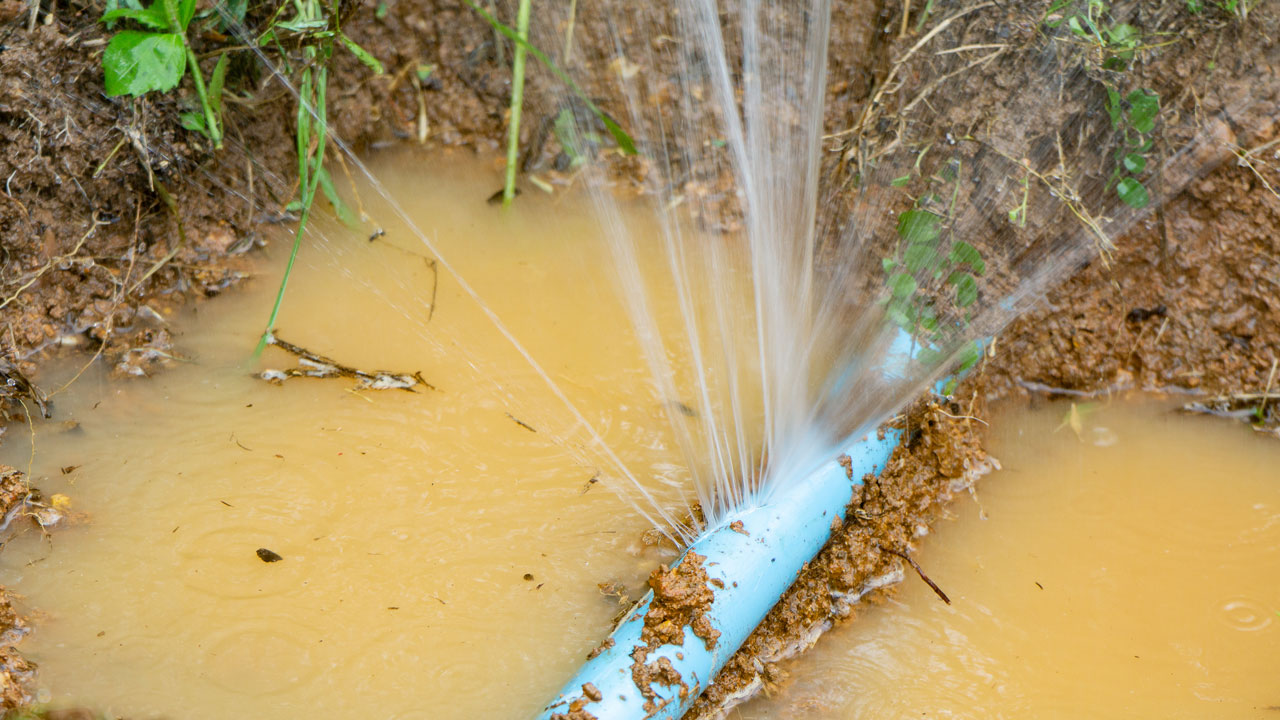
Tetra Tech researched root causes and data challenges for UK Water Industry Research (UKWIR) to help water companies make faster progress toward “zero interruptions by 2050” commitments.
Tetra Tech’s water team conducted research on behalf of UKWIR to understand the reasons for interruptions to supply (ITS). Our experts provided recommendations that will shape future change in the UK water industry, particularly within asset management and network operations.
The challenge for UK water companies is to achieve zero interruptions to supply by 2050. The UKWIR BQ3 roadmap, sets the factors that need to be addressed by water companies in order to achieve the target:
- Minimise and avoid ITS risk when working on assets
- Systems designed to accommodate the full range of demand scenarios and outages
- Confidently identify assets that pose an increasing interruption risk to initiate a timely response
- Confidently predict the onset of asset failure to allow delivery of short-term preventative mitigation
- All water supplies are restored quickly after asset failure
- All new assets are problem free when installed and remain so throughout economic life
Ofwat defines supply interruptions as a period when properties are without a continuous supply of water. A property is considered to be without a supply of water when it is lost from the first cold water tap—operationally equivalent to ≤3m pressure at the main (adjusted for any difference in ground or property level).
UK water companies are required to meet performance targets for ITS incidents and property hours so have an inherent interest in continuous improvement to either prevent incidents or rapidly react to reduce the length of incidents. With an Ofwat mandated outcome delivery incentive (ODI) penalty attached to ITS, there is an economic driver to reduce the occurrence and length of ITS incidents, as well as the customer impact and reputational damage associated with press coverage of large incidents.
Potential causes of ITS
There are a variety of factors that can cause ITS, including:
- Mains bursts
- Air locks
- Pressure control failure
- Exceptional demand
- Blockages
- Network operation
- Production outage
- Reservoir outage
- Planned maintenance
Some of these causes can be controlled by robust planning processes, however, the unexpected can happen where unpredictable elements have influence, such as extreme weather events. Other elements whilst unforeseen in the case of individual events, can be mitigated through proactive asset maintenance and replacement by implementing structured processes and controls as well as improved asset and network knowledge.
About the research
The purpose of the research project was to provide a clear understanding of the major root causes of ITS across the industry. Our work aimed to help UKWIR focus future research appropriately and answer the following questions:
- How do we know how close we are to zero interruptions as an industry and how are we progressing towards this?
- How do we understand the relative ITS impact of different pipeline asset diameters and materials failures?
- How can we better understand the wider range of ITS root causes affecting performance?
Working with our project partner AMCL, we engaged with UKWIR project steering group members to obtain data from UK and Ireland water companies to be able to undertake analysis and provide answers to the questions.
There were many positive aspects to the project from initiation including the participation of industry colleagues in group workshops which helped to establish a project baseline and initial direction and develop co-operation which provided a deeper insight into the work involved. However, we also faced some challenges in that not all invited water companies engaged with the project and the level of engagement was not uniform across contributing companies. We also found that there was huge differences in the types of ITS incident data collected and it lacked consistency in format, depth, and detail.
Much of the incident and investigation information provided was held in spreadsheet-based formats with limited fields and pick list options. This made it difficult to capture levels of detail required for the type of analysis, which would provide the insight granularity required to completely answer the questions set out in the project scope.
Something that was commonly identified as a reason behind the difficulty of companies being able to provide this data is that much of it is obtained and processed through different technology and platforms and it was very difficult for them to be able to link burst data to ITS and to extract useful detailed data into a structured format available for analysis.
At the end of the project we felt we could give a qualified indication rather than a clear understanding of the major root causes of ITS with the majority being (unsurprisingly) from network causes, with ‘bursts’ being the significant proportion of those. The ‘qualified’ being down to the consistency and quality of the data provided by all the contributing companies and that not all UK and Ireland water companies had been involved in the project.
Our learnings and recommendations
There was some evidence that pipe failure is the main cause of ITS, but limited and inconsistent data prevented firm conclusions. We recommend a standard, process-based incident data set and better system links so companies can trust, share, and analyse ITS causes and trends.
Data suggest pipe failure—especially in AC and PVC mains—is the largest driver of Interruptions to Supply (ITS). Smaller-diameter pipes account for most incidents, while larger mains cause rarer but longer events. Poor data breadth and consistency limit certainty. A standardised incident record and automated data links are needed to improve root-cause analysis and industry‑wide trends.
- Main finding: pipe failure is the most common root cause reported; one company showed >50% of ITS linked to network condition.
- Materials: PVC and asbestos cement (AC) appear frequently where material was recorded; CI, MDPE, and PE also contribute to duration.
- Size: incidents are most frequent on pipes <100 mm; failures on >200 mm mains are rarer but cause longer, more complex ITS.
- Trends: available data show fewer incidents and shorter durations in 2020–21 versus 2021–22, but the dataset is too limited to generalise for the whole industry.
- Data gap: limited, inconsistent burst, and root‑cause recording prevents definitive industry conclusions.
- Recommendation: adopt a simple, process‑based ITS recording standard (included in the report) and build interfaces to link systems so incident data are consistent, repeatable, and automatically available for RCA, planning, and research.
To learn more, visit our partner’s page or read the full report.