
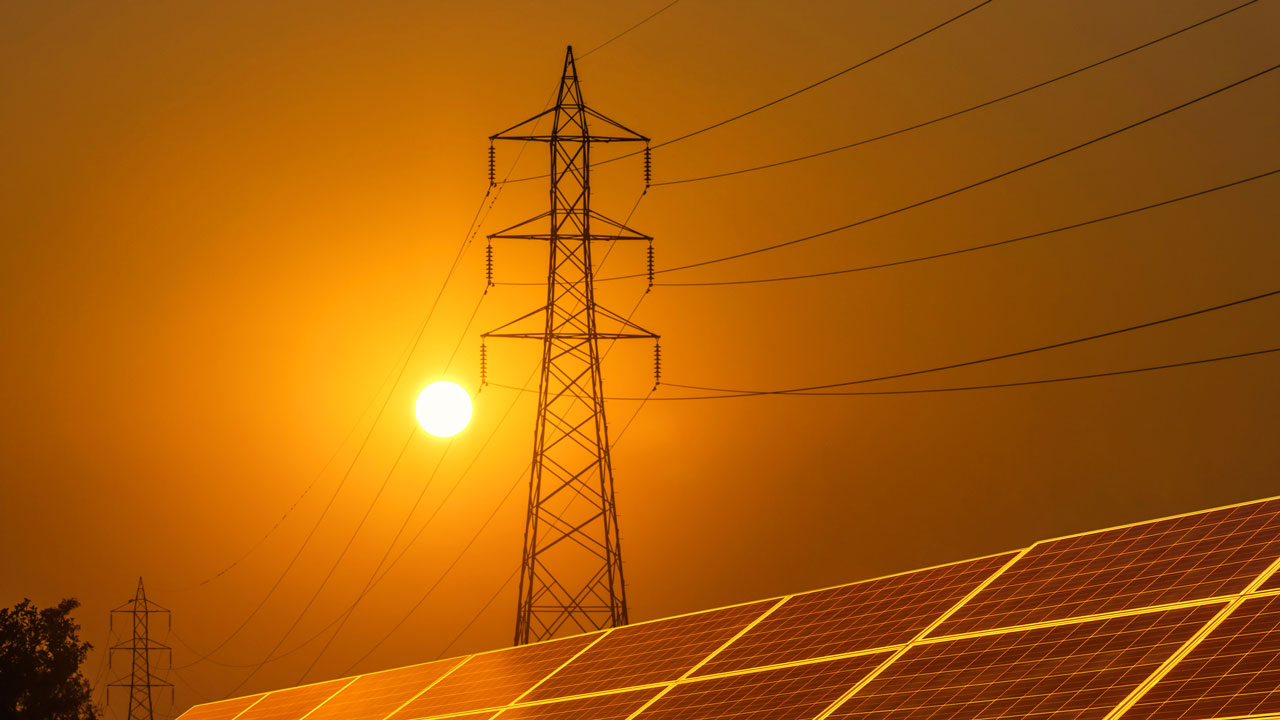
Tetra Tech’s Alan Skipper, civil and structural engineering expert, examines the growing issue of grid connection delays and why resolving these constraints is essential for scaling up solar technology.
As the world moves towards clean, sustainable, and efficient energy sources, solar technology has risen to prominence. But accommodating the growing number of solar projects has its challenges, leaving some developments at a standstill after grid connection complications stunt project progress and threaten net zero targets.
Why grid connection delays happen
Grid connection delays have become an increasingly frequent roadblock to completing solar projects. The grid was not built to cater for so many disparate generation sources, and the utility companies need to meet both technical and resource challenges to ensure that new connections do not have an adverse impact to customers. As the number of solar projects grows, the existing grid infrastructure struggles to accommodate the extra load and peak demand, pushing project timelines off course.
According to The Environmental Audit Committee (EAC), if the UK Government is to achieve its target of generating 70GW from solar energy by 2035, we must improve collaboration to address grid constraints.
In some cases, developers are waiting 10 to 15 years to secure a grid connection for solar sites. EAC identified the reasons for delay as: a lack of physical infrastructure such as cables and transformers, poor availability of data on solar PV generation, and a queuing system of applications where developers are applying despite lacking planning permission.
In early May 2023, The Environmental Audit Committee Chairman, Rt Hon Philip Dunne MP, said: “The ability for low-carbon energy sources, including solar, to be able to connect to the grid could seriously jeopardise Net Zero Britain. Our solar inquiry found that some developers wait up to 15 years for a grid connection: this simply isn’t good enough. We must make sure that concerns around infrastructure and planning are addressed swiftly.”
The impact of grid connection delays to solar projects
As grid connection delays stall project progress, this has a knock-on effect that can cause financial strain. Delayed projects can lead to increased costs, impacting return on investment. This can make it challenging for developers to access capital for future solar projects as investors may be reluctant to commit funds due to the uncertainty associated with grid connection issues.
Reforming the grid connection process: TEC Amnesty and queue management
The TEC Amnesty is an important first step in helping to free up the grid queue and accelerate connections. What can we expect from it?
The TEC register is the queue of projects waiting to connect to the transmission network to 2030 and beyond. The National Grid Electricity System Operator (ESO) has launched a TEC Amnesty which allows stalled projects on the TEC register to give up their place in the connections queue with minimal cost allowing projects that are ready to progress to connect more quickly.
Now, the ESO is developing an industry code modification to reform the queue management process into applying to all projects, not just those that have stalled. Progressing projects will be given priority and allowed to connect first, regardless of when they applied. This will apply to existing contracts and require projects to meet milestones to keep their place in the queue, preventing the queue from growing longer over time and accelerating grid connections.
How to prevent grid connection delays to your solar project
To prevent disruption and bring your solar project online, consider implementing these best practices:
- Pre-emptive planning: Assess all potential challenges and plan accordingly. Engage with utility companies and relevant government bodies early to understand grid capacity constraints and identify necessary upgrades, which will help accelerate approval processes. You need to ensure that you meet specific technical requirements before connecting to the grid, including electrical safety, metering, and voltage regulation.
- Conduct feasibility studies: Before embarking on your solar project, perform thorough technical and financial feasibility studies to gauge the potential for grid connection delays and prepare contingencies.
- Leverage cutting-edge technology: Stay on top of emerging technologies that can enhance grid integration or mitigate the impact of solar variability on grid stability.
- Advanced voltage optimisation systems can help ensure that solar sites can connect safely to existing grids while also optimising electricity production.
- Energy storage solutions can bridge the gap between peak load periods and when solar power is available, ensuring continuous energy supply.
- Real-time data software tools provide solar developers with greater visibility of grid conditions so that they can easily identify potential connection issues and quickly address them. These solutions can also be used to monitor existing connections, allowing developers to gain a better understanding of their projects.
- Seek expert guidance: Collaborate with experienced solar project consultants to help you navigate the maze of permits, documentation and inspections required for securing a grid connection and find efficient, affordable solutions.
While grid connection delays pose significant challenges to the growth of solar technology, their impact can be minimised through proper planning and foresight. Pre-emptive planning, conducting feasibility studies, leveraging cutting-edge technology, and seeking expert guidance are all important measures that can help developers secure a grid connection faster.
Processes such as the TEC Amnesty show promise in revolutionising grid connection queue management and allowing progressing solar developments to operate on track. With these strategies in place, developers will be better equipped to work within tight timelines and achieve their renewable energy targets efficiently and cost-effectively.
About the author

Alan Skipper
Alan Skipper is an operational director with responsibility for civil and structural engineering design delivery.
He has an almost 40 year record of multi-disciplinary design delivery in civil engineering and building developments. His experience encompasses complex projects in the industrial, logistics, energy and rail sectors, including the Transport for London Elizabeth Line train maintenance facility at Old Oak Common, and South Clyde Energy Centre in Glasgow.
Alan is a Chartered Engineer with a BSc in Civil Engineering, and full memberships of the Institution of Civil Engineers and the Chartered Institute of Architectural Technologists.