
Tetra Tech’s Dr. Joe Sanders, technical director, explores the most efficient options for water companies in the UK to meet their strategic leakage targets and how Tetra Tech’s industry-leading leakage and demand management solutions help clients address key challenges and reach in-year targets.
Due to the ever-adapting nature of the water industry and the increasing need to deliver ambitious future demand and leakage targets, it is important to evolve the approaches we take to provide solutions. This presents a challenge, what is the most efficient way to achieve our targets and where should we intervene?
At Tetra Tech, we’re at the forefront of leakage and demand management solutions, providing both long term views of investment and operational DMA level option solutions to reach in-year targets.
Digital integration tools for planning and operational delivery
Strategic Optimisation of Leakage Options for Water Resources (SoLow)
SoLow is our planning tool that we developed to identify the most economical mix of leakage management options to achieve targets at water resource zone (WRZ) level. It accounts for the interaction of options and the potential efficiency gains one option might bring to another and baseline activities.
The environmental impact and implications of other supply and demand interventions on the water available for use are also considered. The tool has been adopted by 11 water companies, as an enhancement to traditional approaches used across the industry.
It determines the most cost-effective solutions based on the inputs provided using a optimisation algorithm, both for scenarios which require a specific level of leakage and those looking to find the sustainable economic level of leakage. SoLow provides a high-level summary of these leakage management scenarios, and the accompanying detailed investment information required at a company and resource zone level over the whole life of the intervention.
The tool uses baseline information such as network characteristics, natural rate of rise, background leakage, and property forecasts to inform investment. It also accounts for adjustments in these appropriately in response to chosen interventions. The tool has been developed to optimise wider demand strategies such as water efficiency impacts on consumption for both households and non household customers to meet the needs of future water demand reduction.
Frontier Leakage Optimisation
FLO (Frontier Leakage Optimisation) is an operational delivery tool that builds on the success of SoLow to optimise selected leakage management options taking them from WRZs down to district metered area (DMA) level. It incorporates the latest network status and performance to prioritise targeting of intervention options and can also be used to inform recovery plans following short-term events such as freeze/thaw.
Quality Assurance
Quality assurance and confidence assessments on data consider the risk of achieving leakage management savings. This allows for water companies to track and target leakage management to achieve annual AMP targets, and to adjust their management options based on currently applied leakage levels and DMA characteristics. It ensures schemes are distinct in that the same DMA will not be targeted with overlapping interventions, in order to appropriately account for the benefits associated with leakage management activities. Alongside this, machine learning is used to adjust benefits and to enable the model to learn and update from both historical and current data provided on leakage management option effectiveness in the field.
Scenarios are further assessed for their risk based on natural rate of rise variability, accounting for best- and worst-case scenarios to achieve targets. This enables the tool to become a record of how an intervention was predicted to perform and how well it did perform. It provides a platform for re-optimisation, helping to justify the adjustment of leakage management strategies in response to performance and supporting leakage management practitioners in the delivery of short- and long-term targets.
About the author
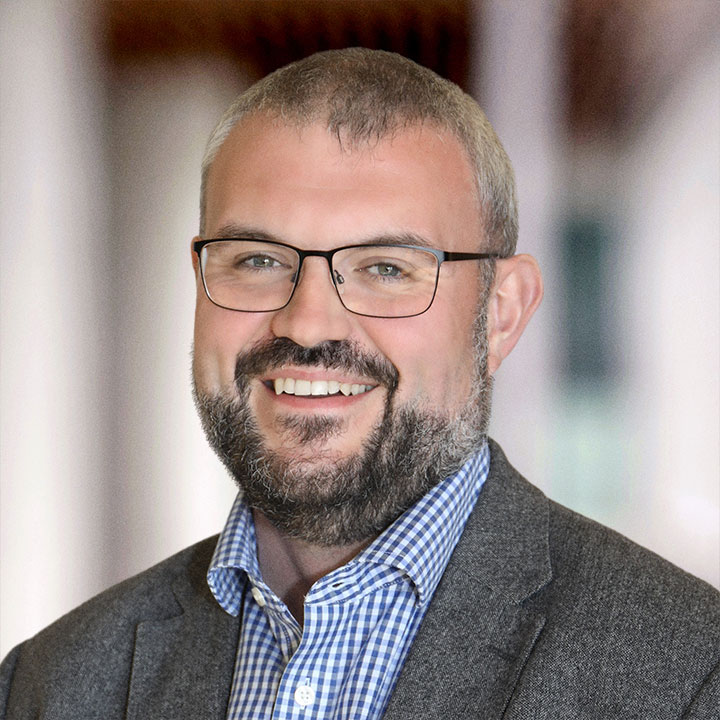
Dr. Joseph Sanders
Joe has over 15 years’ experience working in the water industry as an academic, water company employee, and consultant.
Joe has more than 15 years’ experience working in the water industry as an academic, water company employee, and consultant. He is focused on clean water in the areas of asset management, leakage, water resources, and network optimisation. He has extensive knowledge of leakage assessment, reporting, and calculation techniques.
His experience includes network failure and consequence modelling and developing cost benefit optimisation of water network strategies for both capital and operation interventions. He recently co-authored the UK Water “A Leakage Routemap to 2050”, setting out the needs of the industry for the next 25 years. He is a chartered engineer and water and environmental manager. Joe is a Fellow of CIWEM and sits on their Water Resources Panel.