
Tetra Tech’s Jessica McEarlean, senior hydrology consultant, explores firewater risks associated with battery energy storage systems and the mitigation measures required to protect people, assets, and the environment.
As the demand for renewable energy storage solutions continues to rise, understanding the unique hydrological and fire safety challenges associated with these sites is paramount for developers, contractors, and operators.
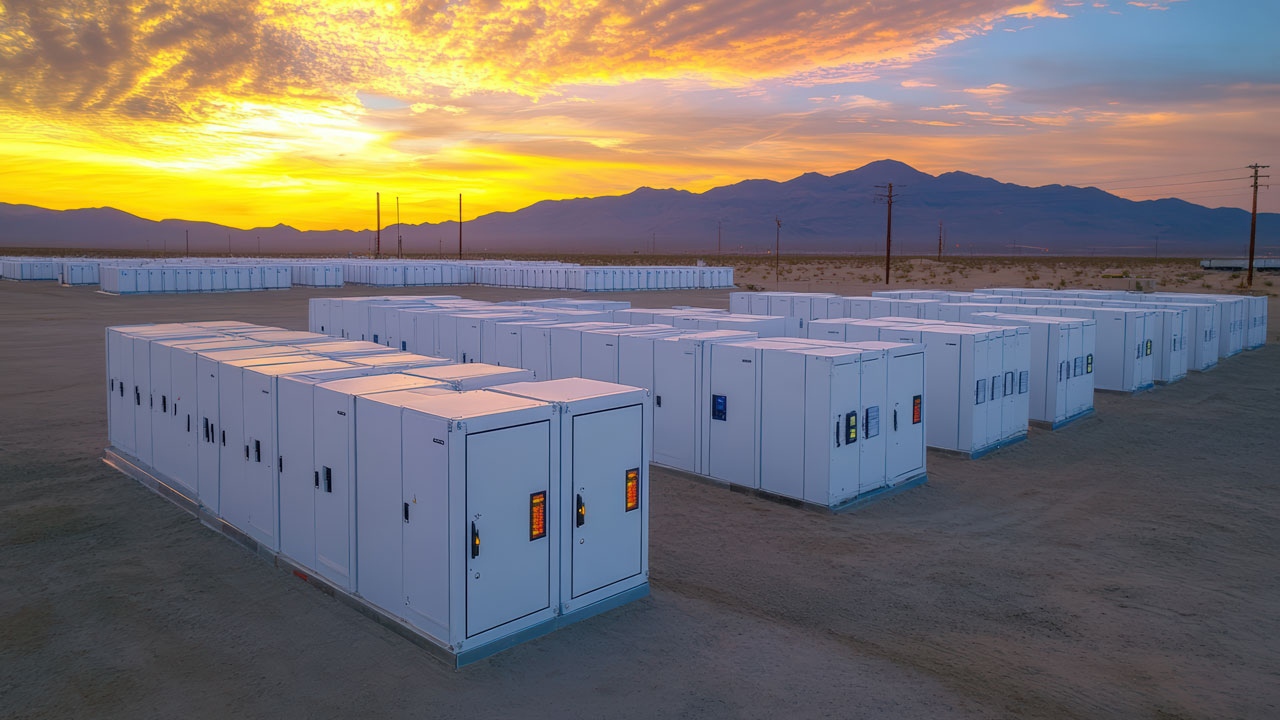
Battery energy storage systems, commonly referred to as BESS, are facilities that house batteries in shipping container-like units. These sites can vary significantly in size and location, ranging from small installations to large complexes, in both urban and rural settings. Each site presents its own set of hydrological concerns and constraints that must be addressed during the design and development phases.
Flood risk vulnerability classification
Every development type, including BESS, falls under a flood risk vulnerability classification, which is crucial for determining how compatible a site is with designated flood zones.
BESS sites are categorised as ‘essential infrastructure’ making them generally suitable for Flood Zones 1 and 2. However, for Flood Zones 3a and 3b, an exception test must be applied to assess the site’s suitability and any additional benefits that the development may bring in that particular location.
From a hydrology perspective, it is vital that BESS sites are designed to remain operational and safe during flood events. They must also be situated and designed to ensure that the development does not impact floodplain storage, impeded water flows, or increase flood risk elsewhere.
Fire risks and mitigation strategies
As BESS sites gain more attention, concerns regarding fire safety have escalated, especially after several high-profile fire incidents. The primary causes of fires in BESS include:
- Thermal runaway: Often linked to defects or damage in the batteries
- Failure of control systems: Leading to overheating and potential fires
- Excess hydrogen: Poor ventilation may result in an explosion
Fire management is a key focus to ensure the risks are mitigated. Below are four main areas of focus for fire risk management:
- Fire protection systems
- Maintenance
- Planning and design
- Construction
Hydrology’s role in fire protection
It is a requirement to ensure that an adequate water supply for firefighting is available within a development. Developers must identify on-site water storage solutions or access points to existing water networks. Common practices include storing water in steel tanks or installing hydrants that connect to local networks.
The firewater requirements are generally determined by three factors:
- Approximate fire duration: Linked to the battery type
- Flow rate and volume: Dependent on guidance from local fire authorities
- Proximity of containers: Adjacent units must be considered to prevent the spread of fire
In the event of a fire, additional water will be released onto the site. The presence of the additional water is a focus for the Hydrology team as this must be factored into drainage calculations. Drainage systems must be designed to manage both rainfall and potential firewater runoff in a sustainable manner.
Drainage best practices
Historically, the approach to drainage for BESS sites followed the drainage hierarchy, which promotes the use of infiltration methods. However, recent concerns about contamination from firewater runoff have prompted a shift in best practice. The current focus is on preventing uncontrolled runoff and ensuring that surfaces within compound areas are impermeable to contain potential contaminants.
One case study which utilised this approach is a 29-hectare BESS site that incorporated lined gravel bases with penstocks to allow the containment of contaminated firewater. This site also included attenuation basins within the wider site drainage network to store surface water runoff, ensuring that any non-contaminated water could be sustainably discharged to local water bodies.
While there is currently limited legislation specifically addressing firewater concerns for BESS sites, the National Fire Chief’s Council has provided guidance emphasizing the need for adequate firefighting measures, water supply, and runoff management. The lithium-ion battery storage bill proposed in 2022 aimed to establish statutory consultations with fire authorities for BESS developments, but it was not bought into law. This has, however, started important conversations on the topic.
Jessica McErlean, Hydrology Consultant
Collaboration among hydrology consultants, fire safety experts, and developers is critical to ensuring that BESS sites are designed with safety and sustainability in mind.
For those involved in developing BESS, it’s important to stay informed about emerging guidelines and best practices. Engaging with specialists in hydrology and fire risk management can facilitate a smoother development process and enhance safety measures across the board.
About the author

Jessica McErlean
Jessica McErlean is a senior hydrology consultant with more than four years’ experience within the hydrology sector.
She has undertaken work for major energy, residential, commercial, and leisure developments across the UK.
Her work primarily relates to the production of Flood Risk Assessment, Drainage Strategies and other Hydrology related assessments to support a variety of planning applications across the UK.
She holds a Master of Science in River Environments and their Management from the University of Birmingham.