
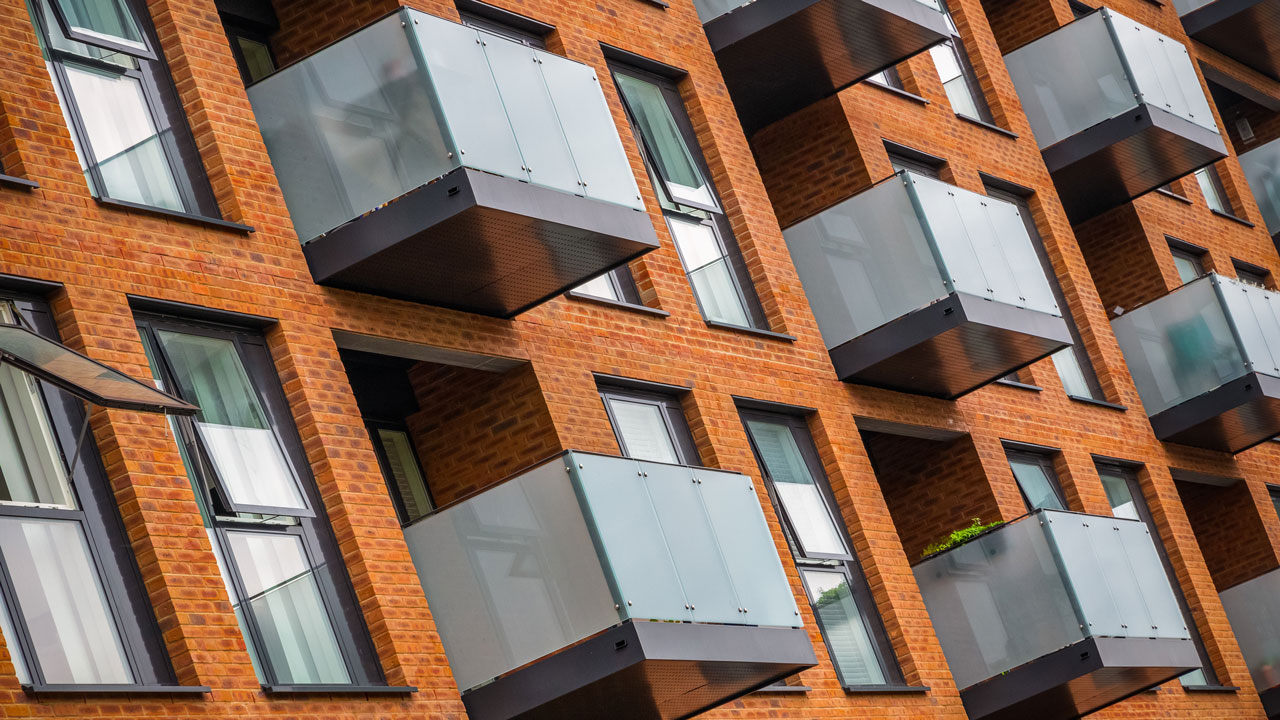
Tetra Tech supported the regeneration of the Grade II* listed Park Hill estate into modern student accommodation while preserving its architectural heritage.
The Grade II* listed Park Hill housing estate in Sheffield is Europe’s largest listed building, the majority of which has been derelict for years. We supported Alumno Developments in redeveloping this iconic site by devising a ‘retentionist strategy’ to keep the historical essence of the project at the core of its retrofit. Part of this regeneration project created 356 units of student accommodation known as Béton House.
Located in a prime position on the outskirts of the city, the conversion of Park Hill will also deliver all associated ancillary facilities, ground floor retail units and external works. Béton House is one of the most unique student developments in Sheffield. With 356 bedrooms, communal lounges, private dining, gym, and commercial units, the site is steeped in the history of Park Hill and located adjacent to the town centre, well-suited for students to live, socialise, and study.
Challenge
With an initial concept described as ‘streets in the sky’, Park Hill estate was a brutalist post-war housing scheme that was viewed as quite revolutionary at the time. The challenge for the development team was to regenerate part of this notoriously neglected estate into a characterful student development that preserved the asset for future generations.
Developing a retentionist strategy prioritises preserving heritage elements whilst ensuring the scheme is modernised and given a new lease of life. Finding the balance between heritage and meeting current design and construction standards is complex.
Part of our role involved challenging the project team at all times, stressing the maxim of do what you can with what you have and driving sustainable initiatives wherever possible.
Solution
We worked with the architect and structural engineer to create a strong argument for saving the balustrades. Bespoke moulds of the balustrade spindles were created so that most of the original balustrades could be retained and those hit hard by weather could be matched and replaced. This approach enabled the team to save most of this historical element, significantly reduced the carbon output of casting new.
Thanks to the ‘retentionist strategy’ and through the willingness to test and experiment to find out what worked for the building, roughly 1.2 tonnes of CO2 embodied carbon was saved, making Béton House a great example of how retrofitting existing buildings can lead to a significant reduction to carbon in construction.
At a glance
Client
Alumno Developments
Location
Sheffield, UK
Services
Cost consultancy, employer’s agent, principal designer, project management
The project featured in this article was undertaken by RPS, A Tetra Tech Company and originally published on RPSgroup.com. In March 2026 RPS rebranded to Tetra Tech.