

Building on its long-standing relationship, Tetra Tech helped Welsh Water to adapt to technological, climate and demographic changes, and address rising operational costs, reduce leakage, and meet growing customer expectations.
Dŵr Cymru Welsh Water supplies drinking water and wastewater services to most of Wales and parts of western England that border Wales.
Welsh Water is the fifth-largest company based in Wales and employs more than 3,500 people. Welsh Water is also the sixth largest of the ten regulated water and sewerage companies in England and Wales. In total, it serves around 1.4 million households and businesses.
In addition to this, Welsh Water also:
- Maintains over 26,500km of water mains
- Maintains over 30,000km of sewers
- Manages over 800 wastewater treatment works
- Analyses more than 600,000 tests a year sampling drinking water
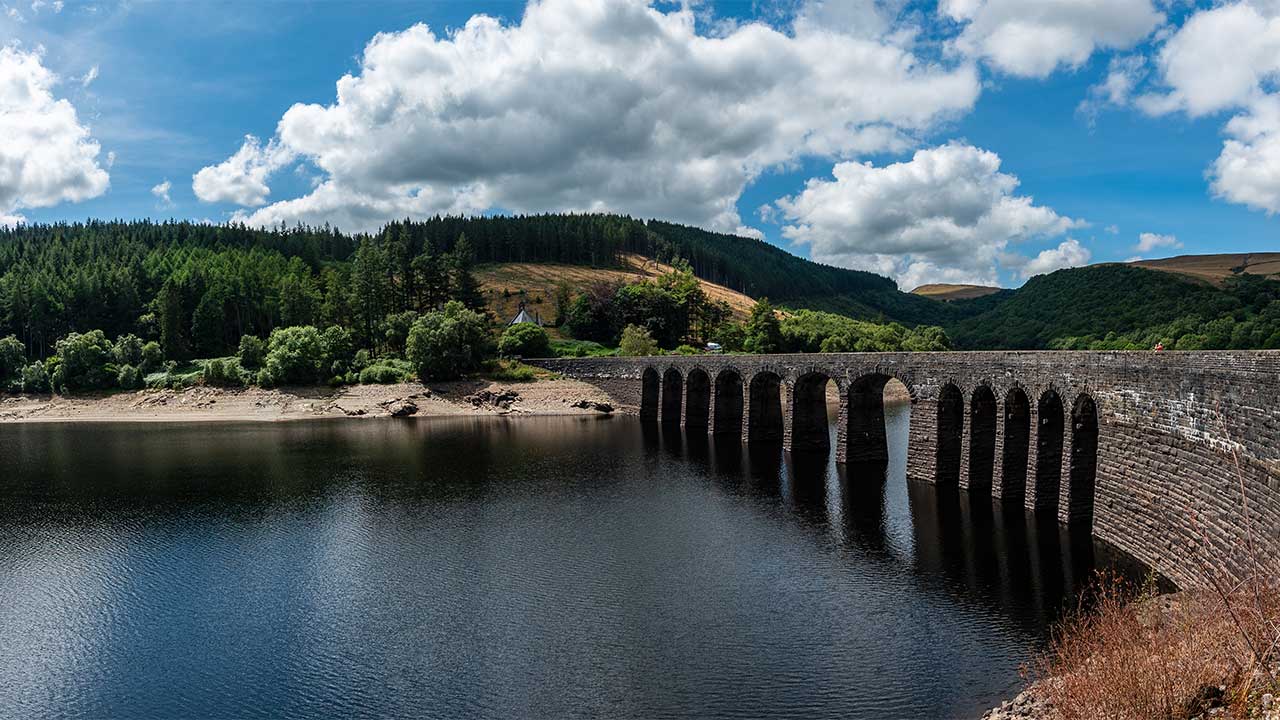
- Looks after 92 reservoirs
- Looks after 40,000 hectares of land
Welsh Water is responsible for supplying nearly 830 million litres of continuous, high-quality supply of drinking water per day to over three million people and for taking away, treating, and properly disposing of the wastewater that is produced.
Challenge
In 2019, Welsh Water was required to deliver a 15% reduction in reported leakage by 2025, as determined by the water industry regular, OFWAT.
Ongoing operational costs, leakage reduction targets, meeting rising consumer expectations, keeping pace with a rapid growth in technology, and climate and demographic changes were just some of the challenges that Welsh Water was facing.
Welsh Water is fully committed to delivering best quality service at the least possible cost and with Tetra Tech as a partner, they can further enhance and actualise the potential of this aim. Tetra Tech’s established relationship with Welsh Water, spanning several years, meant we understood the long-term business needs and vision for their organisation for the future.
Our role
In October 2020, Tetra Tech embarked on a 5-year framework project with Welsh Water to deliver their leakage detection programme and support their commitment to reduce water losses and reach customer satisfaction and water supply targets. Building upon their existing relationship, this new initiative runs until 2020 with potential extensions to 2028 and encompasses strategic operations across Wales.
On commencement Tetra Tech invested over £0.6m in new equipment, most of which was procured and mobilised within six weeks. Investment was made in Trunk-main leakage equipment; ground microphones and additional leak noise correlators; and thermal imaging cameras and pipe-microphones. Tetra Tech’s team has also significantly expanded over the duration of the project, from 100 to over 230 employees.
Tetra Tech prioritised addressing upstream losses and proactive management of water distribution networks. As part of our commitment to meeting Welsh Water’s needs effectively our team provided a round-the-clock service, and weekend working to support the client’s requirements.
Tetra Tech’s dedicated teams are strategically deployed to support Welsh Water clients in:
North Wales: East and West
South East Wales: Eastern and Central
South West Wales: Swansea and West
Each area consists of:
- A project manager
- 2 contract supervisors
- 4 team leaders
- Leakage engineers, noise loggers, and trainee leakage
- Technicians
- Analysts
Expertise
Tetra Tech’s approach considers all aspects of water management (clean and wastewater) and delivers optimised solutions for clients that meet and exceed their regulatory objectives. Tetra Tech has proficiency in complex services and state of the art technology to facilitate cost effective, fit-for-purpose asset management for clients.
Working with Welsh Water, Tetra Tech is committed to operating safely, with integrity, honesty, and transparency—underpinned by value for money.
Leakage detection
Tetra Tech has a detailed and comprehensive suite of high-quality services that allow us to pinpoint leaks. Leakage detection encompasses various methods tailored to swiftly identify and address water loss within distribution networks. Traditional approaches involve meticulous surveying, utilising acoustic methods using listening sticks, ground microphones, enigma loggers and leak noise correlators to pinpoint potential losses. Once located and investigated, repairs are promptly initiated.
Step testing, on the other hand, offers a more expedited approach, especially useful in large areas with thousands of properties. By strategically manipulating valves and isolating sections of the network, step testing enables the rapid identification of significant losses, allowing for targeted intervention.
Additionally, noise logging serves as an efficient tool, requiring minimal expertise. These compact devices, record constant noise during the early hours of 02.00-04.00am, facilitating data analysis and the generation of points of interest for further investigation. This method not only enables broad coverage but also provides an entry point for low-skilled staff, who can progress through training programs to become proficient leakage engineers.
Overall, this multifaceted approach ensures proactive management of leakage, enabling swift response and minimising water loss within distribution systems.
Upstream losses
Another aspect to the contract is upstream losses and addressing leakage in the Trunk-mains system, which serves as the primary conduit for water from reservoirs to distribution points. Trunk-mains typically range from 12 to 30 inches in diameter and require extensive monitoring due to its size and complexity.
Detection of leaks in this system involves walking surveys and the use of advanced correlator leak noise technology to pinpoint areas of interest for further investigation. Detecting leaks in the Trunk-main is a challenging but critical aspect of operations.
Per capital consumption
Per Capita Consumption (PCC) deals with areas experiencing persistent issues with high water consumption. These areas consistently show high levels of water usage despite efforts to mitigate leakage.
Tetra Tech teams, working closely with data analysts are assigned DMA/LCA’s to investigate and address these issues, involving tasks such as verifying customer and domestic properties, meter location and logging, flow and pressure logging and inspecting boundary valves, identifying potential breaches or anomalies.
Close management, detailed reports and oversight are emphasised to ensure that staff fulfil their responsibilities effectively.
Managing the contract
When it comes to managing the contract for the project, Tetra Tech established a robust system of regular review meetings to keep everything on track. With Tetra Tech’s large geographical coverage, coordinating face-to-face meetings can be challenging, so rely heavily on virtual team meetings to ensure effective communication and collaboration. These meetings happen on a weekly and daily basis, providing our team with opportunities to assess their performance, identify areas for improvement, and share valuable insights and best practices.
Additionally, Tetra Tech attends monthly performance meetings with Welsh Water, where they review their progress against set KPI’s and discuss any operational matters. To kickstart each week, our team holds a Monday morning operational meeting to outline their objectives and tasks for the upcoming week.
This structured approach to meetings helps us stay organised, aligned, and proactive in managing the project effectively.
Performance
Tetra Tech operates at different levels of engagement with the client. Our Regional Manager has regular interactions with the client, addressing day-to-day operational matters and our Operations Directors are closely involved, particularly on commercial aspects and issues where traction is needed. Tetra Tech’s relationship with the client remains positive with ongoing open discussions, daily meetings, with consistent suggestions and a compelling drive to create an impact to improve performance and feedback between both parties.
Staff training
Tetra Tech has developed a comprehensive fast track training program. Trainees undertake mentorship, classroom instruction, and practical experience, with client approval at each stage. Training is currently ongoing with the following team members:
- 6 contract supervisors
- 19 team leaders
- 86 experienced staff
- 70 trainees progressing
- 18 USL staff
- 17 noise loggers
Impact
From October 2020 to April 2024, Tetra Tech has raised 35,000 leaks with an estimated saving of 827 MLD (million litres of water per day).
We have delivered wins, exceeded targets, and built a strong and enduring relationship with Welsh Water over the years. With decades of experience in Asset Inspection, our team has achieved incredible outcomes. Utilising their expertise, our teams analyse complex data and provide pragmatic solutions, combining science, technology, and hands-on experience to support their clients.
In 2021, Welsh Water reported that they had been successful in the attainment of their year-end leakage target. Tetra Tech played a key role in this success, delivering strongly against each of the key performance metrics and maintaining a high level of team utilisation. In addition our team has implemented an optimised and rigorous maintenance schedule to ensured that Welsh Water assets have:
- Improved asset resilience
- Reduced leakage
- Improved water quality
- Reduced pollution and flooding
At a glance
Client
Welsh Water
Location
Wales
Services
Leakage detection, per capital consumption, upstream losses
The project featured in this article was undertaken by RPS, A Tetra Tech Company and originally published on RPSgroup.com. In March 2026 RPS rebranded to Tetra Tech.