
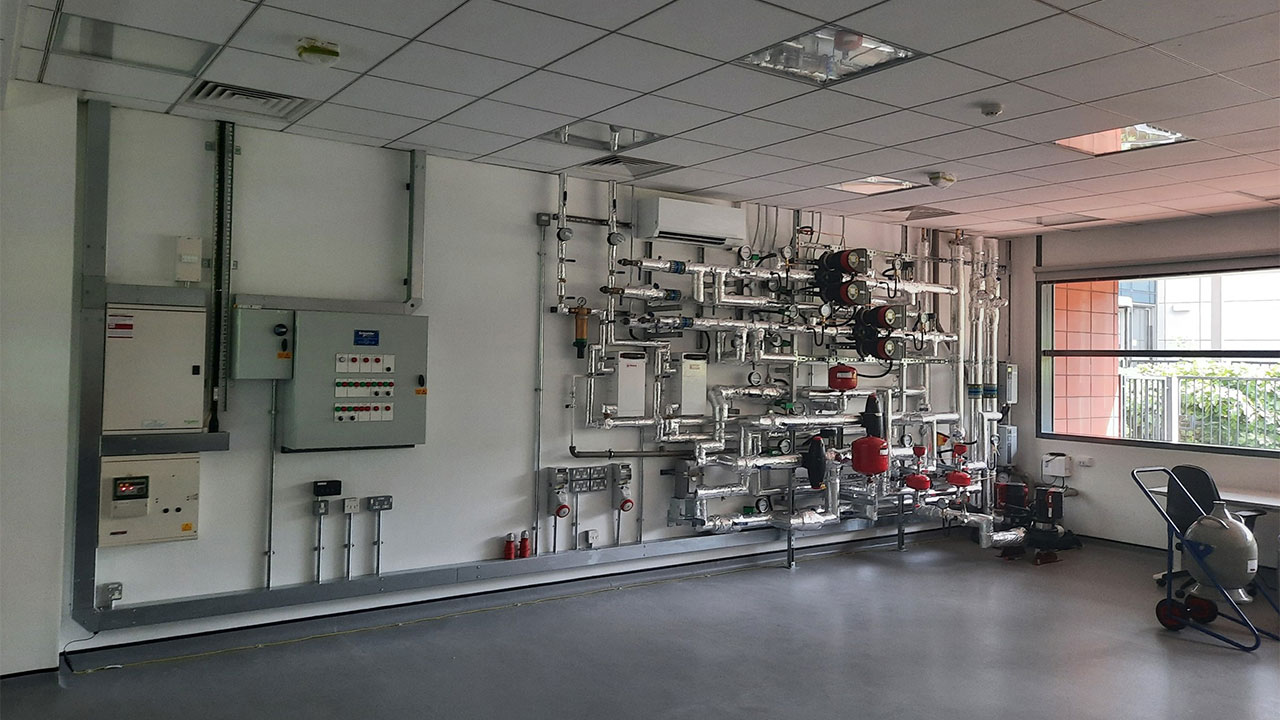
Tetra Tech designed the mechanical and electrical building services for the new BioEmPiRe Centre at The University of Manchester.
We designed the mechanical and electrical building services for a new state-of-the-art BioEmPiRe Centre for Structural Biological Electron Paramagnetic Resonance (EPR) Spectroscopy, located in the Micheal Smith Building at The University of Manchester.
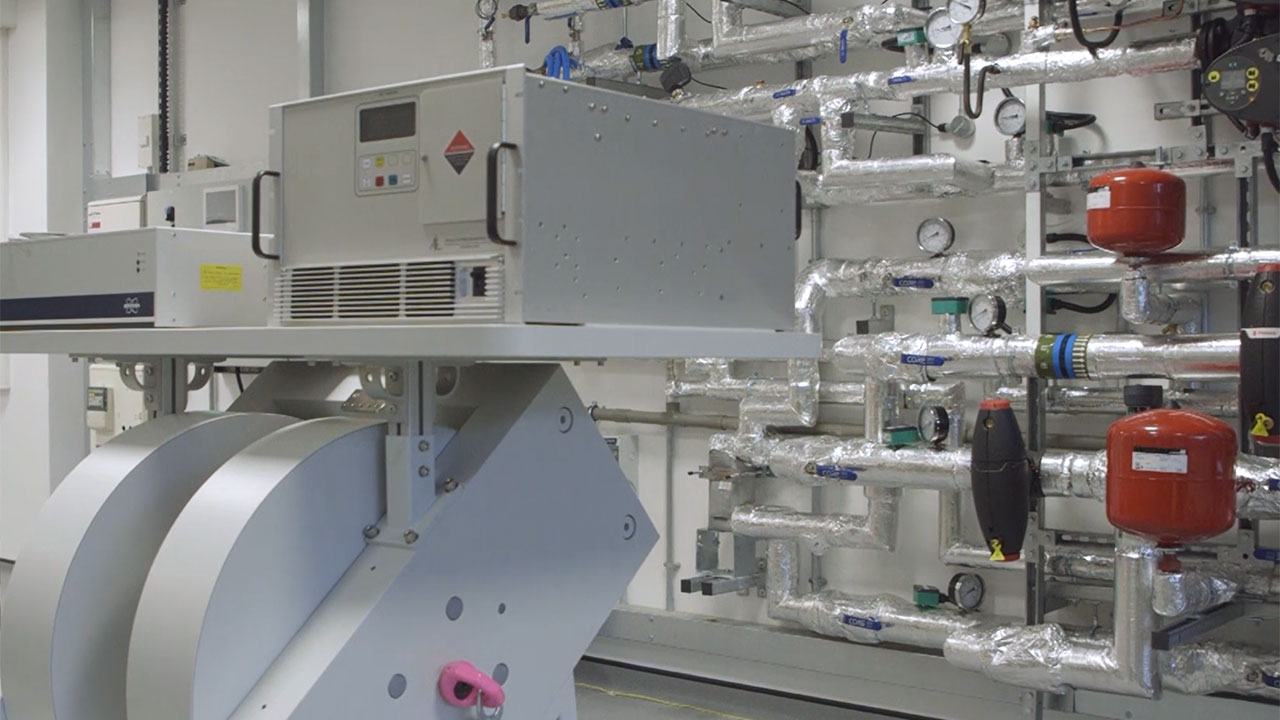
The centre launched in 2025 and is equipped with a new high-power (300 watt) EPR spectrometer and an integrated cryogen-free cooling system to enable the assessment of complex membrane proteins.
Our engineers delivered technical assistance and guidance at every stage of the project, from initial feasibility to final commissioning, ensuring seamless installation and optimal performance of the specialist laboratory equipment.
The project won ‘Small Project of the Year Award’ at The University of Manchester’s Estates and Facilities Outstanding Achievement Awards 2025.
Challenge
The primary challenge was locating a suitable space within the University’s existing building stock that could be converted into a laboratory to accommodate specialised equipment. We worked closely with The University of Manchester to monitor electrical loads and confirm that the building had suitable electrical capacity for the installation.
The next major challenge was to design a water-cooling system that would meet the strict requirements of the lab equipment. After analysing the data sheets for all the specialist equipment, we provided a design that incorporated water filtration, high water pressure systems, and water flow temperatures of 15°C while ensuring it was suitable to operate every month of the year.
Solution
Our team has partnered with The University of Manchester for many years, regularly developing concept designs and feasibility reports for building services across the University’s property portfolio. During the concept stage, we discuss different options, outlining the pros and cons of each solution, together with budget costs. This approach helps reduce time spent exploring design in detail that may not be aligned with the project budget, ultimately saving our client time and money.
We worked closely with the University from project initiation to produce feasibility reports, which discounted three buildings before settling on the Michael Smith Building. We assessed if the building could house the heavy equipment, had suitable environmental conditions for the laboratory and had sufficient space to install and route the supporting services with minimal cost and disruption to the University.
Our mechanical and electrical engineers were critical to delivering the infrastructure to enable the specialist laboratory to operate at optimal conditions. To effectively study the proteins, cryogenic temperatures were required. The University chose to use liquid helium via a new helium compressor which can produce temperatures as low as 0.2 Kelvin. The helium compressor produces a significant amount of heat. The magnetic EPR spectrometer also generated a lot of heat energy that needed to be controlled. We provided the full detailed design for the liquid cooling solution to remove the heat from the laboratory equipment.
Collaborating with the University’s supply chain, we reviewed different options for water temperatures and pressures, plate heat exchangers, pumps, and pipe sizes to provide the most effective solution that balanced capital cost, operating cost, and space constraints.
At a glance
Client
University of Manchester
Location
Manchester, UK
Services
Electrical design, mechanical design
The project featured in this article was undertaken by RPS, A Tetra Tech Company and originally published on RPSgroup.com. In March 2026 RPS rebranded to Tetra Tech.