
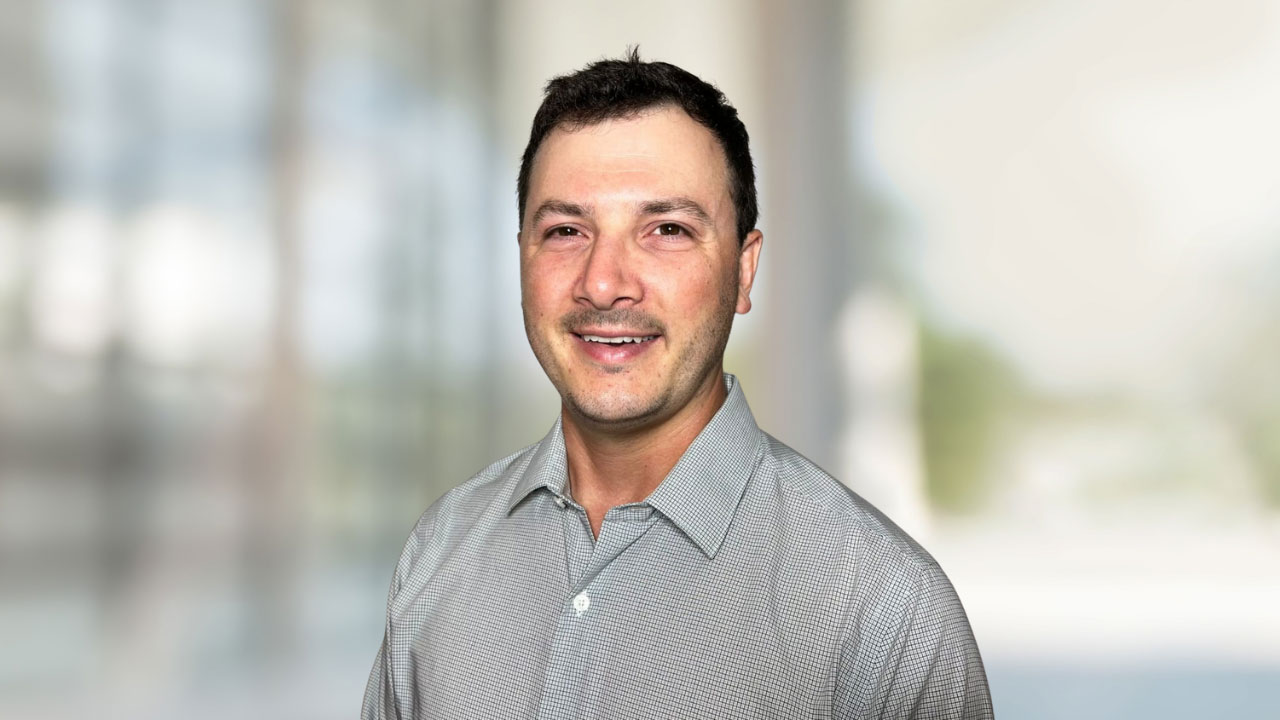
Julien Dupas is a structural and transmission lines engineer with more than 10 years of experience in overhead transmission, substation, and distribution line design across North America.
Julien brings deep expertise in structural and electrical engineering design for high-voltage energy infrastructure, with extensive hands-on experience at both utility and consulting levels. He has contributed to major projects including the design of 345 kilovolt (kV) and 500 kV high-voltage direct current (HVDC) converter stations, substation foundation and structure development, and large-scale transmission line upgrades.

What challenges are you seeing in energy transmission and distribution (T&D)?
Our transmission lines team has experience in a wide range of project types that highlight various trends and challenges in the industry. Increased frequency and intensity of weather events are challenging existing infrastructure, load demand is increasing with the energization of transportation, and renewables developers are pining for a bay in the nearest congested substation—all while infrastructure is aging and the lights need to stay on.
There is a large volume of work required in the T&D networks in North America to strengthen and upgrade existing lines, build new interconnections, and bring supply online. Traditional design approaches don’t always fit the bill in these conditions, which makes for an abundance of design challenges.
What are the latest innovations in foundation design and transmission line constructability?
Historically, North American transmission lines feature direct-embedded wood poles and lattice towers on light foundations. While wood poles are still the right fit for many projects, owners are increasingly considering alternatives because wood has a shorter life cycle, is vulnerable to wildfires, and offers less resilience against security load cases. Lattice towers are still common—especially at higher voltages—but can be slow to design and assemble for fast-tracked projects, so many utilities are adopting tubular steel poles for faster design turnaround, longer life, rapid assembly, and high adaptability. Designers can increase diameter or wall thickness for greater loads, stack phase conductors vertically to fit narrow rights-of-way, or locate attachment points to target narrow clearance opportunities at line crossings.
One popular advancement in foundation design is the helical pile, which outperforms steel grillage foundations or cast-in-place concrete footings. Installation typically requires no excavation requirements, which reduces safety risks and soil disturbance, avoiding dependence on nearby concrete batch plants and curing time and offering flexibility to support lattice structures, tubular steel poles (with welded pile caps), and even wood poles in exceptionally poor soil conditions (bucket piles).
How can we address things like visual, ecological, and acoustic impacts of transmission infrastructure?
Public concern and tougher permitting have pushed transmission-line design and environmental mitigation forward. But putting lines out of sight isn’t always practical, since urban sprawl, added costs, poor soils, and access needs often get in the way. How a line looks is pretty subjective. For example, some people prefer the slimmer profile of tubular steel, while others like the transparency of lattice. Galvanized also can look clean to some, but too stark to others.
Designers balance those tastes with options like longer or shorter spans, non-specular conductor finishes, or switching materials to soften the visual impact. Environmental harm can be reduced too by allowing taller vegetation with higher clearances, avoiding permanent access roads through seasonal or temporary methods, or using bird diverters. And yes, corona-related audible noise matters. Bundled conductors and corona-free hardware help, but compact designs that save space can raise field gradients and noise, so the design has to carefully juggle all these trade-offs.
Can artificial intelligence (AI) or machine learning be used to optimize design?
The short answer is yes, absolutely. With design workloads rising, engineers are leaning on tools to save time and money, from AI that pulls key scope and deliverables from contracts to more technical solutions. LiDAR, for example, delivers dense, raw point clouds that aren’t useful until you process them into layers like ground elevations, wire (catenary) positions at survey time, and buildings or billboards. Or consider tower spotting and lattice design, which assigns cost values to structure types, flags pricey soil or slope areas, sets required positions, and lets software find the tower types and placements that minimize cost and then optimize member sizes to cut weight and expense. These tools speed up decision-making and reveal better trade-offs, but they don’t replace engineering judgment. Used thoughtfully and with proper due diligence, they help teams deliver higher-quality results faster.
How is Tetra Tech innovating to support our clients in delivering critical projects like powering data centers?
Tetra Tech believes in a collaborative approach to designing lines. When it comes to powering data centers, we have complete transparency with our clients and venture to get directly in contact with the utility supplying the power. This reduces the effort on the client side to facilitate the communication and gets the project on track a lot faster. We don’t turn a blind eye to risks not identified by the client. If we see markers or manholes for a buried utility in the corridor, we make sure the client is aware of the potential conflict and offer solutions. Furthermore, if the client is not aware of cost-saving design options, we will identify possible scope changes to save money. A common occurrence is that preliminary engineering identifies a required underground portion of line—which can be multiple times the overhead cost—when a creative overhead solution may be available. At Tetra Tech, we’re not only looking for a solution to a problem. We help our clients achieve the best possible output and, ultimately, sustainable outcomes.