
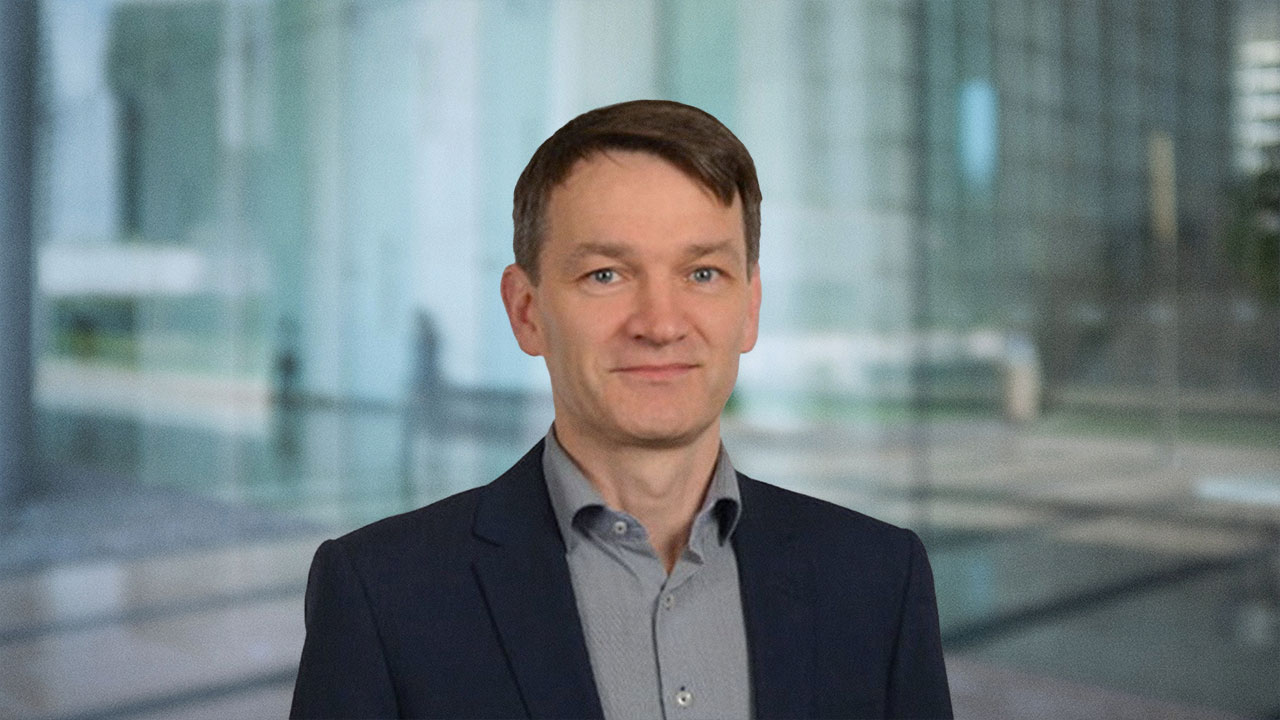
Conall Boland, senior sustainability consultant in Ireland, shares insights on reducing carbon in public sector projects, highlighting practical strategies, cultural change, and the importance of early decision-making.
Conall has served for 12 years as a Board Member (and Deputy Chairperson) of the Irish planning appeals body An Bord Pleanála and has an excellent overview of the various strands of sustainability and the practical challenge of responding to climate change. His skill sets include energy, transport, water, and resource management as well as expertise in governance and change management.
Currently lecturing in sustainable development in Technological University Dublin, he has experience of senior level interaction with government, state agencies, and private companies.
In this interview, we discuss the findings of Conall’s report for the Irish Department of Enterprise, Trade and Employment, “Reducing Embodied Carbon in Cement and Concrete Through Public Procurement in Ireland.”

What is the difference between embodied and operational carbon?
The main source of embodied carbon in concrete is the cement – the material that binds the sand and aggregate together to form concrete. Making cement is an energy intensive process. It involves heating limestone to very high temperatures and when the limestone breaks down in that heat, it also emits carbon dioxide. So there are emissions from the energy use and from the production process. One of our key goals is to reduce the amount of traditional cement in a concrete mix.
Embodied carbon is mostly in the materials and the construction process for a building. It can also come from a refurbishment. Let’s say you took out windows after 20 years and replaced them – that also counts as embodied carbon. But for the most part, decisions taken at the design stage are the most important, particularly selection of materials. If you get in early in the project pipeline during the design stage and build good practice into the design, it helps out a lot down the road.
Operational carbon is more familiar —it relates to the energy use over the building lifetime for heating, power and appliances.
How are the government and public sector bodies encouraging this change in our approach to procurement and design?
At the moment, the government’s approach is to encourage best practice and to improve knowledge and understanding about cement and concrete procurement, and to encourage the design teams employed by public bodies to be much more efficient and careful about specifying cement and concrete. In the longer term, it’s possible that the government will make it mandatory or add some regulatory requirements on specific carbon levels. The next few years will be about encouraging best practice and better design.
What role do the engineers have to play in carbon reduction?
So first of all, structural engineers have a big responsibility for carbon reduction because they’re the people who design things like foundations and structural frames. They make a lot of decisions that will have a big impact on the level of embodied carbon. There are two things—one would be the structural design configuration, and that’s a decision taken with the architect and engineer. How wide are your spans? What’s your spacing of columns? By taking a more traditional or conservative approach, you can arrive at structural arrangements that are less demanding and can be achieved with more slender columns, more slender beams, and ultimately use less concrete or use lower strength concrete.
The other side of that coin is the actual strength class. As technology has improved in the last few decades, it’s become easier to specify higher performance and higher strength concrete and, in some situations, we’re maybe using higher strength concrete for purposes that don’t strictly need it. So we’re overdoing the cement content and as a result, the carbon content is higher than necessary. So we need to ask: Are we over specifying and, as a result, creating more emissions than we need to?
How can structural engineers embed lower carbon approaches in their projects?
When you train as a structural engineer, your first priority is that it’s safe, that the building or structure is stable and durable. But that can still be done with lower carbon approaches. We’re not asking to compromise on safety or durability, but we’re asking people to move away from business as usual and to try and achieve the same stability and safety by using lower carbon approaches. There is an element of relearning and upskilling to achieve that. Plus, the architect needs to be working in the same direction.
Engineers can also incorporate cement options that are less carbon-intensive. CEM I cement is a pure form of cement that is almost 100% clinker from the cement factory. It’s not so much rapid hardening, but it’s a pure form of cement that is almost 100% clinker from the cement factory. If you went back 30-40 years or more, that would have been the main component when you purchase cement. But over recent decades, we’ve realised that you can mix other materials in to make a range of cements, such as CEM II or CEM III, and you can still retain the strength and durability performance. At this stage, CEM II cements have similar strengths and setting and technical characteristics, but they have about 10-15% less carbon. What we’re saying is that the default for public projects should be to steer clear of CEM I unless there’s a very particular reason to use it.
How are opportunities for carbon reduction identified throughout the project lifecycle?
Normally, the process to identify carbon reduction will bring the designer, the client and the contractor around the table to share ideas on carbon reduction. Sometimes the solutions are popular with the client because it might be a matter of building less or taking a leaner approach to design. So for example, instead of using a concrete tank or a lined pond for managing surface water, you might use a swale, or an earth lined pond and that would create a biodiversity feature as well.
Very often, when you save carbon through these measures, you save cost as well. So that’s the sweet spot. As we try harder to get more and more reductions it may involve new materials, low carbon alternatives and sometimes they will be more expensive, particularly in the early years as we learn more and develop these new materials. There will be cases where reducing carbon does increase cost. But the best results are through collaboration and people sharing their knowledge and experience.
Learn more about the report’s findings and how to impactfully reduce the carbon impact of public sector projects.