
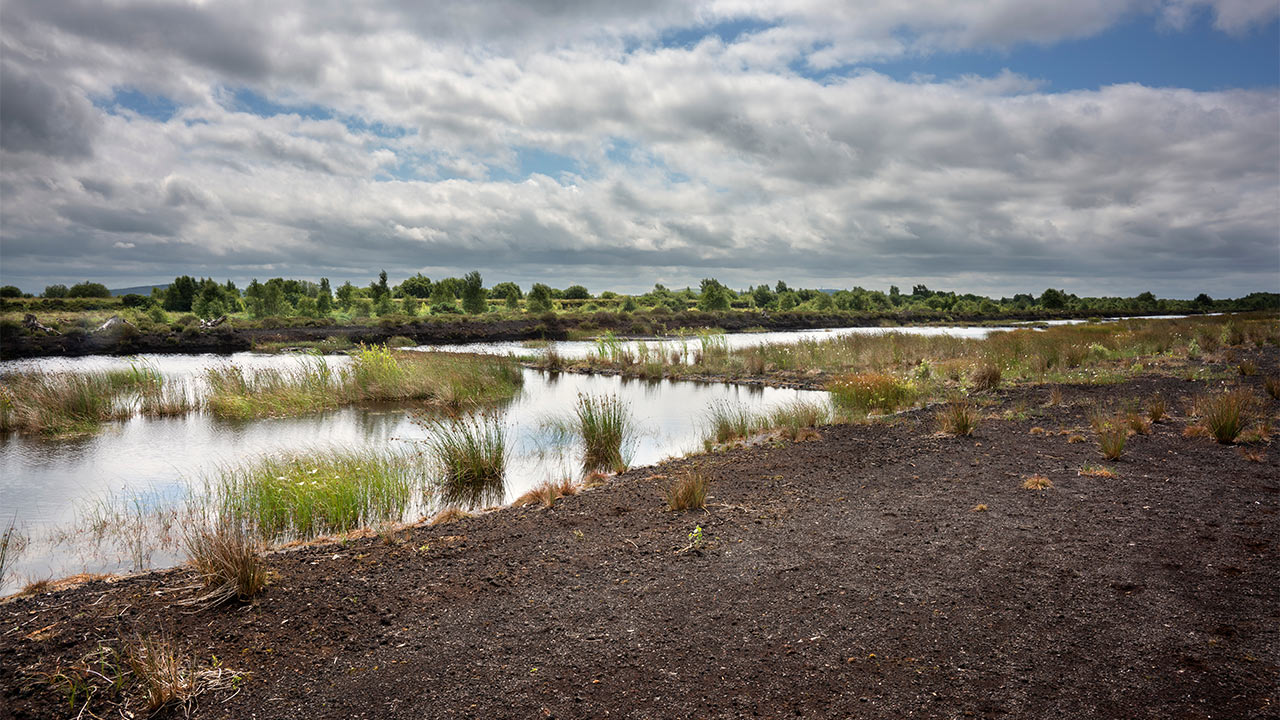
Tetra Tech supported one of Ireland’s largest peatland rehabilitation programmes, helping restore 24,000 hectares of peatlands to reduce carbon emissions, improve water quality and increase biodiversity.
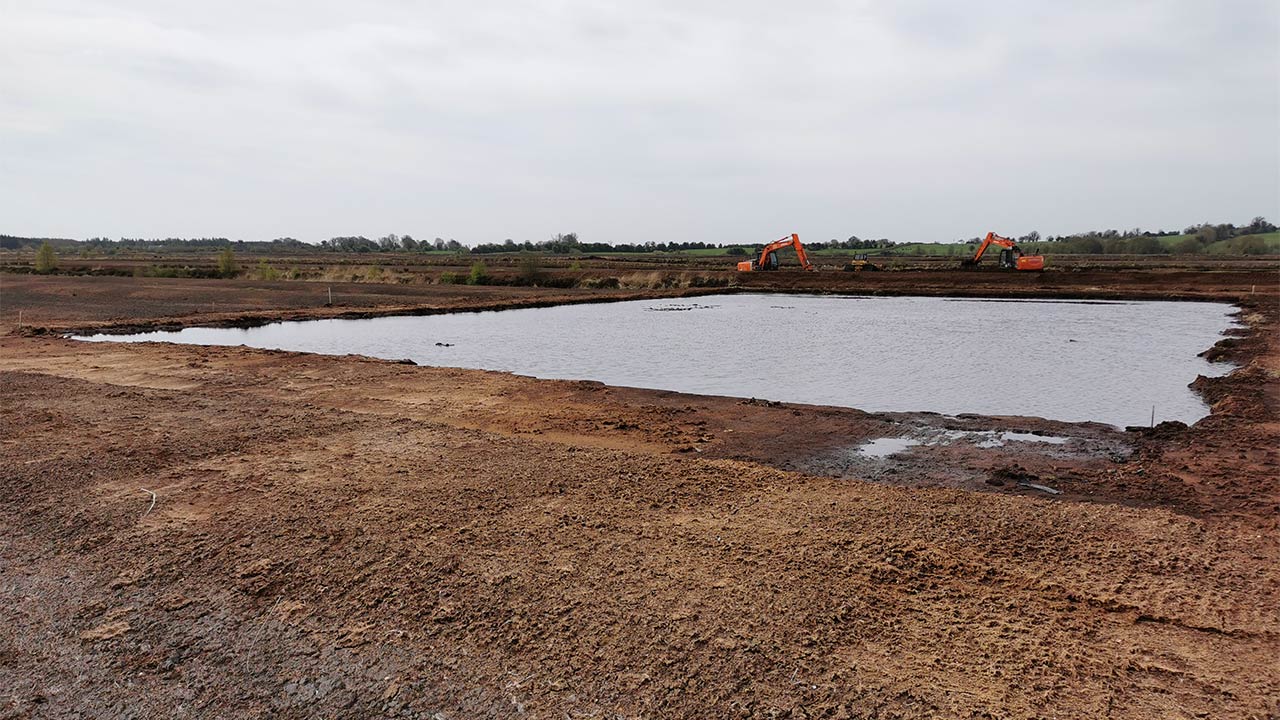
Bord na Móna have committed to one of the largest peatland rehabilitation and restoration projects ever undertaken, targeting 24,000 hectares in over 80 bogs. The Peatlands Climate Action Scheme (PCAS) aims to reduce carbon emissions, improve water quality, increase biodiversity and regulate flow downstream. To support them, we are providing Bord na Móna with hydrological expertise throughout the duration of the scheme.
Bord na Móna is an Irish semi-state company that have carried out peat extraction since the 1940s. They ceased all peat extraction activities in 2019 and with support from the Irish Government and the European Union, have committed to one of the largest peatland rehabilitation and restoration projects ever undertaken in Europe. This goes significantly beyond their requirements to rehabilitate under their Integrated Pollution Control (IPC) licenses.
Challenge
The project has been designed to go significantly beyond Bord na Móna’s existing obligations to maximise rehabilitation of peat-forming vegetation types across the project area and therefore maximise ecosystem services benefits. This includes optimising conditions for converting these vast areas from a significant carbon source to a carbon sink, improving downstream water quality, dampening peak run-off rates to reduce frequency and magnitude of downstream flooding, enhancing biodiversity and creating socio-economic benefits through ecotourism and amenity developments.
From the outset of this project, there were significant challenges, not least in the scale of the rehabilitation works to be carried out over such a short duration. One of the key challenges for Bord na Móna was the need to consider potential hydrological impacts of the proposed rehabilitation measures on adjacent third-party lands. This required a rapid, yet robust methodology to be developed to adequately consider the hydrological risks and identify the need for remedial measures where necessary.
There was also a requirement to design and install a suitable hydrological monitoring regime to ensure adequate monitoring data was available prior to rehabilitation commencing in Spring/Summer 2021. This hydrological monitoring data was required to fulfil a number of key requirements including:
- Collect baseline data on the hydrological setting of each site to inform rehabilitation design
- Collect data prior to, during and post-rehabilitation to assist in determining the impact of specific rehabilitation measures (to inform future rehabilitation measure design)
- Collect data prior to, during and post-rehabilitation which can be extrapolated across representative sections of the site to ensure that the site is on the correct anticipated trajectory
Solution
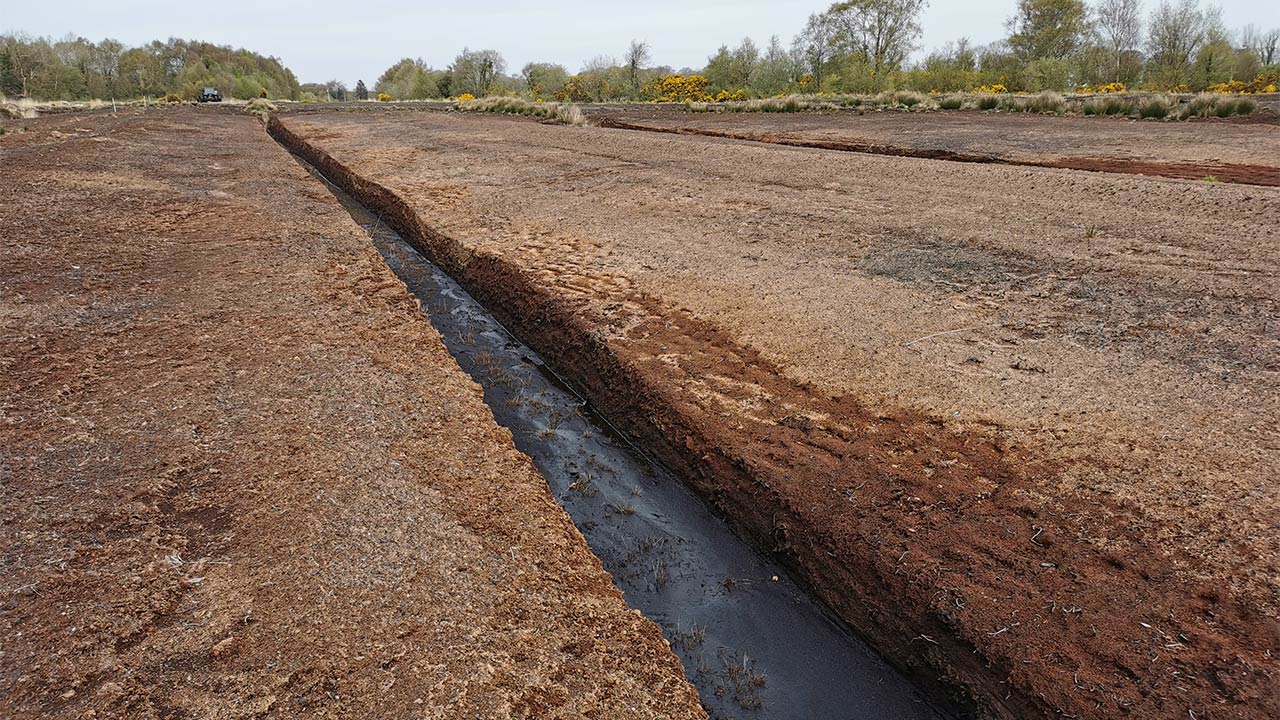
Given the need to rapidly consider risks to third party lands, our team prioritised the development of drainage management plans (DMPs) over the installation of hydrological monitoring infrastructure. The DMPs utilised high resolution LiDAR data combined with detailed site-specific topographic surveys to consider the potential risk from the proposed rehabilitation measures and require solutions, such as the retention of some drainage features. We developed a robust methodology to enable assessment of risk of hydrological impacts which was submitted alongside each rehabilitation plan for approval to the scheme regulator, National Parks and Wildlife Service (NPWS). This involved a collaborative approach with the client to ensure efficient use of time and resources. Close liaison with Bord na Móna ensured that our team could carry out hydrological analysis rapidly and, if necessary, direct Bord na Móna to survey particular areas where any uncertainties remained.
Following initial DMPs development, we focused on the design of a suitable hydrological monitoring network that would address Bord na Móna’s and NPWS requirements. A network of monitoring wells and piezometers were installed, and a sub-set of wells instrumented with automated data logging equipment. The monitoring network consists of piezometer nests comprising phreatic monitoring wells to measure fluctuations in the water-table at the ground surface and deeper piezometers to investigate vertical and horizontal hydraulic gradients.
We also designed and installed the hydrological monitoring network across 60 of the 80 bogs, with over 1,200 monitoring wells installed to date. We complete all hydrological monitoring activities, collecting data from the monitoring wells during summer and winter months, followed by processing of this data and upload onto our project dashboard.
Our team have also undertaken hydrological analysis of the data collected and provide hydrological expertise to Bord na Móna to refine rehabilitation plans as the project progresses.
Project timeline
- November 2020: Start date
- December 2020: Hydrological monitoring infrastructure installation commenced
- April 2021: Rehabilitation works commence (year 1 bogs)
- April 2022: Restoration works commenced (year 2 bogs)
- Ongoing
At a glance
Client
Bord na Móna
Location
Ireland
Services
Biodiversity and ecosystems consultant, hydrological modelling, peatland rehabilitation design, water-quality improvement
The project featured in this article was undertaken by RPS, A Tetra Tech Company and originally published on RPSgroup.com. In March 2026 RPS rebranded to Tetra Tech.