
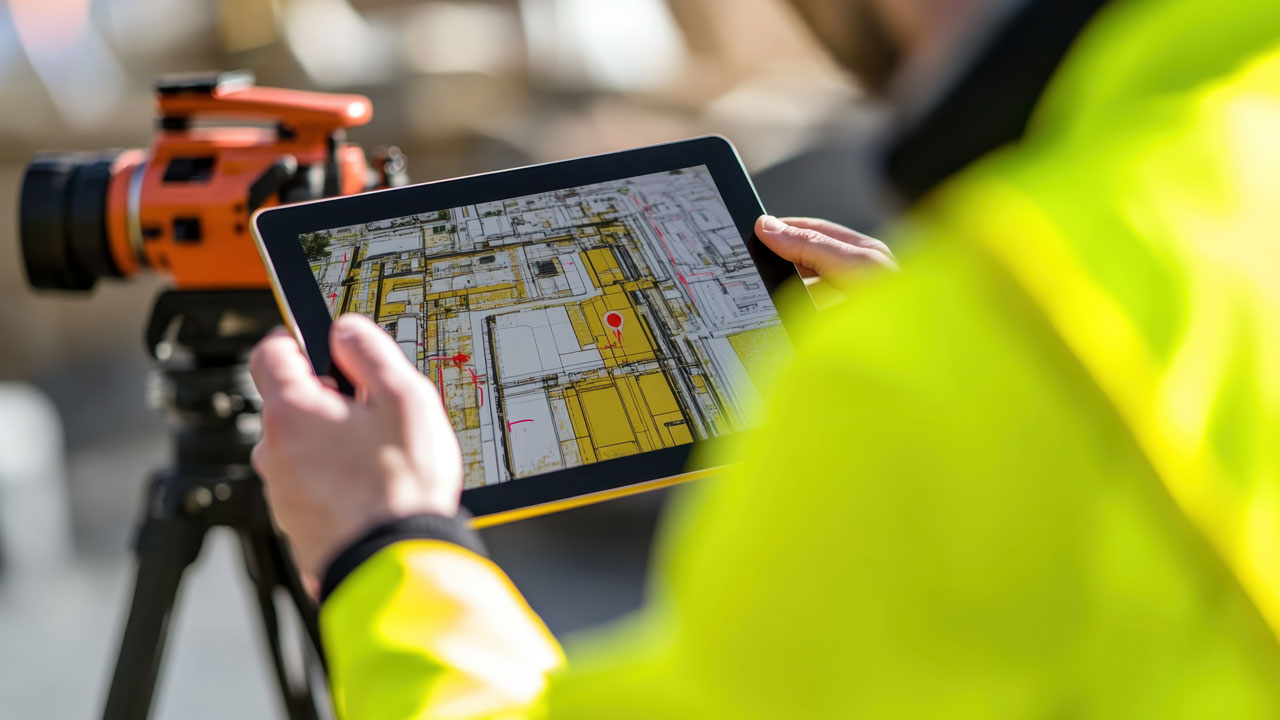
Our experts explore why building refurbishment often delivers greater carbon and cost savings compared to new construction and how effective risk assessment supports sustainable decisions.
Assessing a building’s sustainability for refurbishment
From an architectural standpoint, factors such as form, function, and layout are critically important along with building fabric condition and integrity. If the building isn’t a protected structure and a refurbishment would result in small, cramped functional spaces, then architectural layout re-design considerations and wayfinding will need to be addressed. Achieving full compliance with current building regulations / standards for some older buildings can be quite challenging.
Assessing the feasibility of fabric upgrades is also key from an energy conservation perspective. While maximising the fabric performance is a priority, it is important that fabric upgrades do not create other issues such as interstitial condensation. For protected structures, it may not be possible to upgrade some fabric elements for conservation reasons.
From an engineering standpoint, the first thing to consider is the structural integrity of the building. Structural engineers need to evaluate whether it is safe, structurally sound and if there are issues like material corrosion or degradation, water-ingress or dampness, that could be difficult to remedy and costly to fix.
Mechanical-electrical engineering / building services considerations will include identification of preferred ME Services-strategy, internal environmental requirements, compliance with Building Regulations / Energy Performance Directives, ESG / sustainability assessments / carbon management drivers, etc. On a practical ME design and constructability level, the potential retention and upgrade of part or all existing ME Systems is a major consideration, along with the requirements for mech-elec. service zones above ceilings, which have changed over the years. For example, if the floor plates are too tight with constrained storey heights, effective and efficient ME services refurbishment might not be feasible.
From an energy conservation perspective, the preference will be to retrofit fossil fuel free heating solutions such as ground source or air source heat pumps. While not strictly a prerequisite, a good performing building fabric is preferable for the application of heat pumps since they operate at lower temperatures versus fossil fuel boilers.
The intended purpose of the refurbishment is also key. For instance, a ‘light-touch’ refurbishment of a school building may not require extensive mechanical and electrical infrastructure, whereas trying to fit an operating theatre into an existing office building may present challenges related to ‘deep-retrofit’ requirements and significant floor-to-floor height constraints on ME service routing and distribution.
New technologies and approaches for refurbishment
Advancements in technology, such as digital surveying, allow for the quick and accurate creation of background digital-models of existing buildings. In the past, people would rely on manual measurement with measuring tapes, etc., which was quite slow. Now, digital surveying and scanning technologies have made this process much more efficient, accurate and reliable.
Technologies like 3D scanning and point cloud technology are becoming increasingly common. We’ve also started using small fibre optic cameras that can be inserted through small openings to inspect cavities within structures. When assessing existing buildings, it’s common to find that records, whether operational or as-built installation records, are often lacking, which is why many designers opt to hire third-party specialist firms to gather survey and/or operational data.
In terms of sustainability, including material / carbon-management, the design conversation often revolves around whether it’s more sustainable to demolish a building, considering the likely material-waste involved, versus the potential carbon savings from retaining what’s already there.
Today, there are a number of reliable sustainable design-construction-operation and carbon-management assessment tools that allow you to compare both options, helping you assess the total carbon lifetime cost and determine which approach is more beneficial over the project’s lifespan. Such assessments previously relied on multiple assumptions, whereas established proven tools now provide a standard data-driven baseline for comparison.
In situ value testing can be very beneficial in establishing the thermal performance of existing fabrics. As well as providing a reference value for fabric upgrades, using accurate U values established by testing can reduce oversizing and thus embodied carbon.
More modern heat pumps utilising natural refrigerants such as R290 operate at higher temperatures, making them more suitable to existing buildings particularly where fabric upgrades are not proposed or for direct replacement of fossil fuel plant.
The role of risk assessments to evaluate potential cost benefits
Risk assessments are crucial for identifying unknown factors, such as the adequacy of existing building foundations. For example, discovering that a wall supports a roof during demolition can be quite concerning and costly. By applying appropriate risk assessment techniques, you can weigh the value for money against the carbon benefits.
For instance, when discussing refurbishment of an older building with a potential funding institution, they might have previously viewed it as a significant risk and avoided it. However, by applying a robust risk assessment methodology to any refurbishment plans allows for better risk identification and management, along with greater cost certainty before committing to a refurbishment project. There are now tools available that enable more accurate predictions of refurbishment out-turn costs.
Understanding carbon savings in refurbishments versus new builds
Refurbishing an existing building helps to eliminate the majority of the embodied carbon involved in constructing a new one. You also need to consider the transportation of materials to the site and the material-recovery / waste disposal associated with demolition. Existing buildings often come with pre-established infrastructure, such as roads and parking, which may not be available on a greenfield site. The total lifetime carbon assessment tool plays a significant role in this analysis, as it allows you to evaluate operational carbon savings against embodied carbon, determining whether the former offsets the latter.
Cost savings really depend on the level and degree of refurbishment. A light refurbishment typically doesn’t cost too much, but if you’re going for a deep retrofit that involves significant changes to the building fabric, it can become quite labour-intensive and costly. Generally speaking, refurbishment should be more economical than building a new structure using modern materials.
Have clients shown increased interest in refurbishment options in recent years?
It depends on the client. Some organisations focus almost exclusively on refurbishment due to its cost-benefit implications. Public bodies are guided by government legislation, policy and recommendations, while a significant number of developers seeking foreign direct investment (FDI) can choose to pursue LEED sustainability accreditation for their buildings to enhance their appeal, which is generally easier to achieve on new-build compared to building refurbishment project.
In the industrial space, companies frequently re-purpose existing buildings while also expanding their wider plant-facilities with new-builds. Regular refurbishments of industrial production facilities are common, often involving the full integration of new process facilities.
Additionally, some commercial developments in urban areas occasionally retain listed buildings within or immediately adjacent to new developments, as new-build alone may not meet the full functional or spatial requirements.
In the healthcare sector, extensions to existing hospitals often necessitate the refurbishment of connected departmental buildings, as part of the overall development project.
About the authors

Eoin Doohan
Eoin Doohan is a mechanical and electrical business unit director in the Republic of Ireland.
With over 18 years’ experience, Eoin has delivered mechanical and electrical projects across design, project management and construction management roles. He has extensive knowledge of heating, ventilation, air conditioning, utilities and BMS systems across the aviation, rail, commercial, food, energy, residential, mission critical and infrastructural sectors.
A Chartered Mechanical Engineer with CIBSE, Eoin focuses on developing sustainable and low / zero energy designs for projects, particularly the deep retrofit of existing buildings and protected structures. Eoin was the M&E Lead for the multi award winning refurbishment of the historic Rubrics Building at Trinity College Dublin, which included an innovative geothermal heating solution.

Michael Dawkins
Michael Dawkins is a technical director in our Cork, Ireland office where he leads the mechanical building services team.
He has provided design solutions to clients within a wide range of market sectors since graduating in 1988 working on projects such as pharmaceutical clean rooms, commercial offices, military establishments, hospitals, shopping malls, school and college developments. Energy efficiency has always been to the forefront of Michael’s designs, exemplified by the National Water Laboratory for Irish Water which won the ACEI Sustainability Award. Experience gained during Cork City Courthouse, UCC Windle Building and other historic building projects has informed Michael’s approach to applying energy efficient design to refurbishment. He holds an honours degree in Mechanical Engineering from the Polytechnic of Wales and an MBA from University College Cork.

John Shalloe
John Shalloe is a senior director with responsibility for buildings and transport sector activity in Ireland.
He has over 34 years’ experience of project planning, engineering design, environmental assessment and project management in the buildings, transport and utilities sectors. John has been involved in national strategic studies in road networks, gas transmission and in major urban water supply and drainage studies and has led the delivery of several major infrastructure projects.
John is a Chartered Engineer having graduated with a degree in Civil, Structural & Environmental Engineering from University College, Cork.
Frank Maguire
Frank Maguire is the lead director of Tetra Tech’s buildings and infrastructure team in Ireland.
He has over 38 years’ experience in project management and design, including civil, structural, mechanical, electrical and environmental engineering, specialising in the areas of building, facility and site-development projects for both public and private-sector clients – including new-build and refurbishment projects in the infrastructural, commercial, industrial, educational and healthcare sectors.
He has an excellent understanding of the full project delivery lifecycle including conceptual design, feasibility, budgeting, detailed design, construction and commissioning.
Frank is a Chartered Member of the Institution of Engineers of Ireland and was awarded an MEngSc in Civil Engineering from University College Cork in 1989. He also contributes as a Visiting Lecturer at the Department of Civil, Structural & Environmental Engineering in University College Cork since 1997.

Brian Kelly
Brian Kelly is a business unit director for the building, commercial, and industrial team in Ireland.
He has 28 years’ experience in multidisciplinary project management and civil and structural engineering, and has been involved in the design and construction of a wide range of industrial, commercial, and public buildings including hospitals for the Health Service Executive (HSE), schools for the Department of Education & Youth (DEY), social & affordable housing for Local Authorities, and design-build projects for the Office of Public Works (OPW) and National Development Finance Agency (NDFA).
Brian is a Chartered Engineer with Engineers Ireland and was awarded an MSc in Project and Programme Management from the University of Limerick in 2017. He also holds a Bachelor of Structural Engineering from Cork Institute of Technology, now Munster Technological University

Dave Fleming
Dave Fleming is a technical director and project manager in the buildings and infrastructure team in Ireland.
He has 36 years’ experience in the planning, design, and delivery of construction projects, and has worked on all aspects of large power generation, pharmaceutical, industrial, healthcare, renewable energy and commercial projects.
Dave is a Chartered Member of the Institution of Engineers and a member of Engineers Ireland. He also holds an Honours Degree in Electrical Engineering from University College Cork.