Tetra Tech has modeled the behavior of complex systems since before the advent of computers. Albert Yuen, who joined Tetra Tech in 1970, discusses how early modeling set the stage for later innovations.
This article is part of our celebration of 60 years Tetra Tech of Leading with Science® in 2026.
Before the advent of computer modeling, engineers created physical models to test the integrity of coastlines and structures such as ports and harbors by creating waves and adjusting water flow in an artificial setting.
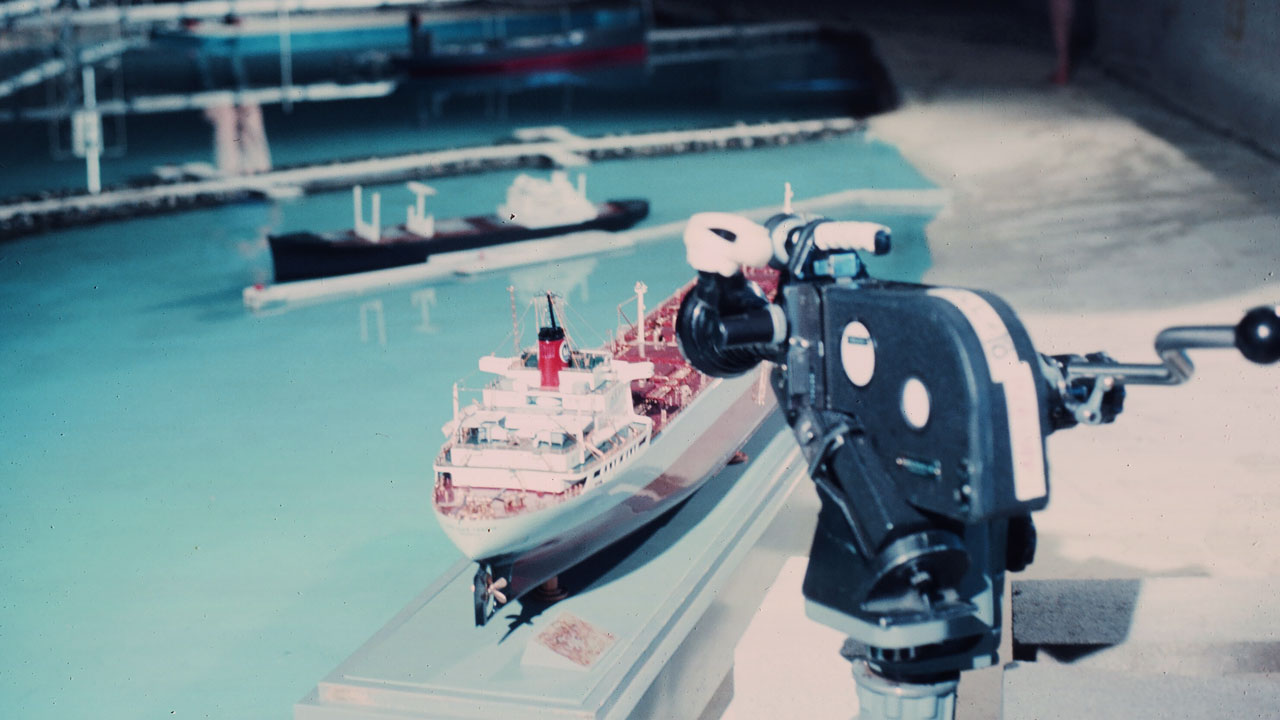
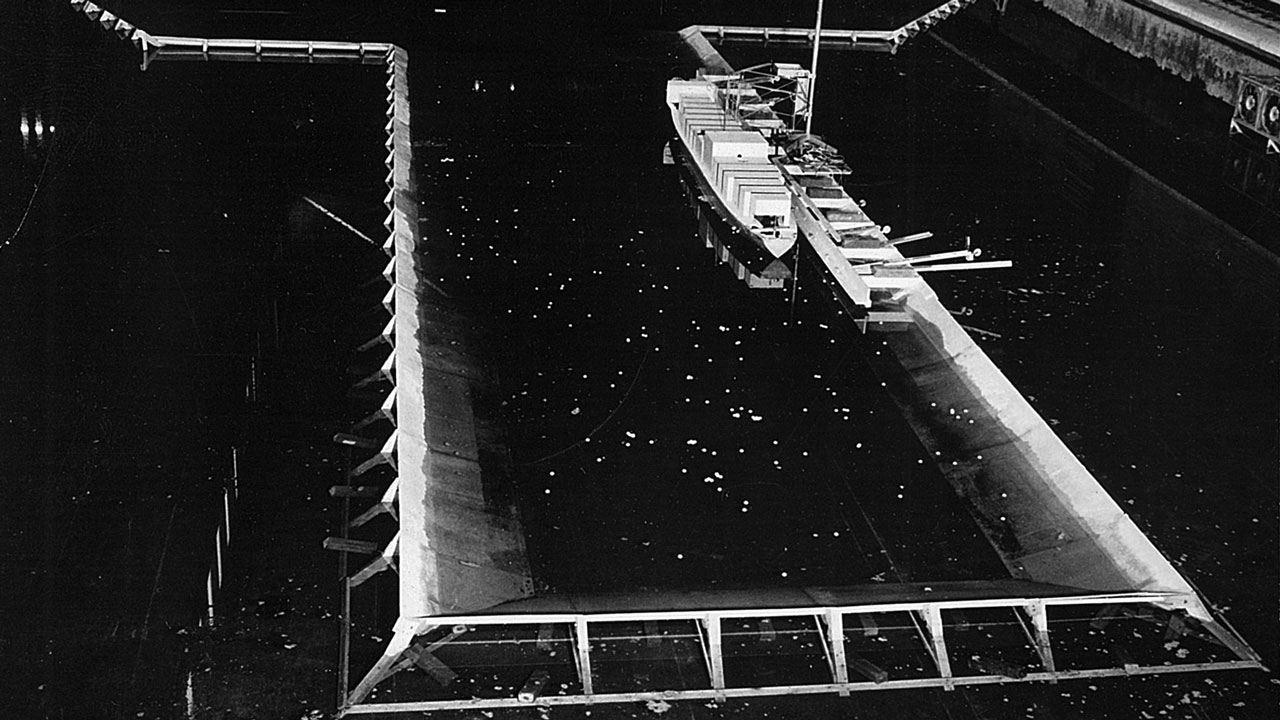
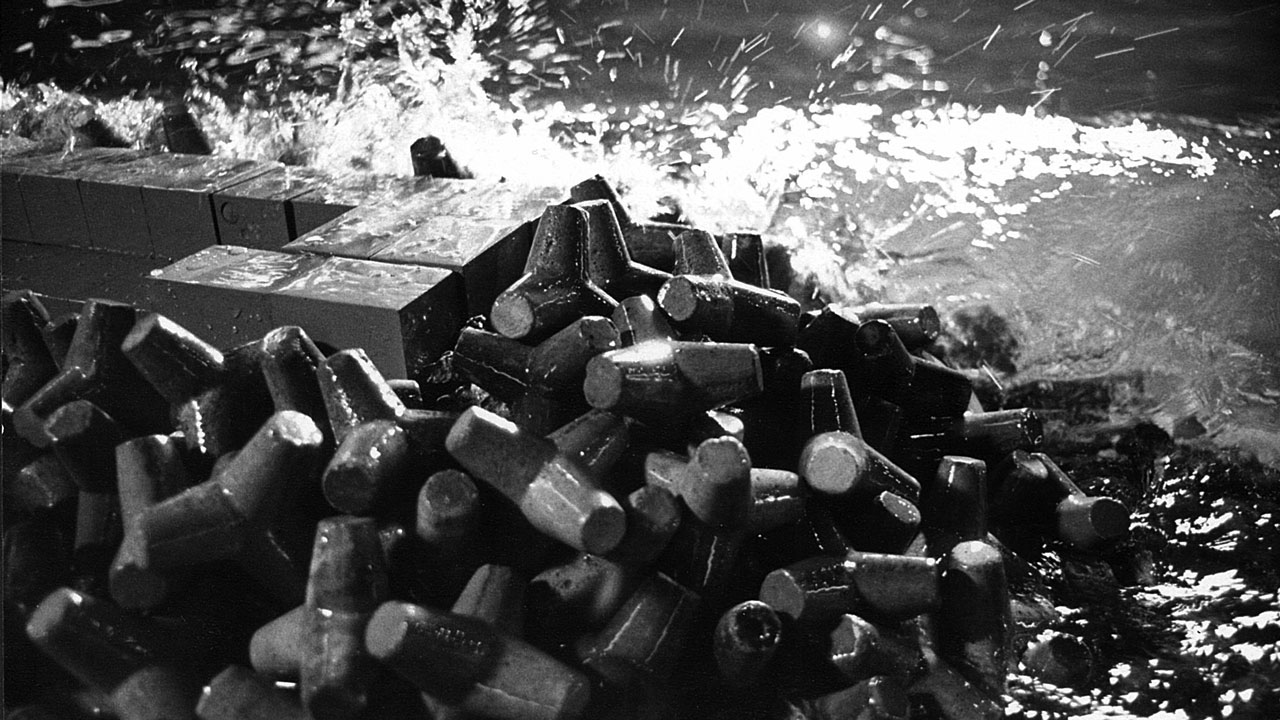
Tetra Tech was at the forefront of building and managing several large-scale physical models. We conducted various physical model studies such as breakwater stability analyses, tsunami wave run-up, beach erosion evaluations, coastal structure design, submarine motion of waves generated by explosions in the sea, and pollutant dispersion in the coastal zone.
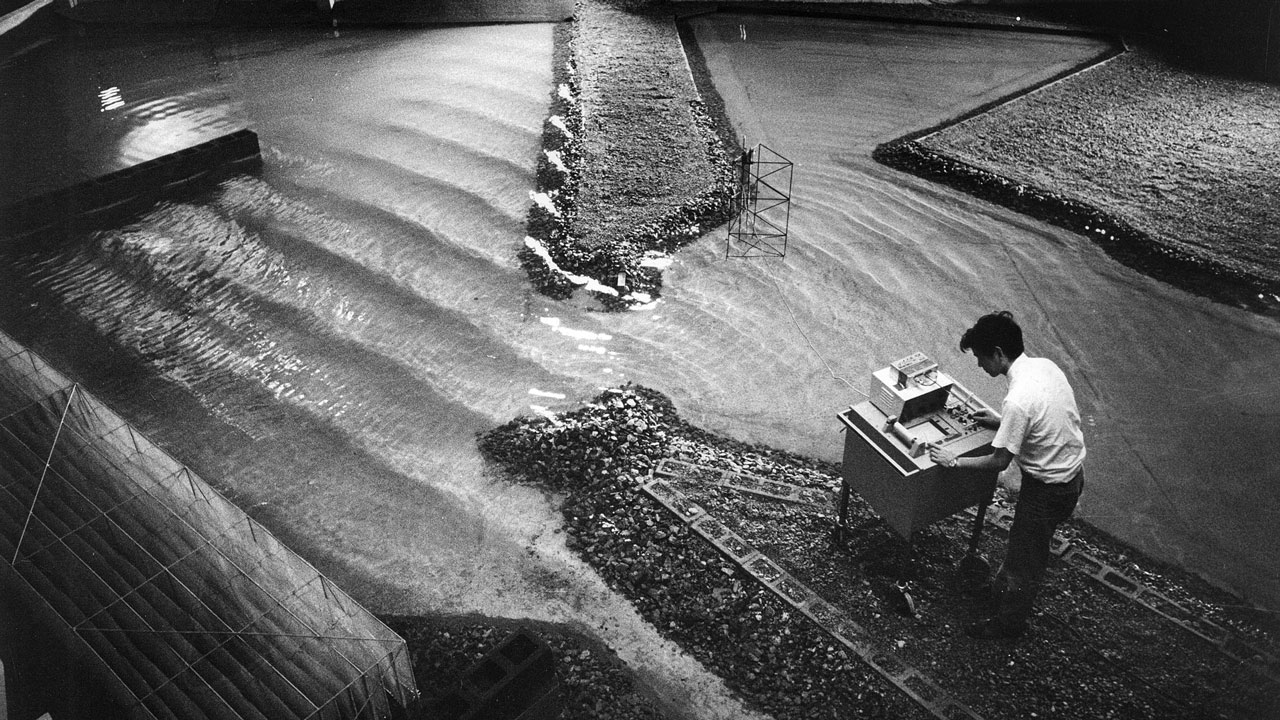
The first Tetra Tech physical model facility was a 4-foot by 4-foot by 100-foot-long wave tank constructed under the former Tetra Tech Pasadena, California, office in 1968. The 2D wave tank was equipped with a plunger-type wave generator capable of creating 1-foot-high waves. Because of numerical simulation limitations, it was necessary to have a three-dimensional wave basin to study wave agitation inside the harbor. We therefore built a 50-foot by 60-foot wave basin in an empty warehouse in Monrovia, California, and designed and installed a three-dimensional paddle-type wave generator. Our budgets were very limited, so I enlisted my wife to help us complete the water-tight wave basin.
We kept outgrowing the facilities and when we needed to model the Algerian Port of Bethouia, we rented warehouse space that was used for building the Pasadena Rose Parade floats. We worked double shifts to return the rental space for the New Year’s event. We finally converted an old supermarket near the Pasadena office into a Tetra Tech hydrodynamic laboratory to meet the project demand. We constructed two wave basins and a large wave flume in this new facility.
After many years of building our physical model experience and strong capabilities in coastal and hydraulic engineering, Tetra Tech received additional contracts for the operation and maintenance of both the Chesapeake Bay and San Francisco Bay-Delta models. As the need for physical models diminished, Tetra Tech transitioned to developing complex 2D and 3D computer models to predict the movement of water and pollutants through the environment. This provided the foundation for more advanced modeling that Tetra Tech continues to provide today.
This article was featured in the At the Water’s Edge: Building Resilient Oceans with High-End Solutions issue of TetraVerse™.