As climate change increases flood risks across the UK, water management must shift towards a catchment-scale approach to address emerging challenges.
Climate change is increasing river, surface water and coastal flooding, while rising sea levels and intensifying storm surges are increasing pressure on coastal communities, infrastructure and the environment. Currently, around 6.3 million properties in England are in areas of high flood risk. By 2050, this figure could be as high as 8 million, or one in four properties.
While traditionally engineered flood defences remain essential, the sector is increasingly recognising that resilience needs a broader approach. This requires a shift in thinking—from protecting individual assets from flooding to proactively managing water across entire catchments through a blend of nature-based and engineered solutions. By combining these approaches, we can build better flood resilience.
Harmonising engineered and natural flood management solutions
A common misconception is that natural flood management (NFM) is a substitute for engineered flood defences. In reality, most NFM solutions are best suited to complement more structural and traditionally engineered flood management systems.
NFM often provide multiple benefits including improved water quality and increased biodiversity, whereas traditional measures can be more limited. Many NFM solutions can be delivered without destroying existing habitats and while traditional flood defences can act as barriers to ecological processes, NFM can enhance natural processes. They can also be designed to engage the wider public in their ongoing maintenance, embedding them into the local community.
NFM works best where interventions match catchment priorities and processes and are delivered as a coherent portfolio. NFM should be treated as part of an integrated system that reduces pressure on assets, improves performance during more frequent and intense rainfall events, and provides substantial wider benefits.
Nature-based solutions can be particularly effective in upstream areas where they can slow, store and retain water before it reaches communities, while engineered infrastructure can provide defined protection where risks remain highest. Used in combination these solutions can reduce the frequency of severe flooding.
Tetra Tech’s work on Noctorum Avenue demonstrates how nature-based and engineered solutions can be integrated to deliver multiple benefits. Working with United Utilities, our team delivered a scheme that introduced rain gardens connected to a new surface water sewer network, reducing pressure on the combined sewer system while improving runoff management. This illustrates how sustainable drainage systems (SuDS) and conventional drainage infrastructure can operate together as part of a more resilient system. Alongside hydraulic benefits, the rain gardens enhanced the public realm, introduced traffic-calming features and improved local streetscape quality.
Advocating a whole-catchment perspective
Where do natural flood management solutions work best?
Benefits are strongest when there is space to capture water, long-term support from land managers, good baseline information for decision-making, and an integrated plan linking upstream measures with downstream communities and assets at risk.
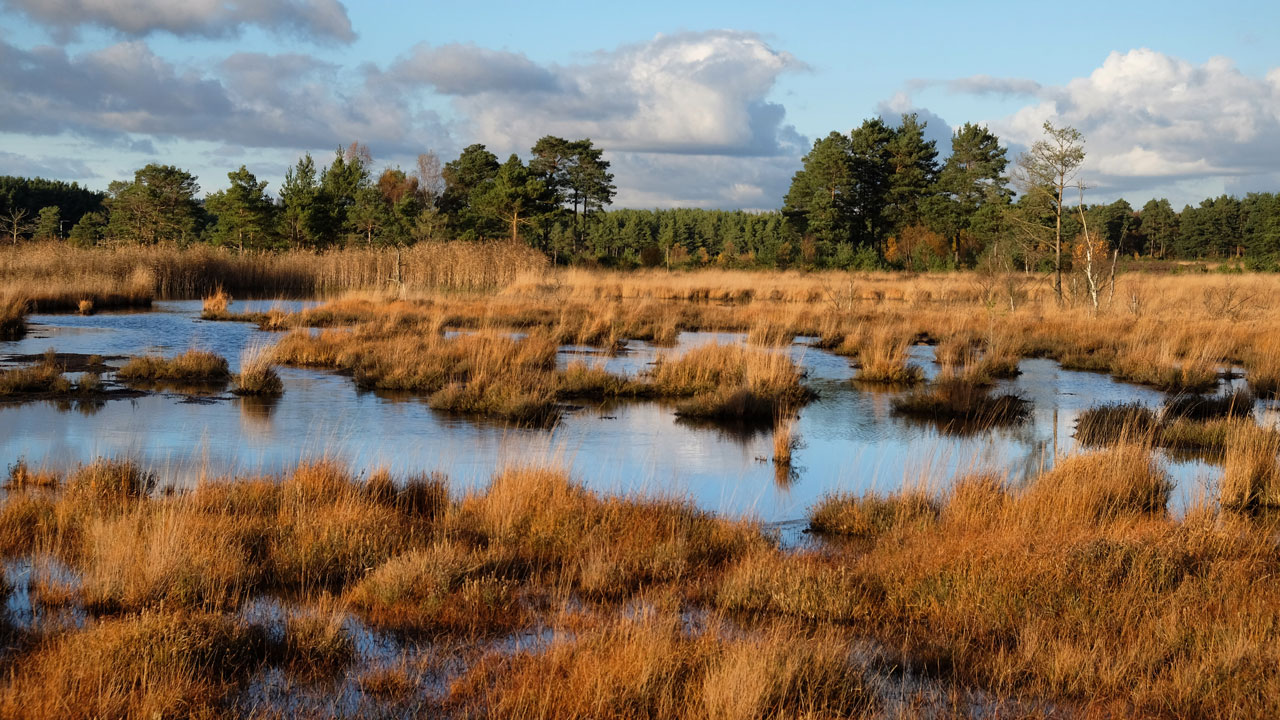
NFM also works particularly well in headwaters, small and responsive catchments, drained peatlands, agricultural runoff pathways, reconnectable floodplains, urban areas with retrofit opportunities, and locations where wetlands or woodland can be restored without transferring flood risk.
Crucially, it works best where multiple stakeholders with different priorities are willing to support implementation. Delivering NFM at scale relies on collaboration between landowners, developers, water authorities, local authorities and communities. Even the most technically effective interventions struggle to progress without stakeholder support, shared objectives and long-term commitment.
The benefits of integrating NFM solutions into flood resilience plans
As NFM schemes rely heavily on restoring natural processes, they can also deliver a wider range of benefits. Tree planting in upper catchments can slow surface runoff and reduce downstream peak flows while creating new woodland habitats. Wetlands and restored floodplains provide temporary water storage, improve water quality and support biodiversity, while peatland restoration can help retain water in the landscape, reduce rapid runoff and support carbon sequestration. Together, these interventions can contribute to biodiversity net gain, climate adaptation, improved ecological connectivity and more resilient landscapes.

Key principles for effective delivery
- Prioritising hydrological impact over ease of delivery: Interventions must be placed where they will be hydrologically effective—often upstream or in the upper parts of a catchment—rather than simply where they are easiest to deliver. Complications can arise when these locations do not align with engaged landowners or funding boundaries.
- Isolated measures are not enough: For catchment-scale NFM to deliver meaningful reductions in flood risk, sufficient cumulative storage must be provided across the catchment to influence the flood volumes being generated. A few isolated NFM measures are not enough to mitigate flood risk, sufficient soil and above-ground storage must be created across a catchment to reduce downstream flood risk.
What are the barriers to delivering NFM at scale?
Siloed stakeholders and fragmented funding
Flood resilience is inherently cross-sectoral, but funding and regulation rarely are. When funding is tied to specific organisational remits, delivering catchment-scale solutions that generate multiple benefits can be challenging. Different regulatory frameworks are governed by different legislation, funding cycles and performance measures, which creates practical barriers even when organisations are willing to collaborate.
Construction and maintenance
Delivering NFM effectively requires a different set of skills to traditional civil engineering projects. Nature-based assets are living systems, therefore installing and maintaining SuDS, wetlands, and other nature-based interventions requires expertise in soils, planting, ecology, and long-term asset management.
NFM measures also largely depend on habitat establishment, leaving them subject to the same challenges as farming. Drought or early exposure to flood events can destroy active components such as tree planting or willow used to bind a flood bank.
Landowners as delivery partners
Many of the locations where NFM is most effective lie on privately-owned agricultural land. Farmers may be reluctant to change land use without confidence around long-term compensation, future land value, and continued productivity. Landowners need fair incentives, practical designs, and clarity about future responsibilities.
The future of flood risk management
Closing the evidence gap
If NFM is to move into mainstream delivery, the evidence base must continue to grow. While confidence in nature-based solutions is increasing, many organisations still face challenges in quantifying performance with the same degree of certainty as traditionally-engineered infrastructure.
Better monitoring, particularly during the early stages of flood events, will help improve our understanding of how interventions perform in practice and inform more effective design. Advances in digital mapping, remote sensing, LiDAR, hydraulic modelling and environmental sensors are also helping to identify opportunities, monitor outcomes and refine catchment strategies over time.
The next wave of NFM innovation is likely to come not just from modelling solutions, but from implementing measures on the ground and learning from long-term performance data.
Building long-term flood resilience
The scale of future flood risk underlines the need to move from reactive flood protection towards long-term resilience planning. Under a high-warming scenario, expected annual flood damages—including direct and indirect impacts—could increase from approximately £3 billion today to £7 billion by 2075. These are annual averages and actual economic losses from such events could be around ten times higher, with individual events potentially causing up to £60 billion in damage as early as the 2030s.
However, this outlook also demonstrates the value of adaptation. Investing approximately £1.5 to £2 billion per year, aligned with the Climate Change Committee’s recommendations for a well-adapted UK, is expected to reduce both annual and extreme flood risks by around 40 percent. Flood resilience should be viewed not only as a cost, but as a long-term investment in protecting communities, enabling sustainable growth and reducing future economic disruption.
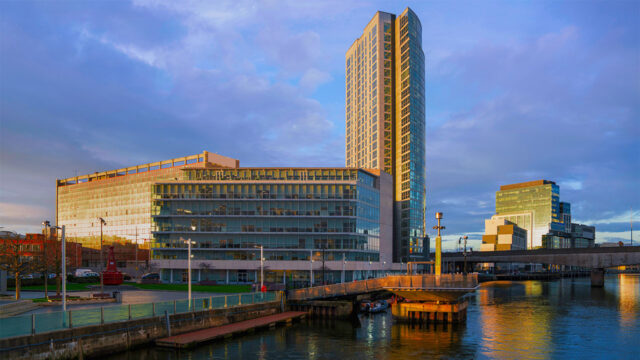
Tetra Tech’s Living With Water project is a strong example of a long-term catchment-scale approach. Developed for the Greater Belfast area, the programme brought together multiple organisations to create an integrated strategy for drainage and wastewater management. The strategy addresses flood risk and environmental enhancement while enabling future growth, championing the value of coordinated catchment-scale planning.
Similarly, our Waverley New Community project demonstrates how sustainable drainage and blue infrastructure can be embedded in major development projects from the outset. By integrating watercourses, sustainable drainage and wider environmental objectives into a large-scale regeneration scheme, the project demonstrates how resilience can be designed into future communities rather than retrofitted at a later stage.
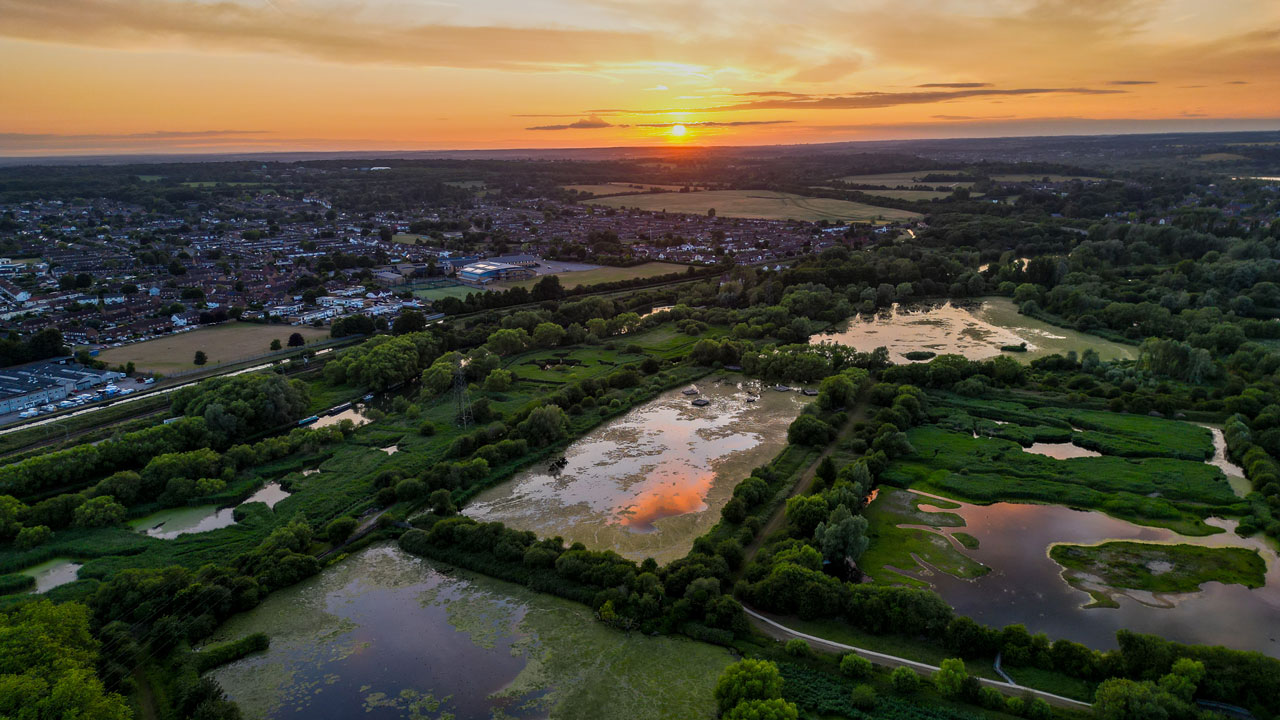
Looking ahead, NFM is likely to become a routine component of flood risk management and climate adaptation programmes. We are likely to see more wetlands, increased tree planting across river catchments, greater use of blue-green infrastructure and stronger integration of biodiversity, water quality and flood resilience objectives.
Most importantly, the sector must continue shifting from defending individual locations against flooding towards applying systems thinking and managing water across the whole catchment. Flood resilience cannot be delivered by a single asset, organisation or intervention. It is best achieved when natural systems, engineered infrastructure, planners, developers, water authorities, landowners and communities work together.
About the authors

Victoria Brayshaw
Victoria Brayshaw is the head of civil engineering and technical development lead in Tetra Tech’s UK division.
She is a fellow of the Institution of Civil Engineers (ICE) and leads a national team of more than 100 engineers, designers, and flood risk management consultants. She has been involved with ICE for more than 20 years, including as a supervising civil engineer, a branch chair, and regional committee member.

Ola Holmstrom
Director of Hydrology, Ola Holmstrom, has more than 30 years’ experience working with water environmental issues.
He provides expert input on hydrology, hydrogeology, flooding, drainage, water quality, and eco-hydrological issues including river restoration. Ola holds a dual MSc in civil engineering focused on Water and Soil Sciences and has a deep interest in efficient design and construction of water related assets. He focuses on holistic solutions that tackle the complex issues that are the root causes for so much of the habitat stress in our national water environment, bridging the gap between hard and soft environmental design. He has a keen interest in nature-based solutions, especially those combining longevity with habitat functionality.

Mark Wilson
Mark Wilson is a technical director for our flood risk management team with more than 20 years’ experience in the water and environment sector.
He has worked on more than 25 flood alleviation schemes, particularly at feasibility stage ranging from £0.5m to £150m in capital cost. These schemes have addressed coastal, fluvial and surface water flooding. Mark’s expertise covers flood risk assessments, catchment management, natural flood management, feasibility studies, and economic appraisals. Mark is a chartered engineer and water and environmental manager with the Chartered Institution of Water and Environmental Management (CIWEM).