
Mike Barker, Senior Director of Ecology for Water & Nature, examines Environmental Delivery Plans (EDP) as part of the Nature Restoration Fund and the implications of the first EDP for development.
The Planning and Infrastructure Act 2025 aims to accelerate housing and infrastructure delivery by streamlining consenting, statutory processes, while also shifting towards strategic landscape-scale nature recovery.
Forming part of the UK Government’s growth strategy, it includes ambitions to deliver 1.5 million homes in England and 150 major infrastructure decisions by 2029. Part 3 establishes the Nature Restoration Fund, through which developers can, where an Environmental Delivery Plan (EDP) applies, pay a Nature Restoration Levy to fund specified conservation measures at a strategic scale.
The Government lauds the approach as a win-win for the environment and the economy, but the ecology and conservation sectors have raised serious concerns about the treatment of existing environmental protections. With the first EDP in Norfolk currently under consultation, it should be assessed through balanced scrutiny of its evidence, conservation measures, and proposed delivery arrangements.
Norfolk’s draft EDP is the first practical test of this new approach. It thoroughly details how it will be implemented, the nature recovery methods measured, and the expected outcomes.
What are Environmental Delivery Plans?
Natural England prepares Environmental Delivery Plans (EDP) for defined geographical areas and environmental issues. Developers within an EDP area can choose to pay a Nature Restoration Levy which funds strategic conservation measures rather than requiring each developer to deliver separate mitigation.
Natural England is developing 16 initial nutrient-related EDPs covering affected river catchments and inshore waters. Further EDPs focussed on protected species could then follow.
For the relevant environmental issue, payment can provide a route through specified environmental obligations, in this first EDP principally those associated with nutrient neutrality and protected sites.
Developers must continue with normal ecological and planning processes for other matters, including biodiversity net gain and, unless covered by a future EDP, protected species surveys and mitigation.
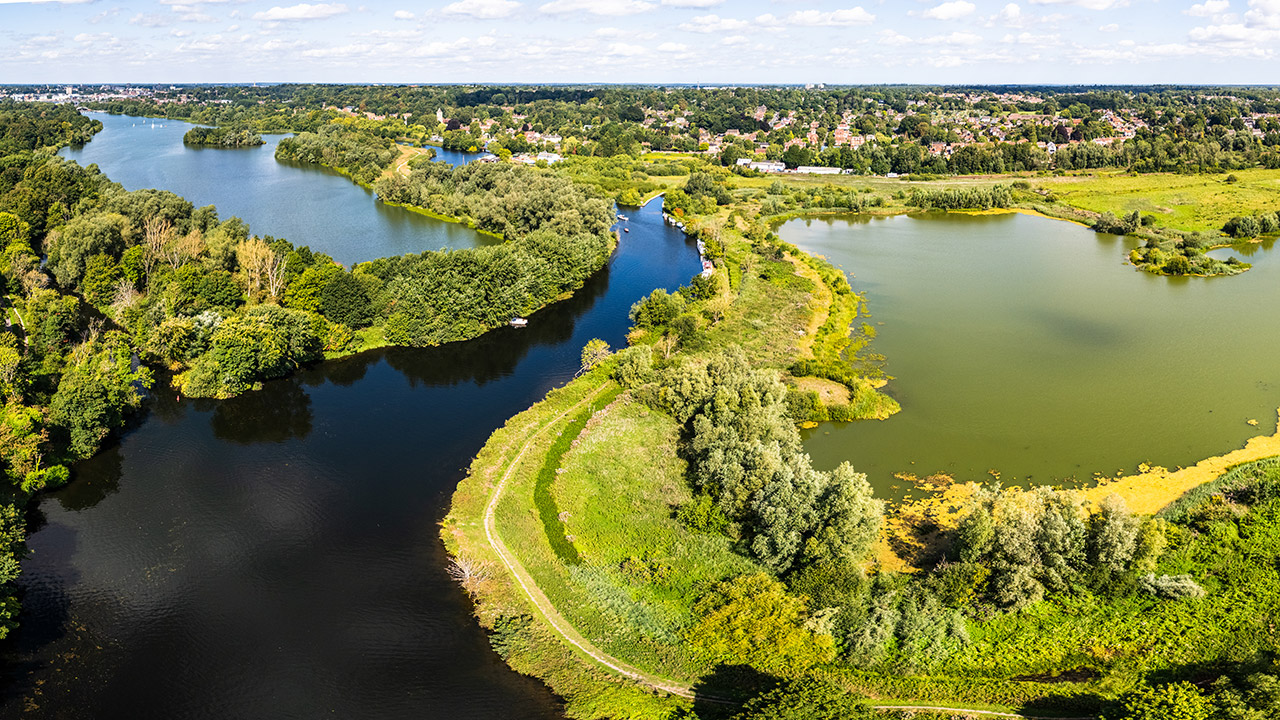
The first EDP aims to deliver healthier wetlands and waterways within the Broads Special Area of Conservation (SAC) and River Wensum SAC alongside the construction of 15,780 new homes in Norfolk. The consultation process for this EDP needs to focus on the actual plan, evidence, and proposed delivery arrangements – not just the wider concerns around the Act.
The real questions to ask are: Will the proposed measures reduce nutrient pollution in these river and wetland systems? Can they deliver tangible and measurable wider ecological benefits?
Nutrient neutrality is constraining development
Nutrient neutrality has become a direct barrier to development in certain parts of England. Additional nitrogen and phosphorus from wastewater, agriculture, and land drainage can affect protected rivers, wetlands and estuaries, contributing to ecological deterioration.
Nutrient neutrality requires development to demonstrate that it will not increase the nutrient load reaching the affected protected site, through avoidance, reduction, or mitigation measures. The Norfolk Broads is a particularly relevant case because a fully established nutrient neutrality solution has not been available across all catchments until relatively recently. Credits are still more suited to small and medium sized developments because of the nature of the mitigation measures they rely on (such as cess tank upgrades and other local interventions). The draft EDP addresses this gap by proposing a catchment-scale mitigation route for eligible development.
Norfolk EDP conservation measures
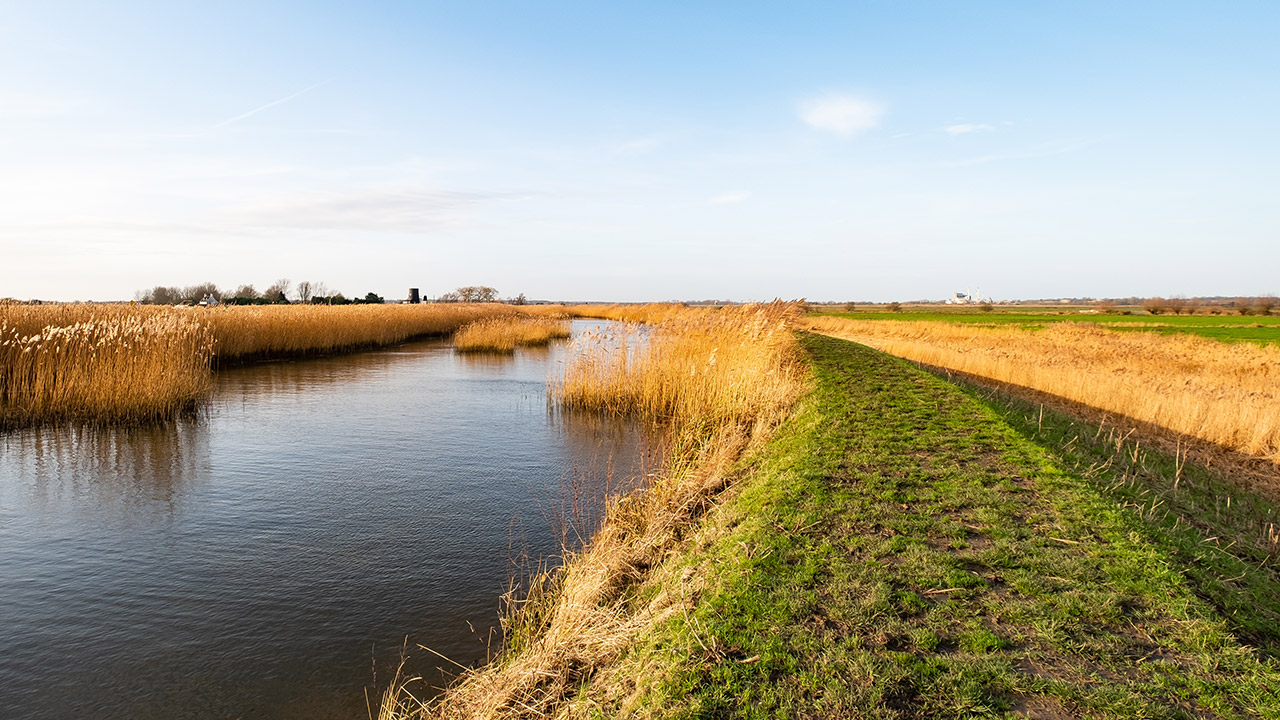
The draft Norfolk EDP contains a programmed package of conservation measures, informed by opportunity mapping, rather than relying on single local interventions. The proposed measures include:
Wetland and habitat measures
- Fen-type wetland creation and restoration
- Management of existing fen-type habitats
- Creation or restoration of wetland habitat contiguous with protected sites
- Conversion of land from arable use to semi-natural habitats in the wider catchment
River and hydrological measures
- River restoration, including channel and floodplain function
- Hydrological restoration
- Removal or modification of in-river structures
Landscape and species-management measures
- Deer management
- Recovery of riverside vegetation, including shrubs, scrub, woodland, and other semi-natural habitats
Deer management may be eye-catching, but it is only one part of a much wider package of wetland creation, river restoration and habitat recovery.
The proposed packages of measures are not solely about offsetting development. They are designed to improve the biological, physical, hydrological, and chemical components of river structure and function, alongside associated wet woodland, fen habitats, and wider catchment biodiversity.
Criticisms of the first EDP
1. The process is untested
While this is a legitimate concern, the first EDP is intended to be the test case. Its manageable scale and range of established measures create an opportunity to assess whether the process works before extending it more widely. With nutrient neutrality, the EDP mirrors and will sit alongside existing environmental credits schemes but has the reach of Natural England to deliver benefits into the wetland and riverine habitats that matter—the designated sites underpinning the SACs themselves.
2. Levy systems may not deliver environmental outcomes
The levy will only be credible if money is spent on the measures identified, measures are delivered at the required scale, and outcomes are monitored transparently.
The good news is the EDP sets out the environmental features, expected changes, and delivery approach in considerable detail. It includes an Overall Improvement Test and quantitative assessment of whether the measures are delivering what was promised. If they do not, additional measures or adjustments should be triggered.
The key question is not whether the Environmental Delivery Plan mechanism is new and untested, but whether its conservation measures successfully work on the ground.
3. Natural England capacity and sector concerns
There are concerns regarding Natural England’s capacity to administer the fund and monitor delivery. These are reasons for clear governance, reporting and independent verification – not necessarily reasons to reject the model in advance.
The priority should be the condition of the receiving environment, but the need for ecological expertise will remain important in strategic assessment, measure design, monitoring and verification.
Implications for developers
Developers should establish:
- Whether their site falls within the EDP’s geographical and development scope
- Whether the levy provides a route for addressing nutrient neutrality
- How the levy affects project viability, programme and consenting strategy
- Which ecological requirements remain outside the EDP
- What evidence and monitoring obligations still apply
This first EDP in Norfolk should provide a pathway to unlock at least 15,000 homes but has the potential to be scalable – if the volume and quality of the proposed measures can also be scaled and delivered.
The need to test and measure
The Norfolk EDP is not a complete solution to nutrient pollution in the Broads, and its success will depend on delivery, measurement, transparency, and review. Nevertheless, its proposed mix of wetland creation, river restoration, hydrological recovery, land-use change and habitat management is sufficiently robust to justify implementing a route to restore the ecological and nutrient balance of the Broads and Wensum SACs.
The first EDP should be scrutinised, but judged by environmental performance and practical delivery, and in the end by the condition of the designated sites it seeks to restore.
The Draft Norfolk Environmental Delivery Plan (EDP) Consultation
Tetra Tech is providing a response in conjunction with clients working in the Broads area being constrained by the nutrient neutrality process. For our clients, the draft EDP is a good solution. The real test is how Natural England use the funds to resolve issues on the ground.
Key takeaways
- The Planning and Infrastructure Act 2025 introduces Environmental Delivery Plans (EDPs) and the Nature Restoration Fund to support strategic, landscape-scale nature recovery.
- The first EDP in Norfolk focuses on nutrient neutrality in the Broads and River Wensum Special Areas of Conservation.
- Developers within the EDP’s scope may be able to pay a Nature Restoration Levy towards catchment-scale conservation measures.
- Proposed measures include fenland restoration, river and hydrological restoration, land-use change, removal of in-river structures and deer management.
- The Norfolk EDP could help unlock up to 15,780 homes while supporting healthier wetlands, waterways and wider biodiversity.
- The EDP should be judged by whether its conservation measures deliver measurable improvements on the ground.
- Developers should assess the EDP’s geographical scope, levy requirements, project implications and any ecological obligations that remain outside the scheme.
- The success of the Norfolk EDP will depend on effective delivery, transparent monitoring, independent verification and the condition of the designated sites it aims to restore.
About the author

Mike Barker
Mike is a senior director of ecology (water and nature) with more than 30 years of ecological and environmental experience.
He has a strong understanding of EIA and HRA in relation to major infrastructure and NSIP schemes. Mike has provided strategic advice on ecological, biodiversity net gain and net zero strategies. He has advised on a range of projects including offshore wind, other energy generation and onshore renewables (onshore wind and solar and battery storage), linear transport, reservoirs, airports, and other significant projects in the UK and overseas, as well has giving evidence when required to Select Committees and public inquiries.
He supports and guides clients to ensure robust and deliverable environmental outcomes in the UK and overseas. Mike has a bachelor’s and master’s degree (BSc, MSc), Chartered Environmentalist status (CEnv), and is a Fellow of the Chartered Institute of Ecology and Environmental Management (CIEEM).
