
Stuart McKeown, technical director in Tetra Tech’s UK architecture team, explores the emerging challenges reshaping the data centre market and what this means for developers and investors.
At UKREiiF, the UK’s leading real estate and infrastructure investment forum, one theme emerged clearly across conversations, panels, and investor discussions. The data centre market is no longer defined by opportunity alone. It is increasingly shaped by constraint, complexity and scrutiny. The long-standing focus on location is giving way to a stronger emphasis on sites that can be delivered and made commercially viable.
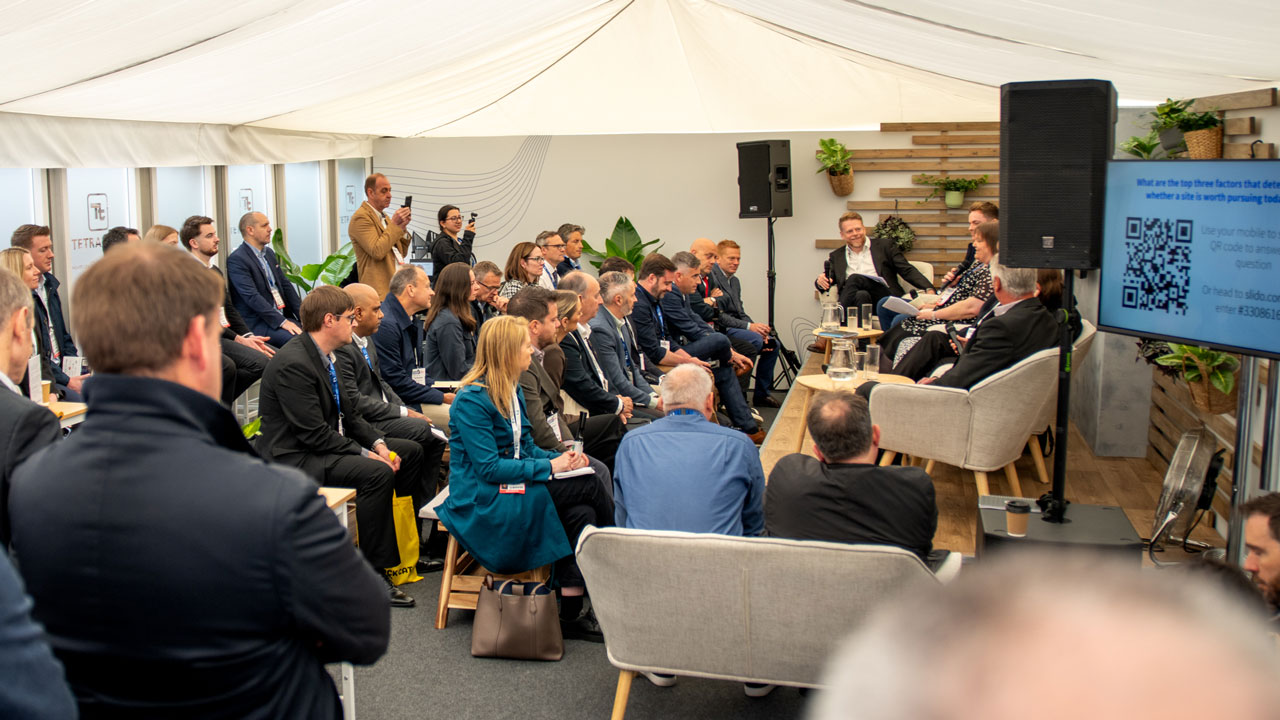
These challenges were evident during a panel discussion hosted by Tetra Tech, which brought together leaders from across development, operations, and planning to explore how the sector is evolving.
A greater focus on delivery
The rules that once defined data centre development are being reset. Growing pressure on power-ready land, combined with competition from alternative uses, is fundamentally changing how site value is assessed. This is not just a shift in thinking; it is reflected in market behaviour, where conversations are moving from pipeline ambition to delivery certainty.
One of the clearest challenges highlighted during the panel was the industry’s continued reliance on speculative thinking. Despite strong demand, the idea that developers can bring forward capacity and wait for customers to follow is becoming increasingly difficult to sustain. Dame Dawn Childs, panel member and chief executive officer of Enlighten and non-executive director at Pure Data Centres, commented directly: “I still 100 percent believe there is no build-and-they-will-come theory.”
This view was reinforced by panel member Lottie Tollman, head of data centres advisory for EMEA at Colliers, who noted that speculative development is significantly harder to justify in the UK market. With higher energy costs and more constrained infrastructure, capital deployment increasingly depends on a clear customer signal rather than assumptions about future demand.
This need to align development with customer demand is particularly acute at the hyperscale end of the market, where the number of potential customers is limited and highly sophisticated. Sites must connect to existing availability zones or clearly support future expansion strategies. Without that alignment, even well-located sites struggle to progress.
High energy costs are impacting decision-making
The wider economic context discussed throughout UKREiiF reinforces this reality. High energy costs in the UK continue to influence investment decisions, particularly when compared with markets such as the Nordics or the United States.
As Dame Dawn highlighted, power in the UK is significantly more expensive, raising fundamental questions about competitiveness and long-term strategy. In this environment, development is not just about unlocking land. It is about ensuring viability in a global market where capital and demand are highly mobile.
This is why the definition of a prime site has fundamentally changed. Deliverability is now the critical metric. Our panel member Matt Smith, commercial director at Harworth Group, explained how this plays out in practice. He outlined the practical requirements needed to move a site forward, saying: “From our side of things, it is power availability, proximity to fibre and water, and, obviously, favourable planning policy.”
What is clear is how absolute the requirement for power has become. A site without a credible, near-term grid connection is no longer simply challenged, it is often unviable. This is reshaping land values across the UK, with deliverability now driving investment decisions far more than geography.
At the same time, the panel challenged another persistent misconception. Data centre development is not a short-cycle opportunity, it is a long-term play that requires capital, patience, and early commitment. Matt Smith referenced live projects with timelines stretching to seven or eight years before reaching a transaction stage.
I still 100 percent believe there is no build-and-they-will-come theory.
Dame Dawn Childs,Chief Executive Officer of Enlighten and Non-Executive Director at Pure Data Centres
Increasing complexity and early investment
The complexity of bringing sites forward, particularly brownfield land, featured heavily in discussions. While these sites can offer advantages such as existing infrastructure and alignment with industrial use, they also require significant upfront investment in remediation, planning, and enabling works.
From a delivery perspective, these challenges cannot be tackled in isolation. Power connections, planning approvals, and delivery strategies all need to be progressed in parallel. This requires capital, coordination, and confidence from the earliest stages.
As Lottie Tollman highlighted, successful schemes depend on aligning multiple critical factors from the outset, including power, fibre connectivity, planning, community support, and access to skilled labour. In a high-cost environment like the UK, this level of coordination is what differentiates viable opportunities from those that fail to progress.
The broader message is that data centre development is a long-term, capital-intensive process that demands discipline and credibility from the outset.
Planning remains central to this challenge. Angela Schembri, senior planning director at Tetra Tech, reflected on the current landscape, noting that while policy is improving, it is not evolving quickly enough to keep pace with demand. There remains a clear gap between national ambition and local delivery, with many authorities lacking defined frameworks for data centre development.
Addressing the perception gap
Beyond the technical and economic challenges, there is also a need to build greater understanding of the role data centres play. As Angela Schembri highlighted during the discussion, much of the planning process still involves explaining the value of data centres. They are often perceived as industrial sheds rather than as critical infrastructure underpinning the digital economy.
This perception gap is beginning to shift, but it remains a barrier to delivery. Increasingly, data centres are being recognised as enablers of investment, employment, and long-term regional growth.
This is particularly relevant in regeneration contexts. Brownfield land, often located around major urban areas, presents an opportunity to reintroduce economic purpose into areas that have experienced industrial decline. However, this requires careful engagement with communities, particularly where expectations are shaped by legacy uses that are no longer viable.
Keeping pace with technological change
Alongside land, infrastructure, and planning, the panel also explored one of the most complex challenges facing the sector—the pace of technological change.
Derek Main, Tetra Tech’s data centre sector lead, highlighted how quickly chip technology is advancing, often outpacing what buildings can accommodate. This creates a clear tension between long development timelines and rapidly evolving operational requirements.
The response is a shift towards more flexible and modular design approaches. Dame Dawn described this as a “building block” model, allowing operators to adapt cooling strategies and hardware configurations over time.
However, flexibility comes with trade-offs. Designing for multiple potential outcomes can introduce inefficiencies in the present. This is a balance developers must manage carefully, particularly within already constrained economic and planning environments.
What connects all these themes is the growing importance of credibility. The market is becoming more selective, and pipeline alone is no longer enough. Developers must also demonstrate that sites are deliverable.
For hyperscalers and major investors, this means rigorous due diligence across power, planning, infrastructure, and delivery pathways. Any uncertainty introduces risk; any lack of clarity reduces confidence. As a result, the number of genuinely viable opportunities is narrowing even as demand continues to grow.
An integrated approach is essential
This is where Tetra Tech adds value. The challenges discussed are not isolated. They are interconnected and must be addressed in a coordinated way. Our teams bring together planning, technical engineering, environmental advice, and delivery strategy. Through this integrated approach, we help clients move from potential to deliverable.
This spans early-stage site assessment, planning, and stakeholder engagement, through to infrastructure strategy and technical design. Crucially, it bridges the gap between policy, community, and investment to ensure projects are viable, supported, and ready to progress.
By integrating architecture with civil and structural engineering expertise, Tetra Tech can lead the design and delivery of complex data centre campuses as fully coordinated, performance-led solutions. This aligns masterplanning, infrastructure, buildings, and systems from day one, enabling delivery at scale.
Conclusion
UKREiiF 2026 reinforced that the data centre market is entering a more disciplined phase. The shift from location to deliverability is not just a change in language. It signals a more mature, more selective market.
Those who can navigate this complexity, demonstrate credibility, and align all elements of delivery will define the next wave of growth.
For others, the gap between ambition and reality will continue to widen.
About the author
Stuart McKeown
Stuart McKeown is a technical director in Tetra Tech’s UK architecture team.
Stuart has more than 25 years’ experience in architectural consultancy and client teams. He brings proven experience in the construction industry, covering high-tech industries, specifically for hyperscale data centre end users, pharmaceuticals and high-rise commercial. Stuart has extensive project and code compliance experience in the UK, EU, U.S., Asia Pacific and South Africa.